
AI may hit office work the way China hit factory work, but the lesson from the last shock is not simple decline. The companies that adapt fastest could see lower costs, new demand, and a labor market that changes before it breaks.
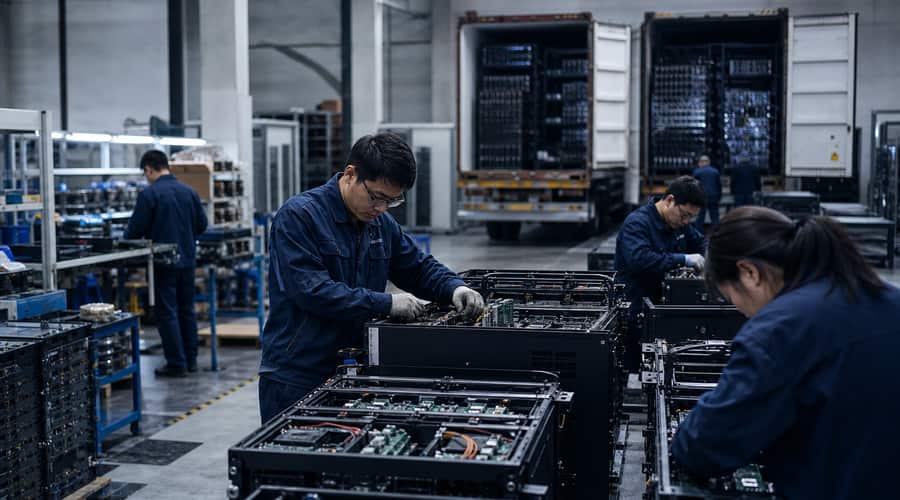
The most useful way to think about AI may not be the dot-com bubble. It may be China joining the World Trade Organization in 2001, when a huge new source of global competition reshaped American manufacturing, closed plants, damaged local labor markets, and still failed to crush the wider U.S. economy.
That is the comparison Apollo chief economist Torsten Slok is now making. As Fortune recently noted in covering his argument, Slok sees AI as a new economic shock with a familiar structure: fast disruption in exposed jobs, painful adjustment for workers and companies, and then offsetting gains that show up in new businesses, cheaper services, and stronger productivity.
The difference is where the pressure lands. The China shock moved through factory floors, supply chains, and industrial towns. The AI shock is moving through cognitive work. Customer support, software testing, junior legal research, marketing operations, analytics, recruiting, sales development, bookkeeping, and layers of management are closer to the front line this time.
Any optimistic reading needs to start with the damage. China entering the WTO intensified global manufacturing competition and helped push work out of many U.S. communities that were built around industrial employment. For workers whose skills, homes, and families were tied to those regions, the adjustment was not a clean textbook transition.
Slok's point is that the national labor market absorbed more of that blow than many people expected. Manufacturing employment suffered, but other forces helped hold the broader economy together. Service-sector growth, export expansion, lower input costs, and business formation created enough demand elsewhere to keep headline unemployment from telling the whole story of the disruption.
AI could follow the same pattern, only faster and in a different part of the economy. A small company that once needed a full back office can now automate invoices, draft support responses, summarize sales calls, and generate code prototypes with a few subscriptions. That can mean fewer traditional roles. It can also mean more companies can start, operate, and compete with less capital than before.
This is where the productivity argument becomes important for founders. If AI only replaces labor, the story is bleak. If it lowers the cost of producing useful services, it can expand demand. That is the logic behind Slok's use of Jevons paradox, the idea that efficiency gains can increase total consumption of a service because the service becomes cheaper and easier to use.
Startups need a transition strategy
For startups, the practical takeaway is not to freeze hiring or replace people for the sake of it. The better question is which parts of the business become more valuable when routine work gets cheaper. A founder who uses AI only to cut customer service headcount may save money in the short run. A founder who uses it to offer faster onboarding, more personalized support, and better retention may build a stronger company.
The same applies to fundraising. Investors are already sorting AI companies into two groups: those using automation to protect margins, and those using it to create new markets. The second group is harder to build but more interesting. It includes startups turning expensive expert workflows into software, helping small businesses access services once reserved for large firms, and giving workers tools that make them more productive rather than simply easier to remove.
There is still a near-term risk that should not be softened. White-collar workers are facing the kind of uncertainty that factory workers knew well two decades ago. Entry-level roles may shrink. Middle managers may be asked to supervise more output with fewer people. Service businesses that sold hours may have to sell outcomes instead. Those shifts will not feel like broad productivity growth to someone whose job is redesigned faster than their skills can adjust.
That is why the labor-market data in Slok's argument matters. He highlights that more than half of U.S. job growth since 1980 came from occupations that did not exist in 1980. That is a strong reminder that economies do not simply run out of work when technology changes. They create different work, often before workers, schools, and companies have a good name for it.
The winners in this phase will not be the companies with the loudest AI story. They will be the ones that can turn lower operating costs into better products, faster learning cycles, and new demand. That means building teams around judgment, distribution, trust, and domain expertise, then using AI to remove the slow parts around them.
The market will keep debating whether AI is a bubble, a productivity boom, or both. It can be both. Capital can overpay for weak companies while the underlying technology still changes how work gets done. The China shock showed that a painful labor transition can sit beside a larger expansion. AI may test the same idea in offices, service firms, and startups first. What matters now is whether companies use the shock to build more capacity, not just smaller payrolls.
Also read: Founders are learning that startup obsession has a personal cost • AI biosecurity risk is becoming a startup compliance problem • ChatGPT is turning game taste into a startup opening