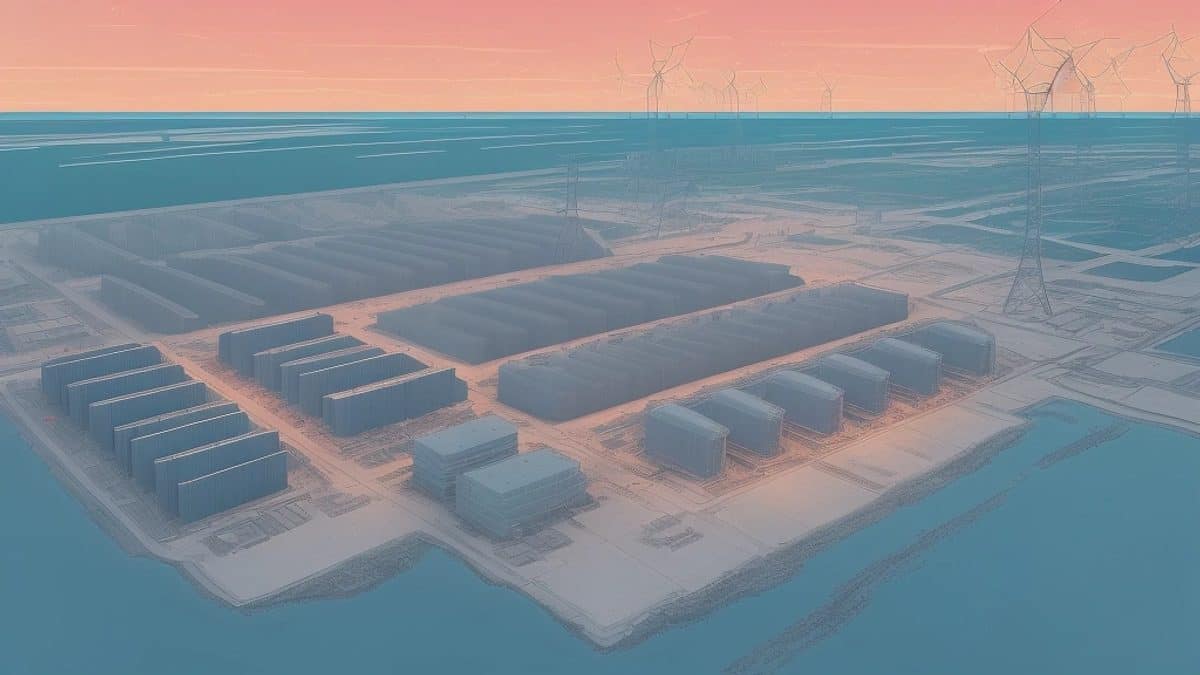
The AI investment story has quietly shifted from chips to kilowatts, with energy infrastructure emerging as the defining bottleneck of the decade's most consequential technology buildout.
For the past two years, the AI trade was simple: buy semiconductors, watch NVIDIA soar, repeat. That chapter isn't over, but sophisticated money is increasingly moving downstream to the infrastructure that actually keeps these systems running. Specifically, it's moving toward power. The Reuters "Inside ETFs" report circulating across financial desks this week crystallizes what many strategists have been watching build quietly: the electricity demands of modern AI are so extreme they're rewriting utility sector economics, grid planning timelines, and investment theses all at once.
The numbers are hard to absorb without pausing. Data centers currently consume roughly 3% of total U.S. electricity generation. Credible projections put that figure closer to 9% by the end of the decade. To put that in human terms, the compute load required to train and continuously serve large language models at scale is beginning to resemble the consumption profile of mid-sized nations. Tech executives are no longer speaking quietly about this. Power availability has become the loudest single constraint on how fast AI can actually scale in 2026, surpassing even chip supply as the primary operational chokepoint.
What makes this moment distinct is how the investment community is repositioning around it. The semiconductor trade captured the first wave of AI capital appreciation. The working thesis on Wall Street now is that the second wave belongs to the energy complex. Utilities that spent decades rewarded with steady, regulated single-digit growth are suddenly signing power purchase agreements with hyperscalers that make their earnings profiles look more like software companies than infrastructure stalwarts. Stock performance in select utility names has reflected exactly that shift, with upward earnings revisions arriving at a pace the sector hasn't seen in a generation.
Nuclear energy is receiving particular attention. The pitch is straightforward: it provides dense, reliable, carbon-free baseload power that can anchor a data center campus indefinitely. Reactor developers and the handful of utilities still operating nuclear assets have gone from afterthought to actively courted. Small modular reactor companies, once viewed as a long-horizon science project, are now being evaluated seriously as near-term procurement options by technology procurement teams with urgent timelines and deep balance sheets.
The fossil fuel paradox
Here is where the story gets genuinely uncomfortable for anyone following corporate sustainability commitments. The immediate demand for reliable power is forcing utilities to delay retirement of natural gas and even coal facilities that were supposed to come offline. The grid simply cannot absorb the new load fast enough through renewables alone, and no hyperscaler is willing to gamble data center uptime on intermittent generation without storage solutions that don't yet exist at the required scale. The result is a near-term resurgence in fossil fuel demand that sits in direct tension with the public climate pledges made by the same technology companies driving that demand. Investors watching regulatory bodies navigate this contradiction are treating it as one of the more consequential policy stories of the year.
Natural gas producers and grid modernization companies are capturing investment flows alongside nuclear players, precisely because they represent the realistic bridge between today's grid constraints and whatever cleaner architecture emerges over the next decade. This is not an ideological bet; it's a pragmatic read of infrastructure lead times.
What investors are watching now
ETF flows are already reflecting this thesis. Thematic funds with exposure to power infrastructure and grid buildout have attracted capital at a meaningful clip in the first quarter of 2026, and the Reuters reporting suggests that conversation is accelerating among institutional allocators who previously treated utilities as a defensive parking spot rather than a growth vehicle.
The practical takeaway for anyone building or managing a portfolio with AI exposure is that the pure-play semiconductor trade is mature. The next identifiable leg of value creation runs through transmission lines, reactor sites, and gas turbines. Whether that reality aligns with anyone's preferred energy future is a separate conversation. The market is currently pricing what is, not what should be, and what is looks like a structural power shortage arriving at exactly the wrong moment for an industry that cannot afford to slow down.
Also read: DeepSeek V4 Pro lands in the middle of the pack and that is a problem for the company's whole strategy • DeepSeek V4 rewrites the cost calculus for frontier AI and Wall Street is already paying attention • The AI gold rush is minting billionaires at the chip layer while everyone else is still panning for flakes