NVIDIA and its semiconductor peers are booking record profits from the AI boom, but software companies and startups are finding that turning compute spend into actual revenue is a lot harder than anyone admitted.
Two years into the most hyped technology cycle since the internet bubble, a genuinely uncomfortable question is circulating through earnings calls, venture partner meetings, and CIO offices alike: who, exactly, is making money from AI? The answer, so far, is uncomfortably narrow. If you sell the hardware that runs AI, business is extraordinary. If you sell software that uses AI, you are mostly still waiting for the economics to work out.
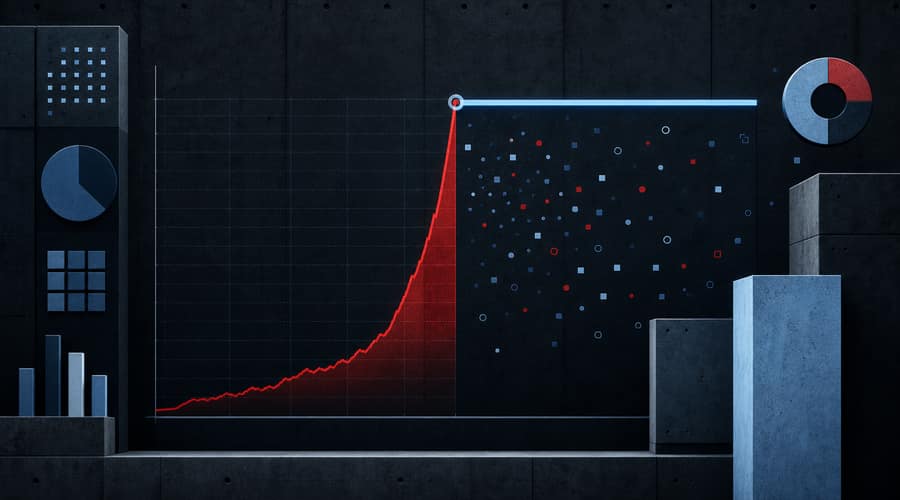
NVIDIA's numbers make the point with brutal clarity. For the fiscal year ending January 2026, the company posted data center revenue exceeding $110 billion, powered by relentless demand for H100 and Blackwell architecture GPUs. That is not a rounding error or a one-quarter anomaly. Broadcom and AMD have followed with record figures in their own custom chip and data center divisions. The picks-and-shovels metaphor, so often applied lazily to technology investing, turns out to be precisely correct here. The people selling the shovels are getting rich. The prospectors are having a rougher time.
Microsoft is the clearest illustration of the tension at the application layer. Despite weaving Copilot deeply into Office 365 and Azure, and spending aggressively to build out inference capacity, the company's revenue growth has settled into the 10 to 15 percent range. That is respectable for a company of its scale, but it is nowhere near the explosive acceleration investors priced in when AI was purely a promise. The core problem is inference cost: running large language models at commercial scale is expensive, it compresses margins, and enterprise customers are not yet converting pilot programs into the kind of committed spending that justifies the infrastructure bill.
OpenAI's situation is more acute. The company completed its transition to a for-profit structure and released GPT-5 in late 2025 to considerable fanfare, but costs have continued to outpace subscription revenue. Discussions about further price increases for ChatGPT Plus and enterprise tiers are an acknowledgment that the unit economics of frontier AI remain genuinely unsolved. When you are burning through compute to serve users who pay $20 or $30 a month, the math requires either dramatically higher prices, dramatically cheaper inference, or both.
The pilot program problem
What keeps coming up on Q1 2026 earnings calls, particularly from enterprise software vendors, is a phrase that should worry anyone with exposure to the AI application trade: pilot program. CIOs are running experiments. They are not, in most cases, committing the kind of multi-year, enterprise-wide contracts that would validate the trillion-dollar market size estimates Gartner and its peers have been publishing. The deployment curve is real but slower than the investment cycle assumed, and that gap is now showing up as a repricing of risk across the sector.
Venture capital in Silicon Valley has already begun adjusting. Capital is shifting away from unprofitable AI startups toward established infrastructure players who can demonstrate actual revenue. That is a meaningful strategic shift after two years in which almost any startup with a large language model wrapper could raise at a substantial valuation. The correction is not a crash, but it is a recalibration, and founders building at the application layer are finding that the bar for the next round has moved considerably higher.
None of this means the broader AI opportunity is illusory. Productivity gains from AI tools are measurable in specific domains, legal research and software development being the most cited examples, and the compounding effect of better models and cheaper inference over time is real. The timeline, though, appears to be measured in years rather than quarters. For investors and founders, the practical takeaway heading into the second half of 2026 is straightforward: watch whether inference costs fall fast enough to rescue application-layer margins, and watch whether enterprise adoption moves beyond pilots at scale. Until one or both of those things happens, the people reliably cashing checks from AI are the ones building the infrastructure it runs on.
Also read: DeepSeek's Huawei-optimized model signals that U.S. chip controls may be losing their bite • GPT 5.5 quietly rewrites what a language model is supposed to feel like • DeepSeek V4 arrives as an open-source reasoning model that Western AI labs cannot afford to ignore