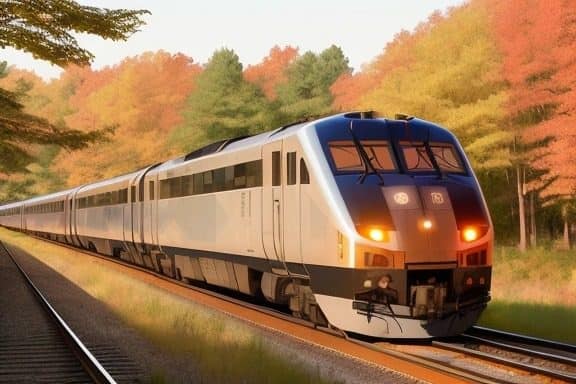
Record Amtrak ridership and a growing willingness to pay for premium upgrades reveal a shifting landscape in American travel, where comfort and reliability are increasingly outweighing traditional loyalties to air travel.
When a Business Insider reporter recently compared a $30 coach seat to a $150 business class fare on Amtrak's Northeast corridor, the takeaway was clear: the $120 upgrade paid for itself in a single perk, the ability to choose a forward-facing seat. For anyone prone to motion sickness, that is not a luxury. It is a necessity. The experiment highlights a broader trend that extends far beyond personal comfort. Amtrak is having a moment, and the numbers back it up.
In the 2025 fiscal year, Amtrak reported 34.5 million customer trips and $2.7 billion in adjusted ticket revenue, a 10.4 percent increase over the previous year. Those are record-breaking figures for the national rail service, and they arrive at a time when air travel in the United States continues to frustrate passengers with delays, cancellations, and cramped cabins. The appeal of rail is no longer purely nostalgic or regional. It is becoming a practical, competitive choice for business travelers and entrepreneurs who need predictable schedules and productive time en route.
The gap between Amtrak's coach and business class experiences mirrors a stratification happening across the entire travel and mobility sector. In coach, seating is unassigned. Passengers board and scramble for a forward-facing window seat, often claiming entire rows by spreading belongings across empty cushions. The dynamic is familiar to anyone who has flown economy on a budget carrier. Business class, by contrast, offers reserved seating, more legroom, and quieter cars. The reporter found the upgrade particularly valuable for avoiding the nausea that comes from sitting backward on a swaying train, a small detail that carries outsized weight for frequent travelers.
This willingness to pay a premium for marginal but meaningful improvements is something we see echoed in digital services, subscription models, and even cryptocurrency platforms. Users will pay for certainty, for control, and for an experience that removes friction. Amtrak's revenue growth suggests the company is capturing this demand effectively, at least on its busiest routes like the Northeast Corridor between Washington, New York, and Boston.
Infrastructure, Investment, and the Road Ahead
Amtrak's Moynihan Train Hall, which opened in 2021 after a $1.6 billion renovation, serves as a tangible symbol of renewed investment in American rail infrastructure. The facility offers a waiting area with dedicated restrooms, outlets, and an exclusive Metropolitan Lounge for first-class passengers. Coach and business class travelers can purchase a single-visit lounge pass for $50, an upsell that further monetizes the waiting experience. These are small but deliberate revenue levers that reflect a broader strategy: treat rail travel as a premium product worth investing in, not just a subsidized public utility.
The challenge for Amtrak is scaling this experience beyond the Northeast. Long-distance routes and services in less densely populated regions continue to struggle with aging infrastructure, slow speeds, and limited frequency. Federal funding remains a political football, and the capital required to modernize the national network runs into the tens of billions. Yet the ridership trend line is moving in the right direction. If Amtrak can maintain service quality while expanding capacity, rail could capture a significantly larger share of the domestic travel market over the next decade.
For investors and entrepreneurs watching the mobility space, the takeaway is straightforward. Consumer behavior is shifting toward alternatives that offer reliability and a better experience, even at a higher price point. Whether that plays out in rail, electric vehicles, ridesharing, or blockchain-based ticketing platforms, the underlying demand is real. Amtrak's record year is not an isolated data point. It is a signal that the market for thoughtful, well-positioned travel services is growing, and the companies that meet that demand with genuine quality improvements will be the ones that capture the upside.