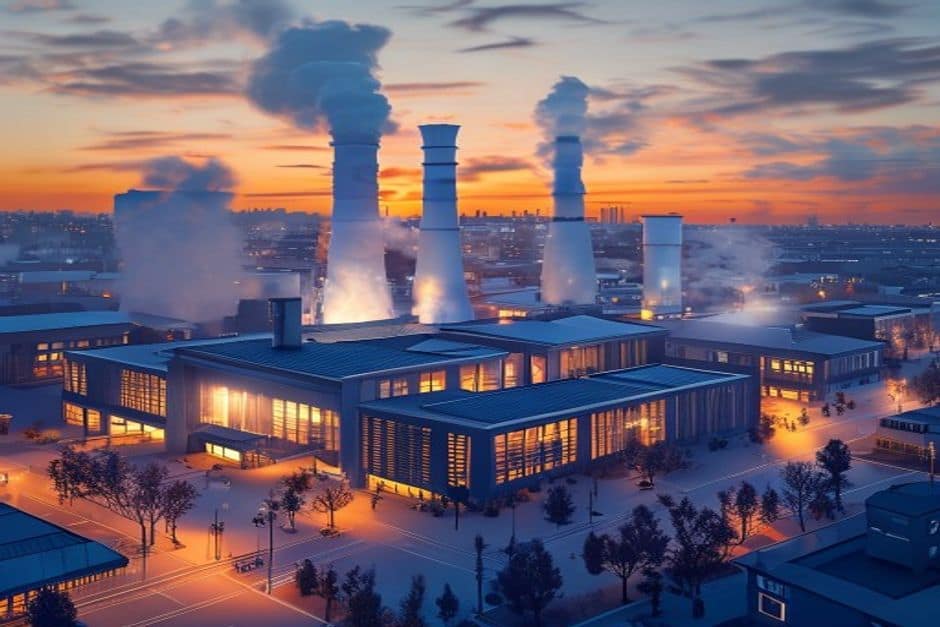
Communities across Australian cities are pushing back against large data centers over energy consumption, water use, noise, and planning opacity, and the resistance is an early signal of a constraint that hyperscalers and AI infrastructure investors have systematically underpriced.
The Guardian's reporting on Australian community opposition to data center developments captures something that does not appear in the capital expenditure announcements, the grid interconnection filings, or the hyperscaler earnings calls that dominate AI infrastructure coverage. It captures the point at which a financial and engineering problem becomes a political one. Residents near proposed and operational data center sites in suburban Melbourne, Western Sydney, and other urban corridors are organizing against facilities that consume electricity equivalent to small towns, draw significant volumes of water for cooling, generate continuous low-frequency noise, and arrive with planning documentation that is frequently insufficient for communities to understand what they are actually consenting to. The companies proposing these facilities have the capital. What they increasingly lack is what urbanists and regulators call social license: the implicit community acceptance without which a technically and financially viable project becomes a contested one.
The specific objections being raised in Australia are not unique to Australian culture or planning law. They are the objections that emerge when large-scale industrial infrastructure is placed in proximity to residential areas anywhere that has functioning democratic planning processes and an informed public. Energy consumption is the most quantifiable: a large hyperscale data center draws between 100 and 500 megawatts of power continuously, equivalent to the residential demand of a city of 80,000 to 400,000 people, and that load lands on grids that are simultaneously being asked to decarbonize, electrify transport, and absorb new residential demand. Water consumption for cooling adds a second pressure point in a country that has experienced severe drought conditions and where water allocation is politically sensitive in ways that it is not in cooler, water-rich climates. Noise from cooling systems and backup generators creates a chronic quality-of-life impact for immediately adjacent residents that is difficult to mitigate after construction without significant additional cost.
Australia is not where the largest concentrations of AI infrastructure are being built. The United States, particularly Virginia, Texas, and the Southeast, is absorbing a far larger share of current hyperscaler capital expenditure, and European data center markets in Ireland, the Netherlands, and the Nordic countries are similarly stretched. But Australia is a useful leading indicator precisely because its planning system is transparent enough that community objections become visible, its media environment is robust enough to report them, and its geographic constraints, limited land near urban power infrastructure, finite water resources, and a grid in active transition from coal to renewables, compress the tension between infrastructure demand and community capacity in ways that make the conflict legible earlier than it becomes visible in markets with more diffuse resistance.
The Virginia data center corridor, which already hosts more concentrated data center capacity than anywhere else on earth, has been generating local opposition for several years over similar concerns: grid strain, water consumption, and the conversion of agricultural land and suburban residential areas into industrial facilities. Northern Virginia localities have introduced moratoriums, imposed new requirements on energy sourcing, and in some cases denied permits for projects that would previously have moved through planning processes without significant friction. Ireland's data center permitting environment has tightened substantially as the country discovered that approved data center capacity represented a significant fraction of national grid capacity, creating a direct conflict with renewable energy transition targets. The Australian situation is not an outlier. It is the same dynamic appearing in another advanced market with effective institutions.
For AI startups and the investors behind them, the practical consequence is a compute supply chain that is more geographically and politically constrained than the capital available to build it would suggest. The assumption that cheap, scalable cloud compute is effectively unlimited has been foundational to AI startup financial models for the past several years, because the hyperscalers' capital commitments have been so large that supply constraint seemed implausible. Community resistance does not eliminate supply, but it extends permitting timelines, increases mitigation costs, and in some cases prevents development entirely in the locations that would otherwise be most economically rational. Those delays and cost additions flow through to cloud pricing and availability with a lag that is beginning to shorten.
Whether design and community engagement can become competitive advantages
The data center developers and hyperscalers that are beginning to take community relations seriously as an operational discipline rather than a public affairs function are finding that the investment has measurable returns in permitting speed and project completion rates. Microsoft's commitment to water-positive operations by 2030, which involves returning more water to local watersheds than its facilities consume, is the kind of specific, verifiable commitment that changes community conversations in water-stressed regions. Google's investments in local renewable energy development as a condition of large data center siting decisions have produced both regulatory goodwill and grid relationships that competitors without those commitments cannot replicate quickly. These are not philanthropic gestures. They are competitive positioning in a market where the ability to open new facilities predictably and on schedule is a direct input to the reliability commitments hyperscalers make to enterprise customers.
For the startup ecosystem that depends on this infrastructure, the actionable insight is that compute geography is becoming a variable worth tracking in the same way that chip supply and power costs are tracked. A hyperscaler that can build facilities faster in constrained markets because it has solved the social license problem is a more reliable infrastructure partner than one that is navigating an escalating series of community and regulatory disputes. And for founders building AI infrastructure businesses, facility design that takes community impact seriously from the planning stage, whether through waste heat recovery for district heating, water recycling systems that reduce net consumption, or genuinely transparent community engagement before permits are sought, is moving from a differentiator to a baseline requirement in the markets where the resistance is most organized. Australia is showing what that looks like when the resistance arrives before the industry has adapted to it. The question for every other market is whether the adaptation happens proactively or reactively.
Also read: When suspicion becomes the default setting consumers bring to online content the entire attention economy changes with it • The operating cost argument for local AI just got a lot harder for startup founders to dismiss • TOTO's 18 percent share surge is the AI infrastructure trade reaching places that would have seemed absurd a year ago