Shares in TOTO, the Japanese company best known for its high-end toilets, surged 18 percent on reports linking its advanced ceramics business to AI infrastructure demand, and the move is worth examining both as a genuine industrial story and as a test of how far AI-adjacent narratives can stretch a valuation.
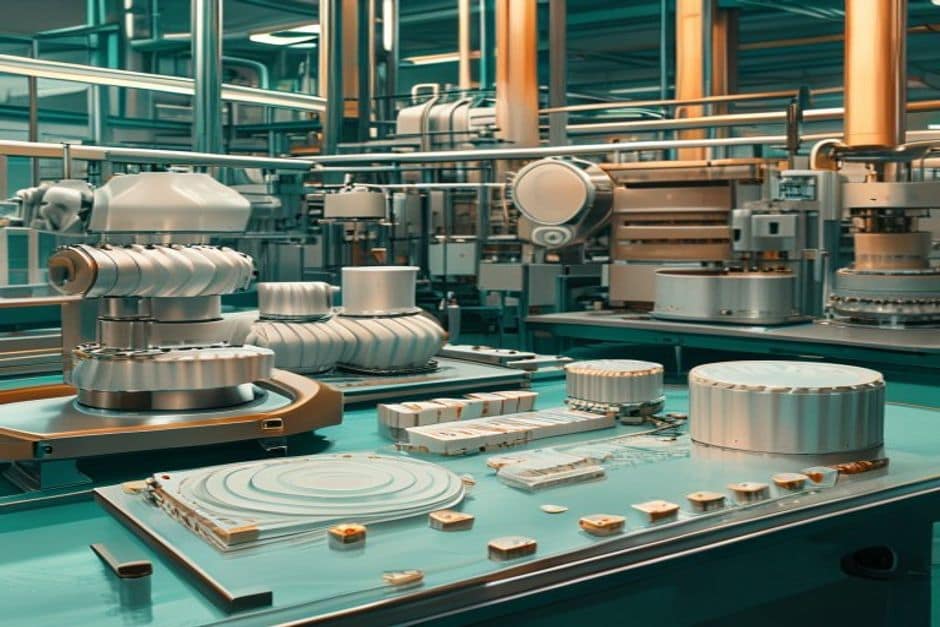
There is a version of this story that is entirely rational and a version that is speculative overcorrection, and the difficulty is that both are probably partially true simultaneously. TOTO is not only a bathroom fixtures company. It is one of Japan's significant producers of advanced technical ceramics, a materials category that has genuine and growing relevance to semiconductor manufacturing, electronic substrates, and the high-performance components that data center infrastructure increasingly depends on. Alumina ceramics, zirconia components, and ceramic substrates are used in chip fabrication equipment, in the insulating and structural elements of high-density server hardware, and in the thermal management systems that keep AI accelerators operating within safe temperature ranges. If AI infrastructure buildout is driving sustained demand growth for those specific materials, a repricing of TOTO's industrial ceramics division is not an irrational response from investors who previously valued the company primarily on its sanitary ware business.
The question that the 18 percent move raises immediately is whether the market is pricing a documented change in TOTO's order book and revenue guidance, or whether it is extrapolating from a category narrative without the underlying numbers to support the magnitude of the move. Those are very different situations with very different implications for anyone considering the stock at its new valuation. Advanced technical ceramics represent a meaningful but not dominant share of TOTO's overall business, and the company's earnings and forward guidance would need to show a clear inflection in that segment to justify an 18 percent uplift to the entire enterprise value. Whether that inflection is visible in confirmed reporting or whether investors are getting ahead of the fundamentals is the central analytical question the move creates.
The materials science underpinning this story deserves more attention than it typically receives in coverage focused on chips and cooling. Semiconductor fabrication at leading-edge nodes requires equipment components that can withstand extraordinarily harsh chemical and thermal environments while maintaining dimensional precision measured in microns. Technical ceramics, particularly high-purity alumina and silicon carbide variants, are among the few materials that satisfy those requirements. ASML's extreme ultraviolet lithography machines, the TSMC and Samsung fabrication lines running at 3 and 2 nanometer nodes, and the inspection and deposition equipment that supports advanced packaging all contain ceramic components that need to be replaced on regular maintenance cycles as production volumes increase.
AI chip demand has increased production volumes at leading-edge fabs substantially. More wafer starts means more equipment wear cycles means more demand for the precision ceramic components inside that equipment. That transmission mechanism is real and documentable, and it connects TOTO's industrial ceramics output to the AI compute buildout through a supply chain path that has nothing to do with the company's bathroom fixtures. The same logic applies to ceramic substrates used in advanced chip packaging, where the shift to chiplet architectures and high-bandwidth memory stacking has increased the substrate complexity and materials intensity of each finished processor significantly.
Where reasonable skepticism enters is in the sizing. The global technical ceramics market relevant to semiconductor applications is a specialized niche within TOTO's already diversified business, and the incremental demand from AI infrastructure, while real, has to be measured against the company's existing revenue base to assess whether it moves the needle at the enterprise level in a way that justifies an 18 percent valuation change. Kyocera and NGK Insulators are the Japanese industrial ceramics companies with more concentrated exposure to the semiconductor supply chain, and their recent performance provides a useful comparator for what a fundamentals-led repricing in this segment actually looks like versus a narrative-driven move on a company with partial exposure.
The broader pattern this trade reflects
TOTO joining the list of AI-adjacent beneficiaries is consistent with a pattern that has been developing for the past eighteen months. The AI infrastructure trade began with Nvidia, spread to TSMC, SK Hynix, and the memory suppliers, then moved to power equipment companies like Eaton and Vertiv, cooling system manufacturers, electrical cable producers, and the construction materials companies supplying data center buildouts. Each extension of the trade has followed the same logic: find a physical input to AI infrastructure that is supply-constrained or demand-elastic, and reprice the companies that produce it. Some of those repricing events have been well-supported by earnings revisions and order book disclosures. Others have been narrative-driven moves that partially unwound when quarterly results did not confirm the expected AI contribution to revenue.
For investors and founders trying to read the signal in the TOTO move, the practical approach is to wait for the company's next earnings disclosure and focus specifically on whether management quantifies AI-related demand in its technical ceramics segment, whether order visibility has extended and at what margin profile, and whether the guidance range has shifted upward in a way that independently validates the market's repricing. A single stock move on sector narrative without that confirmation is a hypothesis, not a conclusion. The AI infrastructure materials trade has produced real winners and real head fakes in roughly equal measure, and distinguishing between them requires the same discipline as any other fundamental analysis: follow the revenue, not the story.
The longer-term question for industrial materials companies in this position is whether they can convert a cyclical demand uplift from AI infrastructure into a structural repositioning of how investors value their businesses. TOTO has a materials science capability that genuinely intersects with one of the most durable capital expenditure trends in the global economy. Whether management can articulate and execute against that opportunity clearly enough to hold a higher valuation multiple after the initial excitement fades is what separates a lasting re-rating from a temporary momentum trade.
Also read: Solana's 10 billion transaction quarter is a real milestone that still requires a careful reading before it becomes a narrative • A proposal to let Satoshi prove wallet control without moving coins reveals how deep Bitcoin's quantum anxiety runs • Coinbase says a key crypto bill compromise has been reached but the hard part is still ahead