Judith Murphy is a financial journalist and market analyst covering AI, technology stocks, and emerging market trends. She has contributed to multiple financial publications and brings a data-driven approach to her coverage of the technology sector and its impact on global markets.
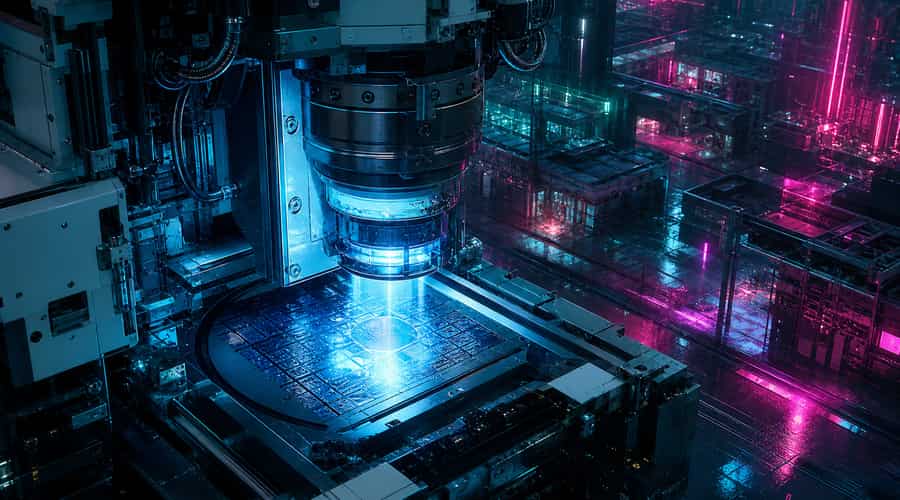
Washington warned ASML on June 18 that one of its top-tier EUV lithography machines may have reached China in violation of export controls. The disclosure, reported by Bloomberg, raises serious questions about the integrity of the U.S.-led semiconductor export regime and arrives as China simultaneously pursues a covert domestic EUV program using former ASML engineers.
Dream, the Israeli AI cybersecurity firm co-founded by NSO Group's former CEO Shalev Hulio and ex-Austrian Chancellor Sebastian Kurz, has raised $260 million in a round led by Bicycle Capital and Group 11, tripling its valuation to $3 billion in 16 months. With over $130 million in annual revenue from six governments, the company is building what amounts to a sovereign AI defense platform, arriving at a moment when nation-state cyberattacks on critical infrastructure are accelerating globally.
Roelof Botha, the former Sequoia Capital managing partner and ex-PayPal CFO, joined SpaceX's board as an independent director on June 16, just six days after SpaceX raised $75 billion in the largest IPO in history. He joins the audit committee and reunites with Elon Musk after two decades, raising questions about what genuine board independence means at a company where Musk retains majority control.
Thoma Bravo has handed Medallia to its lenders, crystallizing a $5.1 billion equity loss on its 2021 buyout of the customer experience software company. Blackstone, Apollo, and FS KKR Capital now own the business after rising interest rates pushed annual debt service from $135 million to $300 million, far exceeding the company's earnings. CEO Mark Bishof is now steering a $500 million AI product overhaul under new ownership.
NEA partner Tiffany Luck argues in a fresh TechCrunch interview that the enterprise AI market has hit an ROI reckoning: deployment is easy, proof of return is the hard part. Vertical AI startups delivering finished work products, complete legal memos, equity research reports, compliance outputs, are the ones best positioned to survive tighter procurement cycles and a more demanding public market.
How to get first customers for a startup is less about creative tactics and more about doing the obvious things most founders skip. The channels that work before you have money to spend are often the ones that keep working long after you do. From community building to targeted cold outreach to borrowed audiences, here is what consistently moves the needle.
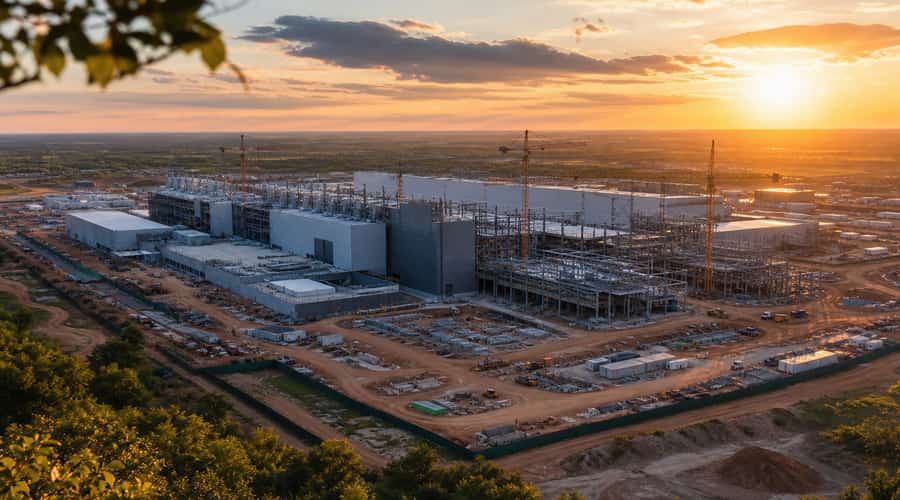
ASML CEO Christophe Fouquet confirmed direct talks with Elon Musk about supplying equipment for the $55 billion Terafab megafab in Texas, calling Musk 'very serious,' but warned the project only works as an opportunity if ASML avoids becoming supply-constrained. With EUV backlogs at record highs and TSMC, Samsung, and Intel already queued for machines, Terafab's ambitions could force a zero-sum competition for the world's most critical chip-making equipment.
ElevenLabs, the Polish-founded voice AI company now valued at $11 billion, has committed $11 million to a Warsaw R&D hub as its EU headquarters, targeting Central and Eastern European enterprise clients. The move comes as the company crossed $500 million ARR in May 2026, just months after raising a $500 million Series D led by Sequoia Capital. With real engineering work staying in Warsaw, ElevenLabs is making the case that a European AI decacorn doesn't have to fully decamp to win.
Kuaishou is spinning out Kling AI as an independent entity targeting a $20 billion valuation and a 2027 Hong Kong IPO, after the video generation platform posted $153 million in full-year 2025 revenue and an annualized run rate of $500 million by April 2026. The pre-IPO round of roughly $2 billion prices Kling at nearly four times rival Runway's recent valuation, with geopolitical risk from US chip export controls adding complexity for any western investor writing a check.
PayPal is winding down its decade-old corporate venture arm, hiring Jefferies to sell secondary stakes in a portfolio that includes Plaid and Anchorage Digital. The shutdown, confirmed as new CEO Enrique Lores cuts 4,760 jobs and targets $1.5 billion in savings, raises a harder question for the startups left behind: what does strategic capital actually mean when the strategy changes?
Coinbase launched 1:1-backed tokenized U.S. stocks for eligible non-U.S. users on June 16, 2026, with real share custody, automatic on-chain dividends, and an initial lineup including Nvidia, Alphabet, and SpaceX. The international-first rollout sidesteps unresolved SEC domestic rules while competing directly with Kraken's xStocks platform, which has already logged $20 billion in cumulative trading volume.
Man Group and Morgan Stanley are both flagging the same concern: AI infrastructure debt is surging toward $570 billion in 2026, hyperscaler bonds now represent nearly 4% of the entire US investment-grade index, and bond investors are only starting to price the gap between capital being deployed and revenue that has yet to materialize.
OpenAI filed its S-1 confidentially with the SEC on June 8, targeting a valuation of up to $1 trillion despite burning $34 billion in 2025 against just $13 billion in revenue. The company doesn't project positive cash flow until 2030, with compute costs expected to reach $600 billion through the end of the decade. Public investors are being asked to price a company losing roughly three dollars for every dollar it earns, at one of the largest IPO valuations in history.
Alibaba's Tongyi Lab has unveiled the Qwen Robot Suite, its first dedicated AI model stack for robotics, with enterprise pilots already running on Alibaba Cloud. The suite bundles spatial navigation, manipulation, and world-modeling into a single cloud-scale offering, positioning Alibaba against Nvidia and US hyperscalers in the race to control the intelligence layer of physical AI. For enterprise robotics buyers, the competitive unit is no longer a point solution , it's a stack.