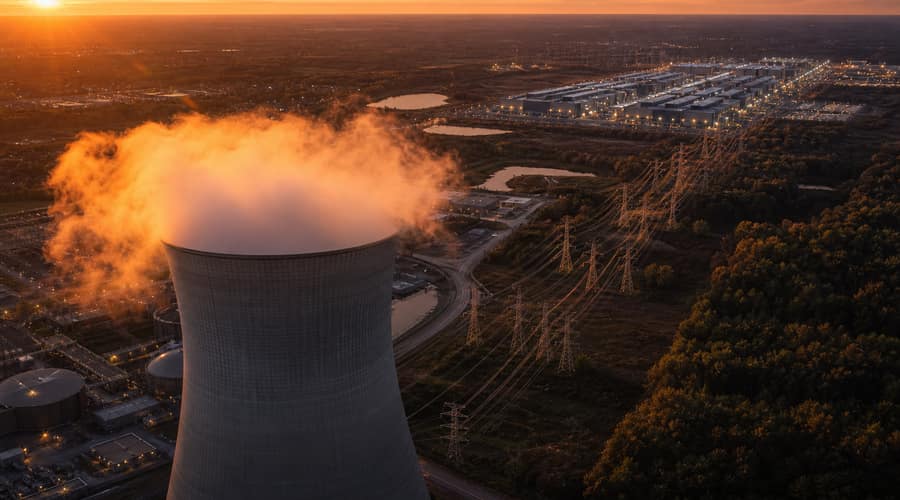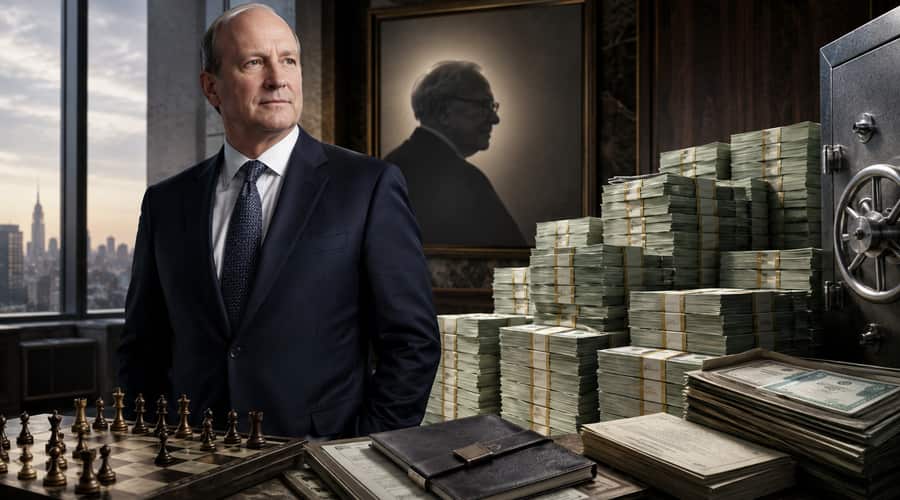
Greg Abel's first Berkshire quarter looks less like a break from Warren Buffett and more like a careful test of what discipline means after Buffett.
Berkshire Hathaway has finally given investors the first real evidence of how Greg Abel will run the machine he inherited, and the answer is not dramatic. The company is richer in cash, still cautious in public markets, and only selectively active where the odds look clearer.
That matters beyond Omaha. Berkshire is not a startup, a venture fund, or a growth equity shop. But its behavior is watched by the same people who decide when risk is worth paying for. When a conglomerate with a record cash pile keeps selling more stock than it buys, it tells the market something about price, patience, and the cost of being wrong.
The key figure is $397.4 billion. Berkshire ended the first quarter with that amount in cash, cash equivalents, and short-term Treasury bills, up from roughly $373 billion at the end of 2025. Operating earnings were $11.35 billion, not the much larger figure circulating in some summaries, and net earnings attributable to shareholders were about $10.1 billion. According to Berkshire's first-quarter filing and its May 15 13F, the company bought about $15.9 billion of equities during the quarter and sold about $24.1 billion.
So yes, Abel is buying. But he is still taking more chips off the table than he is putting on it.
It is tempting to treat Berkshire's cash balance as a problem waiting to be solved. Nearly $400 billion is too large to hide inside routine treasury management. It is larger than the market value of many companies that dominate their industries. It is also earning real income in short-term government securities, which changes the pressure on Berkshire to move quickly.
That is the part founders and venture investors should pay attention to. In a near-zero-rate world, idle cash looked like a drag. In a higher-rate world, patience has a yield. Berkshire can wait without looking foolish, and that gives Abel a different kind of negotiating power. He does not need to chase marginal deals just to show activity in his first quarter as chief executive.
The portfolio changes also show a useful distinction. Berkshire did not sit still. It initiated a large position in Delta Air Lines, added to Alphabet, and cleaned out or reduced a long list of smaller holdings. Reports following the 13F linked part of that cleanup to the departure of Todd Combs, who left Berkshire for JPMorgan Chase late last year. That makes the quarter less about a grand investment manifesto and more about ownership clarity.
Still, the optics matter. Buffett is no longer chief executive, but the restraint remains. Abel has shown he is willing to simplify the portfolio and make new bets, yet he has not used the transition as an excuse to reset Berkshire's risk appetite. That is exactly what institutional investors wanted to know.
Why startups should care
For startup founders, Berkshire's quarter is not a direct funding signal. Venture capital follows its own cycles, and early-stage companies are priced on ambition as much as current cash flow. But the broader lesson is useful. When the world's most famous capital allocator is willing to hold nearly $400 billion rather than stretch for assets, valuation discipline is not just a private-market slogan.
That discipline is already shaping the startup environment. AI infrastructure companies are raising huge sums because demand for compute, power, networking, and data center capacity is real. But real demand does not automatically make every price sensible. Berkshire owns operating businesses across insurance, energy, rail, manufacturing, and services, so it sees many parts of the economy before they appear in a software investor's dashboard.
Insurance is especially important here. Berkshire's float gives it low-cost capital when underwriting is done well, and that capital can be invested while claims are still in the future. As AI infrastructure expands, more physical assets need to be financed, insured, powered, transported, and maintained. Berkshire does not need to own the hottest AI startup to benefit from the real economy that AI is building around it.
That may be Abel's quiet advantage. Buffett became the symbol of patient capital, but Abel spent years running Berkshire Hathaway Energy and overseeing non-insurance operations. He understands assets that take decades to build and cannot be repriced every week. In a market obsessed with model releases and chip supply, that operating background may be more relevant than it first appears.
The first quarter therefore gives us two signals at once. Berkshire is not frozen by succession. It bought, sold, repurchased a small amount of stock, and reshaped part of the portfolio. But it is also not trying to prove that a new CEO must act like a new strategy.
That is probably the right balance. The worst thing Abel could do would be to spend for the sake of personality. Berkshire's advantage has always been the ability to say no longer than others can tolerate. If the next year brings lower rates, weaker credit, or a cleaner entry point into quality businesses, that cash pile becomes less of a headline and more of a weapon.
For everyone else, the takeaway is simple. Capital is available, but the best capital is becoming more selective. Abel's first quarter says Berkshire still believes the price of patience is worth paying. The next thing to watch is whether markets finally offer him something large enough, durable enough, and cheap enough to change that answer.
Also read: Meituan puts avatar video startups under new pressure • Hodl Hodl brings Lightning trading back into the small trade fight • SpaceX Starship V3 reaches space in milestone test flight