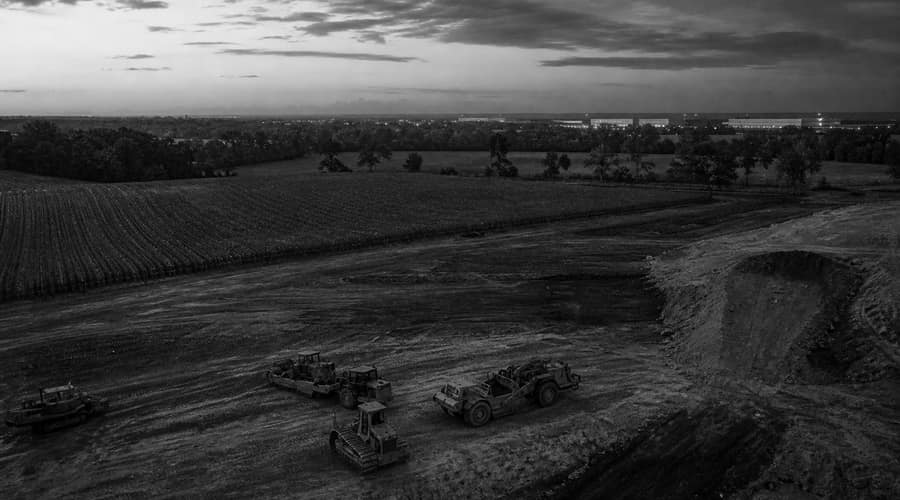
Blackstone's QTS has walked away from its part of Prince William Digital Gateway, and the lesson is blunt: AI money doesn't beat land-use law when residents keep fighting.
QTS confirmed this week that it's terminating its Digital Gateway project in Prince William County, Virginia, and withdrawing the filings that would have let it build on more than 800 acres near Manassas National Battlefield Park. The Financial Times reported the decision on July 2, after years of lawsuits, public meetings and local opposition. For anyone watching the AI data center buildout, this is the kind of story you cannot model from chip orders alone.
The scale was enormous. At full buildout, Prince William Digital Gateway was planned as a 37-building campus across roughly 2,100 acres, with about 22 million square feet of data center space and 14 dedicated electrical substations, according to earlier reporting from Tom's Hardware on the county fight. QTS held one part of that footprint. Compass Datacenters, the other developer tied to the project, walked away in April. Prince William County's Board of Supervisors also voted in April to stop pursuing its appeal. QTS was the last major piece still trying to keep the project alive. Now it isn't.
What killed it wasn't a lack of Blackstone money or a sudden collapse in demand for AI compute. It was public notice.
In August 2025, a Prince William County circuit court judge ruled that the county hadn't given residents sufficient notice before the Board of Supervisors approved the rezoning in December 2023. The Court of Appeals of Virginia upheld that ruling on March 31, 2026. The American Battlefield Trust and local residents, including the Oak Valley Homeowners Association, had sued over the approval in January 2024. Their argument was narrow, but it was enough: the county's hearing notices didn't meet the required standard.
That should get your attention. Digital Gateway wasn't a speculative slide deck sitting in a broker's inbox. It had county approval. It had rezoned land. It sat in Northern Virginia, already the country's most important data center market and the place developers still want because power, fiber and cloud customers are already clustered there. Yet the project still fell apart because the approval process did not hold up in court and residents refused to let the issue fade.
The battlefield location mattered too. Manassas is not just empty land with a power line nearby. It is Civil War ground, and the American Battlefield Trust built its case around the damage a giant data center campus could do to land adjacent to the national battlefield. You don't have to oppose data centers everywhere to understand why this site became a hard fight. A 22 million square foot campus near a historic battlefield is exactly the kind of project that turns a zoning dispute into a broader argument about what a county is willing to trade away.
Developers across the corridor will read this closely. The precedent isn't that every opposition campaign wins. Most don't. The point is sharper than that: an organized group only needs one real legal defect if the project depends on years of approvals, interconnection work and land contracts lining up in the right order. In this case, an allegedly flawed notice from 2023 was still strong enough to help sink a major AI infrastructure project in 2026.
Power was already making the story harder. The North American Electric Reliability Corporation documented a July 2024 voltage event in the PJM region in which roughly 1,500 megawatts of data center load disconnected across about 60 facilities. The Department of Energy-backed Lawrence Berkeley National Laboratory has also estimated that U.S. data centers used about 4.4% of national electricity in 2023 and could reach 6.7% to 12% by 2028. Those numbers are dry, but they explain the pressure underneath this fight. More AI demand means more land, more substations, more diesel backup generators and more residents asking why their county should absorb the burden.
Frankly, anyone treating AI infrastructure as a straight line from Nvidia GPUs to hyperscaler capex is missing the ground under the building. A cloud company can budget for racks. Blackstone can finance a campus. A county can approve the rezoning. None of that guarantees the land will still be available when the lawsuits finish.
The local fallout is still messy. More than 100 landowners had signed contracts expecting a Digital Gateway payout, and some residents have sued to get out of agreements tied to a project that no longer exists. Virginia also still has thousands of permitted diesel generators clustered around Loudoun and Prince William counties, a reminder of how much physical machinery sits behind the clean language of AI capacity.
Whatever gets built on this land next, it won't be the corridor QTS and Compass spent years planning. That is the real warning. The AI boom is hungry for campuses of this size, but counties are no longer treating them as automatic wins. In Prince William County, the residents with the court filings outlasted the developers with the capital.
Also read: Crusoe is raising billions to prove investors still believe in AI's buildout • Alibaba Cloud Offers $5,000 in AI Credits as Qwen3.7 Max Challenges Rivals • Alibaba Times Its Qwen Price Cuts to Catch American Coders at Work