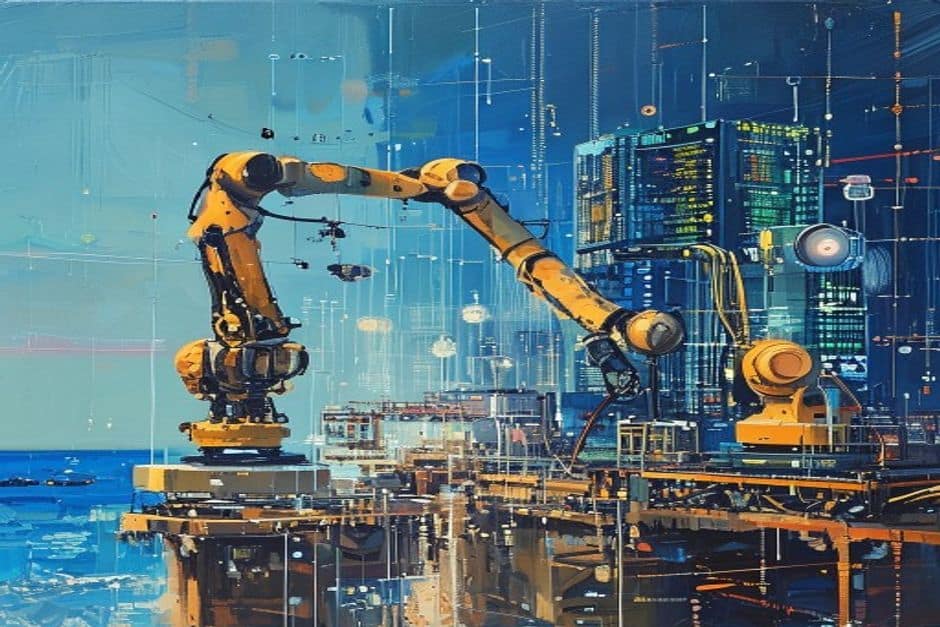
China's export machine is no longer just about cheap goods. AI demand is pulling robotics, power gear, optical modules and smart manufacturing into the center of global trade.
China is now exporting at a pace that works out to roughly $500 million an hour, and the more important point is what is inside those shipments. The country is not simply selling more of the same low-cost products into overseas markets. It is using the global AI buildout to move higher up the manufacturing chain, from factory robots and optical transceivers to data-center power equipment and energy-storage systems.
That is why the latest trade numbers matter beyond the usual argument about tariffs and deficits. Customs data showed China's exports rose 14.1% year on year in April, with total outbound shipments reaching about $359.4 billion for the month. Divide that across the hours in April and the number lands almost exactly at the figure now drawing attention: half a billion dollars an hour.
According to Reuters, the April rebound came as overseas buyers rushed to secure goods and components while global input costs remained under pressure. But the stronger story is not just demand being pulled forward. It is the way AI infrastructure spending is feeding directly into China's industrial base.
For years, the lazy version of the China export story was built around scale, low wages and consumer goods. That version is now badly out of date. Official customs figures for 2025 show exports reached 26.99 trillion yuan, up 6.1% from the previous year, while high-tech product exports rose 13.2% to 5.25 trillion yuan. That is not a rounding error. It is a structural change in what the world's factory is being asked to produce.
The most telling figure is industrial robots. China's exports of industrial robots jumped 48.7% in 2025 and exceeded imports, making the country a net exporter in a category that once belonged more firmly to Japan, Germany and other advanced manufacturing economies. Special-purpose equipment exports rose 20.6%, while high-end machine tool exports gained 21.5%. Those are the tools that help factories automate, cut labor intensity and build more complex products at greater speed.
AI is also changing demand for less visible equipment. Optical transceiver modules used in high-end GPU applications rose nearly 60%, while exports of large transformers and energy-storage batteries increased 18.8%. These are not glamorous consumer products. They are the physical plumbing of AI: data centers need networking gear to move information, power equipment to keep servers running, and batteries to stabilize energy demand.
That is the part of the AI economy many investors still undercount. The public conversation remains obsessed with model labs, frontier chips and benchmark scores. Those things matter. But AI becomes a real economy only when it touches factories, warehouses, electric grids, telecom networks and devices. China already has the supplier networks to turn that demand into shipments.
The startup lesson is uncomfortable
For U.S. AI startups, this creates a difficult reality. A company may train its models in the United States, raise money from Silicon Valley investors and sell software to global customers, but its hardware costs, device strategy or robotics roadmap may still be shaped by Chinese supply chains. If a startup needs sensors, batteries, camera modules, contract manufacturing, smart devices or server-adjacent components, it is competing with an ecosystem that can move quickly and price aggressively.
This does not mean every young company should manufacture in China or become dependent on Chinese suppliers. The risks are obvious. Export controls, tariffs, sanctions and geopolitical shocks can turn a cost advantage into a supply problem very quickly. But ignoring China's manufacturing leverage is worse. It leaves founders building financial models around component prices and production timelines that may not survive contact with the real market.
The competitive pressure is also moving from components into finished systems. Robotics is the clearest example. When Chinese companies export more industrial robots than they import, they are not just selling hardware. They are exporting a learning curve. Each shipment gives manufacturers more data, more customer feedback and more incentive to improve the next generation. That makes life harder for startups trying to sell premium automation tools into price-sensitive markets.
The same logic applies to AI devices. Smart cameras, edge boxes, warehouse systems and industrial inspection tools all sit at the meeting point of software and hardware. U.S. startups can still win through better models, design, enterprise integration and trust. But if the hardware wrapper costs too much, deployment slows. In many markets, the cheaper good-enough product gets the first customer relationship.
There is also a macro point here. China's export strength gives Beijing more resilience at a time when the U.S. and its allies are trying to limit access to advanced chips. Restrictions can slow progress at the top end of AI, but they do not erase China's ability to dominate the wider equipment base around AI adoption. In some cases, pressure may even push domestic firms to localize more of the stack.
What should founders watch next? Not just Nvidia supply, model performance or cloud pricing. Watch customs data, robotics exports, optical module shipments, battery prices and data-center power equipment. Those numbers show where AI is becoming physical, and where cost curves are being set.
The next phase of AI competition will not be decided only by who builds the smartest model. It will also be decided by who can manufacture the machines, networks and power systems that make those models useful at scale. Right now, China is turning that layer of the market into an export business measured by the hour.
Also read: AMP is turning AI compute into a new venture capital battleground • Claude adds /goal to keep working until the job is done • A cup of water exposed the real economics of local AI hardware