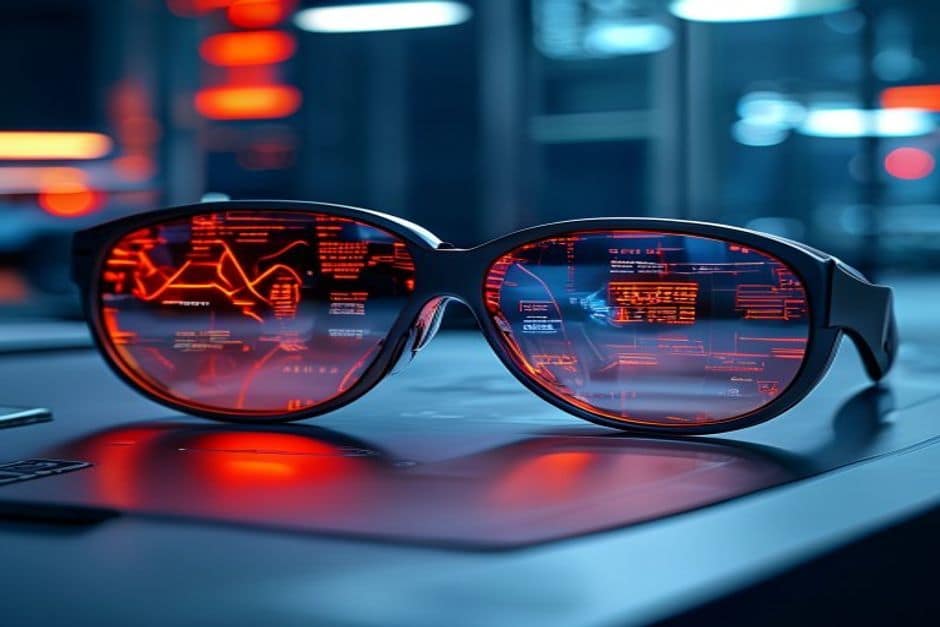
Smart glasses are becoming a serious distribution fight, and China is moving quickly. Meta has the brand advantage, but Chinese hardware makers may have the faster playbook.
Meta helped make AI glasses feel normal. That matters. Ray-Ban Meta took a category that had spent years looking awkward and made it look like something people might actually wear outside a product demo. The harder question now is whether that early lead can survive a wave of Chinese competitors treating glasses less like a camera accessory and more like the next AI interface.
The shift is already visible in China. Huawei, Alibaba, Xiaomi, Rokid, Xreal, RayNeo and other device makers are crowding into the same narrow space: lightweight eyewear that can listen, see, translate, search, record, make payments and connect users to an assistant without forcing them to pull out a phone. Some products will fail. Many will look too early. But the pace is important because consumer hardware markets are often decided before the perfect product arrives.
As the South China Morning Post recently reported, Huawei launched its first AI glasses in April with pricing from 2,499 yuan, or about $367, and a frame weight of 35.5 grams. The same report noted that China's smart eyewear shipments surged 35-fold in 2025. Those figures do not prove that Chinese brands will beat Meta globally, but they show why the market can no longer be treated as a one-company story.
The real prize is not eyewear sales by themselves. It is distribution. If AI assistants become more useful when they can see what you see and hear what you hear, glasses start to look like a better front door than a phone screen. A person walking through an airport, paying at a store, translating a menu, recording a short video or asking for directions does not necessarily want to stop, unlock a phone and open an app.
That is why this market matters for founders well beyond consumer electronics. Search could become contextual. Payments could become more ambient. Translation could move from app to default behavior. Creator tools could shift from editing after the fact to capturing and prompting in the moment. If that happens, the companies that control the wearable interface will have unusual leverage over which assistants, services and transactions sit closest to the user.
Meta understands that better than most. Its partnership with Ray-Ban owner EssilorLuxottica gave it something Silicon Valley hardware companies often lack: a credible fashion channel. The glasses look familiar, distribution is global, and the Ray-Ban name softens the privacy concerns that follow any face-mounted camera. For a first mainstream AI wearable, that was a smart route.
But the same model can become a constraint. Brand partnerships move at the speed of design cycles, retail coordination and premium positioning. Chinese device makers tend to compete differently. They iterate quickly, pressure suppliers, test multiple price points and use domestic ecosystems to bundle practical features. A product tied into Alipay, Taobao, Amap, Qwen or a local voice assistant may not need to win on global cool factor if it becomes useful enough in everyday Chinese life.
China's advantage is the hardware loop
China's strongest card is not simply lower cost. It is the density of the hardware supply chain. Cameras, batteries, displays, audio components, optical modules and assembly partners sit close to the companies trying to turn AI glasses into a daily product. That shortens the feedback loop. A thicker frame, weak battery life or uncomfortable nose bridge can move from consumer complaint to prototype revision faster when suppliers are nearby and competition is intense.
That matters because glasses are brutally unforgiving hardware. A phone can be a little heavy. A laptop can be slightly ugly. Glasses sit on the face, change how a person looks and must work in public without making the user feel strange. The winning product will not be the one with the longest feature list. It will be the one people forget they are wearing until they need it.
Chinese startups and tech giants also have room to attack different slices of the market. Xiaomi can push value and ecosystem integration. Alibaba can use Quark and Qwen to connect eyewear to commerce, maps and payments. Rokid and Xreal can keep leaning into display-heavy use cases. Huawei can tie glasses to its broader device and chip strategy. Meta, by contrast, has to protect a global consumer brand while navigating regulators, privacy expectations and a premium retail partner.
There is a risk of overreading the moment. Smart glasses have disappointed before. Google Glass showed that technical possibility does not equal social acceptance. Even now, battery life, heat, display quality, camera etiquette and assistant reliability remain real problems. ByteDance's reported pause on its Doubao glasses project is a reminder that not every major internet company will see enough differentiation to justify the push.
Still, the direction is hard to ignore. The AI wearable market is becoming less about whether glasses can take photos and more about whether they can become a practical layer between people and digital services. That changes the startup calculus. A founder building an AI shopping assistant, travel tool, meeting product, local search service or translation workflow should at least ask how the product behaves when the user is looking at the world instead of tapping through a phone.
For Meta, the next phase is about turning a stylish head start into a durable platform. For Chinese hardware makers, it is about proving that speed, price and local utility can overcome Meta's brand and distribution advantage. For everyone else, the lesson is simpler: the phone is still the center of consumer computing, but it may not remain the only place where AI products are discovered, used and paid for.
Also read: Bumble is trying to end the swipe before the swipe ends Bumble • GM is making AI fluency a new test for IT workers • OpenAI is turning enterprise AI into an implementation business