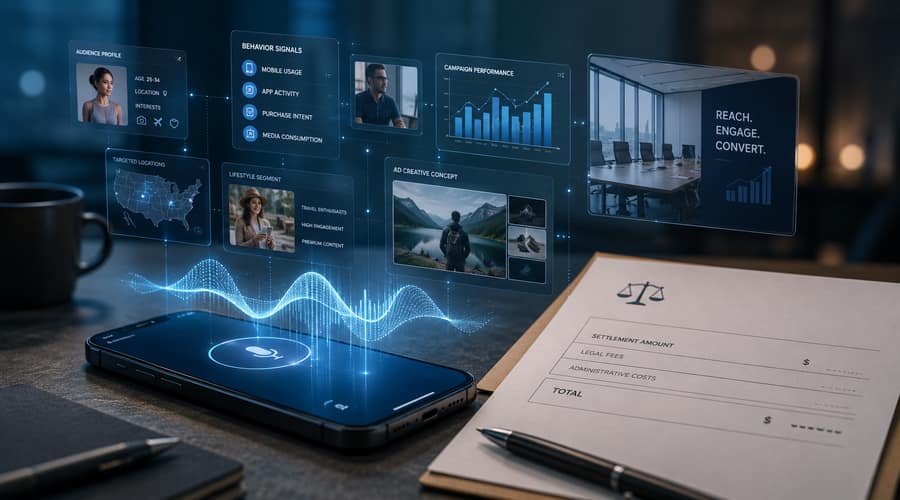
The FTC's Cox Media Group case is a warning to founders that privacy claims can create liability even when the product does not work as advertised.
Cox Media Group has landed in the kind of trouble every adtech founder should study closely. The company did not just sell a controversial targeting idea. Regulators say it sold businesses a story about AI, voice data and consumer consent that was not true.
On May 21, the Federal Trade Commission said Cox Media Group, MindSift and 1010 Digital Works would pay a combined $930,000 to settle allegations tied to an advertising product called Active Listening. According to the FTC, the companies claimed the service could listen for relevant conversations through smart devices and use that information to target ads in specific local markets. The agency's sharper point was even more damaging: the product allegedly did not use voice data at all.
That distinction matters. This is not a simple case of a company being punished because it secretly recorded people through their phones. The FTC's case says the companies marketed an invasive capability, reassured customers that consumers had opted in, and then delivered something more ordinary, email lists obtained from data brokers and resold at a significant markup. That is still a serious problem. In some ways, it is the cleaner enforcement lesson for startups.
The anxiety around phones listening to private conversations has been around for years, and Cox Media Group's own marketing poured fuel on it. Active Listening was presented as an AI powered way to detect real time intent from conversations around smartphones, smart TVs and other connected devices. For advertisers, that sounds like a dream. For consumers, it sounds like surveillance moving from the browser into the living room.
As the FTC recently stated in its announcement, Cox Media Group will pay $880,000, while MindSift and 1010 Digital Works will each pay $25,000. The money is intended for redress to Cox customers affected by the alleged conduct. The proposed orders would also bar the companies from misrepresenting the features of their marketing services, the collection or use of voice data, consent, and the accuracy of geographic ad targeting.
For founders, the important part is that regulators did not need to prove a working spy machine to act. The alleged deception was enough. If a startup tells customers it can harvest sensitive signals, infer private intent, or operate on consent it does not actually have, the sales deck can become evidence. That is especially true when AI is used as the wrapper around the claim.
The FTC also took aim at the idea that mandatory app terms can be treated as meaningful opt in consent for voice data. Clicking through dense terms of service is not the same as agreeing to have conversations inside a home collected for ad targeting. The agency said that if Active Listening had worked as advertised, collecting and using consumer voice data without adequate consent would itself violate Section 5 of the FTC Act.
AI marketing has less room for loose language
Adtech has always lived on inference. Cookies, device IDs, location data, purchase records and brokered lists have made it possible to target people without knowing them personally. The Cox case shows how quickly that culture can become dangerous when companies start describing those inferences as something more direct and more intimate.
There is a practical reason this should make early stage companies nervous. Startups often test messages before products are fully mature. A founder might describe a feature as listening, sensing, understanding or predicting because those words make the product easier to sell. In consumer AI, that language carries legal weight. It can imply a data source, a technical capability and a consent model that the company may not be able to support.
This is where the case reaches beyond Cox Media Group. Any startup building in martech, retail media, voice interfaces, connected devices or consumer AI has to treat sensor data as a regulated surface, not a clever growth channel. Microphones, location, cameras and behavioral trails all create expectations. Once a company says it uses them, it needs a defensible answer for how the data is collected, who consented, where it goes, and whether the product actually performs as promised.
The smaller firms in the case also show that liability does not stop with the brand that faces the customer. The FTC accused MindSift and 1010 Digital Works of helping provide the materials and claims that enabled Cox's marketing. That matters for vendors, agencies and infrastructure startups. If you supply the pitch, not just the software, you may still be part of the problem.
The market lesson is straightforward. Privacy is no longer just a policy page managed after launch. It is part of product design, sales discipline and investor diligence. A founder who cannot explain the difference between inferred intent and collected voice data is not ready to sell that feature.
The next wave of enforcement will likely focus on the same weak spots: exaggerated AI capabilities, vague consent, and sensitive data claims that are easier to put in a deck than prove in an audit. Cox Media Group's settlement is small by Big Tech standards, but the signal is not. If your product depends on making consumers feel watched, or making advertisers believe they can watch more than they legally can, the growth story may become the case file.
Also read: AI researchers are testing life after the Transformer • Sweden's self-driving bus crash puts autonomous transit on notice • NuExtract3 gives startups a smaller path to document AI