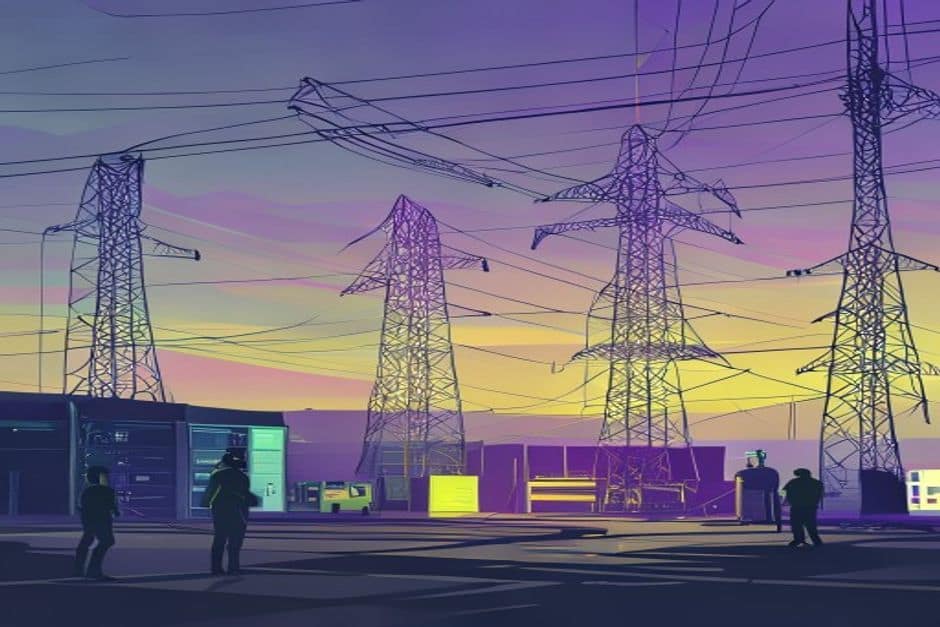
AI's next constraint is no longer just chips or cloud pricing. It is whether the local grid can carry the load without making everyone else pay for the strain.
North America's power watchdog has moved the data center boom from a planning headache to a reliability warning. The North American Electric Reliability Corporation, better known as NERC, has issued a rare Level 3 alert over large computational loads, the kind of demand created by hyperscale data centers, GPU clusters and other facilities running modern AI workloads.
This is not a niche utility story. The reason it keeps catching fire on Reddit and other mainstream forums is simple: people understand that AI is no longer an abstract software race. It is showing up as transmission queues, higher power bills, fights over local permitting and questions about whether a handful of very large customers should be allowed to reshape the economics of the grid.
As Utility Dive reported this week, NERC's alert followed incidents where large data center loads unexpectedly dropped or rapidly shifted demand, creating reliability concerns for grid operators. That matters because the power system is built around balance. Electricity supply and demand need to match in real time, and a sudden swing measured in hundreds or thousands of megawatts is not something operators can casually absorb.
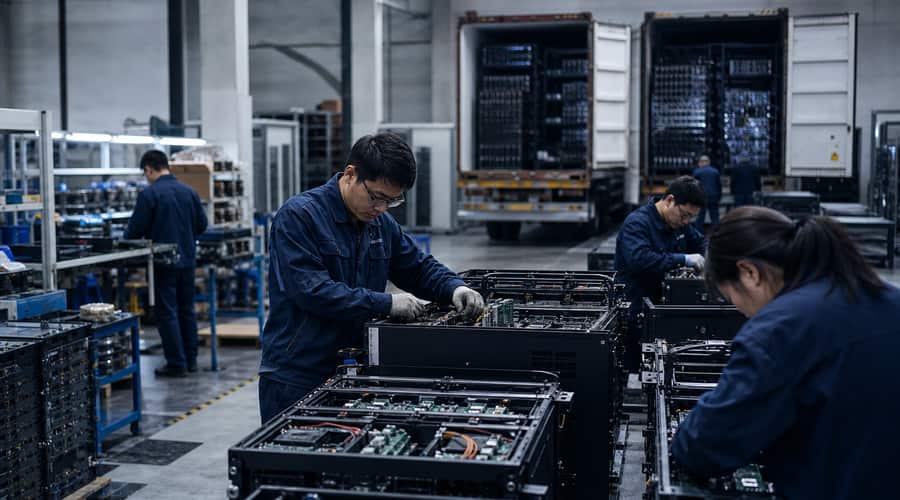
The old story about cloud growth was mostly about servers, land and fiber. The new story is about electricity. AI training and inference loads are much denser than traditional enterprise computing, and the largest clusters can behave more like industrial facilities than office buildings. When a hyperscaler brings a new campus online, it is not just buying power. It is asking for generation, transmission capacity, substation upgrades, cooling infrastructure and a local political license to operate.
For startups, this changes the meaning of compute access. A young company used to think about cloud availability in terms of GPUs, reserved instances and price discounts from Amazon Web Services, Microsoft Azure, Google Cloud or specialist providers. Those still matter. But behind every available GPU is a power contract, a utility interconnection agreement and a region where regulators have decided how fast large loads can connect.
That creates a quiet but important shift in competition. The best funded AI labs can prepay for capacity, sign long term cloud commitments and push closer to the front of the line. Smaller startups are left exposed to higher prices, tighter allocation and less predictable access when power becomes scarce. In that environment, model efficiency is not just a technical virtue. It is a business strategy.
Nvidia remains central to the story because its GPUs define much of the demand curve. But the real bottleneck is starting to spread beyond chips. Even if more accelerators are manufactured, the data centers that house them need power at a scale many local systems were never designed to handle. That is why utilities are suddenly talking about grid studies, demand response, co-located generation and whether large customers should fund more of the upgrades they require.
The fairness question is going to get louder. If a data center needs a new transmission line or substation, should those costs be spread across all ratepayers, or should the operator pay more directly? Utilities often argue that infrastructure benefits the broader system over time. Households and small businesses are less patient with that logic when their bills rise while a multibillion dollar technology company receives priority service for an AI campus.
Regulators are already being pulled into that fight. Some regions want the investment because data centers can bring tax revenue, construction jobs and a deeper technology footprint. Others are worried about water use, land use, emissions and the risk that speculative connection requests will clog planning queues. The result is a messy patchwork where AI infrastructure may be easier to build in one state or province than another, even when demand for the product is global.
Efficiency may become the startup advantage
This is where entrepreneurs should pay attention. Power bottlenecks can hurt startups that depend on brute force compute, but they can help companies that design around constraint. Smaller models, better inference routing, edge deployment, specialized chips, caching and workload scheduling all become more valuable when electricity is scarce or politically contested.
There is also an opening around stranded and flexible energy. Startups that can place compute near underused renewable generation, curtailed power, industrial waste heat or behind the meter energy assets may have an advantage over companies waiting for conventional grid upgrades. That approach is not easy. It requires energy expertise, hardware discipline and local relationships. But it turns power from a line item into a source of leverage.
The more immediate implication is that founders need to treat infrastructure risk as part of product planning. An AI startup promising low latency inference at scale cannot assume that cloud regions will expand smoothly forever. A company training frontier models cannot treat electricity as an invisible input. Even software businesses serving enterprise customers may need to explain how their compute costs behave if regional capacity tightens or cloud providers pass along higher energy costs.
The data center boom is not going away. AI demand is too strong, and the economic incentives for hyperscalers are too large. But the NERC warning shows that the next phase will be governed as much by power markets and permitting boards as by model benchmarks. The companies that win will not simply be the ones with access to the most chips. They will be the ones that understand where energy, regulation and compute meet, then build for that reality before it becomes an emergency.
Also read: Trump Media's Bitcoin bet is turning Truth Social into a crypto proxy • Vibe-coded apps are turning startup speed into security debt • North Korea's laptop farm case should put startups on notice