Dell's rally shows how quickly politics, philanthropy and AI optimism can collide in a public stock.
Dell Technologies had the kind of week most hardware companies rarely see. President Donald Trump thanked Michael and Susan Dell by name at a White House Mother's Day event, told Americans to go out and buy a Dell, and investors did something close to that with the stock.
Shares hit an intraday high of $263.99 on Friday, May 8, according to Yahoo Finance market data, before closing at $260.46. That was a gain of 13.11% on the day and left the stock up nearly 24% over five sessions. For a company many investors once treated as a mature PC and infrastructure name, that is not a normal move.
The immediate spark was political theater, but the market response was not only about one sentence from the president. The endorsement landed on top of a larger story Wall Street was already buying: Dell is becoming a more important supplier in the AI server buildout, and investors are still trying to price how much of that demand can flow through its income statement.
The White House moment traced back to the Dell family's December pledge of $6.25 billion to help seed so-called Trump Accounts, the child investment accounts created under the administration's tax and spending law. The structure is simple enough to understand. The federal government is expected to provide $1,000 to qualifying children born from 2025 through 2028, while the Dell pledge is aimed at adding $250 for roughly 25 million children who otherwise would not receive that newborn contribution.
As Reuters reported when the pledge was announced, the accounts are part of the Invest America initiative, with broader operational details still developing ahead of the expected July 2026 opening. That matters because the gift is not a conventional corporate buyback, product announcement or quarterly earnings surprise. It is philanthropy tied directly to a federal savings program, and it has now created a very public association between the Dell name and the president's economic messaging.
That association can be powerful. It can also be uncomfortable. When a sitting president urges consumers to buy from a specific company, markets notice for reasons beyond sales. Traders see visibility, retail investors see a signal, and critics see the possibility of blurred lines between public office, private enterprise and political gratitude.
For shareholders, the important question is whether the attention changes anything fundamental. A presidential compliment might drive a short burst of buying, but it does not by itself improve margins, expand server capacity or win enterprise contracts. The more durable argument for Dell has to come from its role in the AI infrastructure cycle.
AI Is Doing The Heavier Lifting
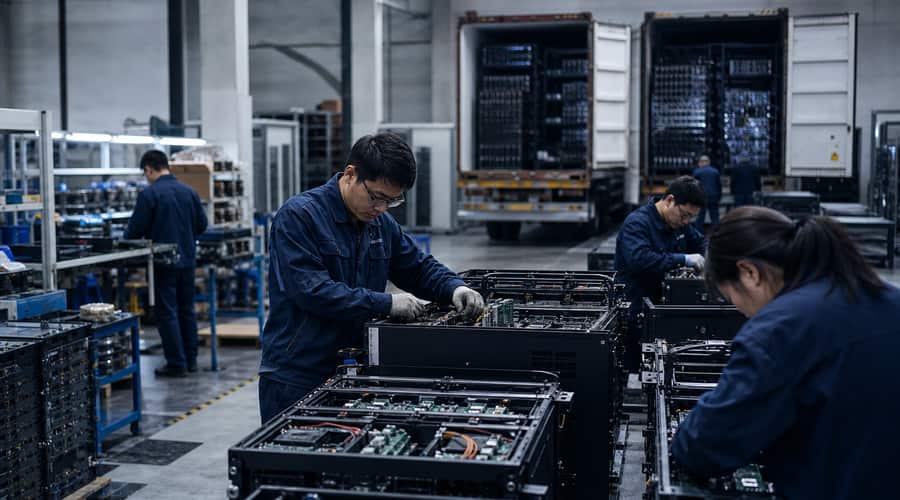
Dell has been one of the quieter beneficiaries of the AI boom. It does not design the GPUs that dominate headlines, and it does not own the cloud platforms that capture much of the investor imagination. Its advantage sits in a less glamorous part of the stack: building and shipping the servers, storage and infrastructure that enterprises need when they want to run AI workloads at scale.
That is why analyst revisions have mattered almost as much as the Trump comment. Mizuho lifted its Dell price target to $260 from $215 earlier in the week, keeping a bullish stance as investors looked ahead to continued AI server demand and a possible enterprise PC refresh. The new target ended up looking less like a stretch after Friday's move, with the stock trading near that level almost immediately.
The stock's path into the rally also tells a useful story. Dell had already climbed sharply on Wednesday, then pulled back Thursday in a weaker market session. Friday's record high did not arrive in isolation. It came after investors had already been repricing the company around AI infrastructure, earnings momentum and the possibility that corporate hardware spending may recover after a long digestion period.
Still, the valuation conversation has changed quickly. At a market value near $170 billion after Friday's close, Dell is no longer being treated like a low-growth hardware supplier. Investors are paying for participation in a buildout that could last years, but hardware cycles can be unforgiving when expectations get too clean. Orders can be lumpy, components can squeeze margins, and AI spending can shift from one supplier to another faster than the stock market likes to admit.
There is also a reputational layer investors should not ignore. The Dell family's donation may be philanthropic, and the Trump Accounts program may broaden access to long-term investing for children, but the optics are now part of the equity story. A brand boost from the White House can help in the short term. It can also pull a company into political arguments it did not fully control.
That is the real lesson from Dell's record week. Markets do not move on fundamentals alone, especially when a company sits at the intersection of AI demand, household consumer recognition and presidential attention. The next test will be Dell's ability to show that Friday's surge was more than a headline trade. If AI server revenue keeps scaling and margins hold up, the rally will look less strange with time. If not, investors may remember this week as a reminder that even a famous endorsement is not the same thing as earnings power.
Also read: Alphabet is closing in on Nvidia as AI lifts Google. • Stablecoins face their real payments test in everyday settlement • AI's giant spending spree is making investors ask harder questions