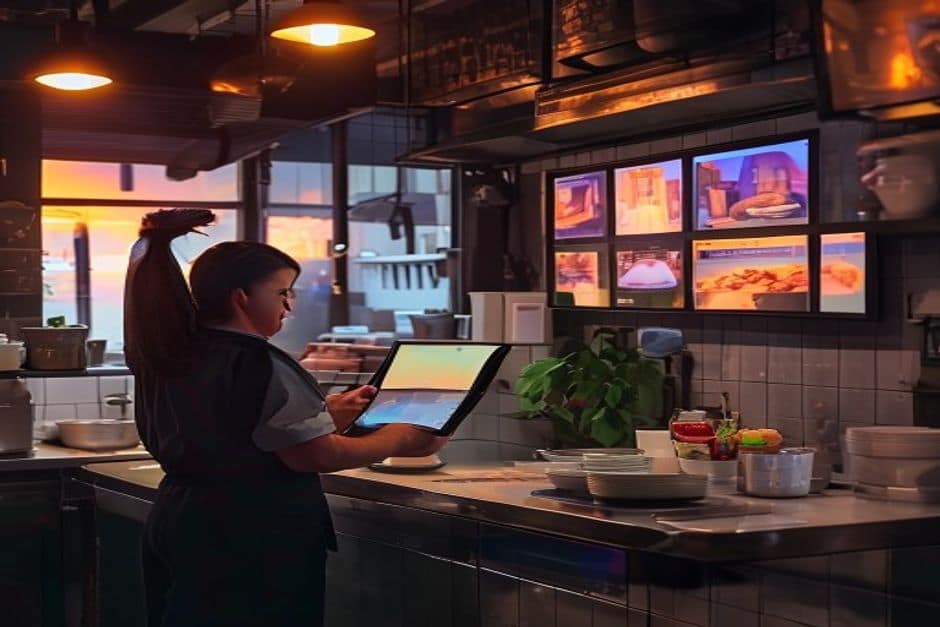
DoorDash launched a full suite of AI-powered merchant tools on Monday, including a website-scraping onboarding flow that reduces setup time by over 35%, two distinct photo editing tools called AI Retouch and AI Replate that have collectively improved millions of menu images since their initial rollout, a shoppable video library with sales analytics, a website builder that produced nearly 10% average order conversion in pilot testing, and an automated marketing campaign builder, all available broadly in the Merchant Portal and Business Manager App, not in limited pilot.
The specific tools are worth understanding precisely because each one addresses a different category of restaurant friction. The onboarding tool mirrors what Amazon launched in 2024: direct the system at a restaurant's existing website, and it automatically pulls menu items, photos, store hours, and operational details to build a DoorDash listing. The merchant reviews and publishes rather than building from scratch. For a new restaurant joining the platform, the difference between a guided data-entry process and a self-populating one is measured in hours of owner or manager time, which is the resource that independent restaurant operators have least of. AI Retouch handles background replacement, image sharpening, and lighting correction without changing the food itself. AI Replate goes further, repositioning dish presentation to match professional plating standards, adjusting lighting and color while preserving food quantity and appearance. Both tools allow merchants to download the resulting images for use off-platform, a detail DoorDash specifically calls out, meaning the output of a DoorDash AI tool is designed to improve a merchant's presence across every channel, not just on DoorDash. That is a meaningful choice. It frames the tools as merchant infrastructure rather than platform-captive features.
The conversion data behind the photo tools is the most commercially significant number in the announcement. DoorDash's own research from earlier in 2025 established that restaurants see a 44% increase in monthly sales when menu items have photos, and that approximately 38% of customers use menu photos to decide which restaurant to order from. Those are large effects, and they hold across the entire long tail of restaurants that join the platform with poor or absent photography because they do not have the budget, time, or equipment to shoot professional food images. AI Replate effectively provides professional food styling to every restaurant on the platform regardless of budget, which makes DoorDash's supply quality more uniform and reduces the visual disadvantage that independent restaurants currently face against chains with dedicated food photographers. From a marketplace perspective, making the long tail more visually competitive increases supply quality without requiring DoorDash to spend on production services, and gives independent merchants a genuine reason to stay and invest in their DoorDash presence rather than treating it as a low-quality backup channel.
The dependency argument is the one that deserves honest examination. Each tool DoorDash adds to its merchant experience solves a real problem that independent restaurants currently pay for through third-party services, agency work, or owner time. A restaurant that builds its website through DoorDash's new website builder, uses AI Replate for all its menu photography, runs its email marketing through DoorDash's campaign builder, and manages its customer analytics through the revamped video library dashboard is not going to be price-shopping competing delivery platforms. The switching cost is not contractual. It is operational. Moving to Uber Eats requires rebuilding the listing from scratch, re-uploading images that may have been created within DoorDash's tools, reconstructing the marketing automation, and losing the analytics history. The tools are individually free and individually useful, but collectively they make DoorDash the system of record for a restaurant's entire digital customer acquisition stack, which is exactly what marketplace platforms do when they are winning.
The startup opportunity question that this creates is not whether to compete with DoorDash's merchant tools directly. That is not a viable strategy. A startup trying to build a standalone AI photo editing product for restaurants, or a standalone onboarding tool, is now competing against features that are free, integrated, and distributed to every restaurant that signs a DoorDash contract. The viable startup thesis in this landscape is the cross-platform play: a restaurant operator with a meaningful presence on DoorDash, Uber Eats, Square, Toast, and a direct ordering website has fragmented data, fragmented analytics, and fragmented customer relationships across five separate systems, none of which talk to each other. The AI tools that DoorDash is building solve the DoorDash problem. They actively create the cross-platform problem by making DoorDash's tools better than what a restaurant has elsewhere, widening the data and quality gap between platforms rather than consolidating it. A product that gives restaurant operators a unified view of their customer data, menu performance, photo assets, and marketing results across all channels, and that lets them apply AI improvements to their presence everywhere simultaneously rather than one platform at a time, is addressing the problem that DoorDash's tooling creates rather than the problem it solves.
The broader pattern this announcement represents is distribution platforms embedding vertical AI into their core merchant experience rather than leaving the workflow to third-party SaaS vendors. Amazon did the same thing with its seller onboarding AI in 2024. Shopify has been progressively replacing third-party app categories with native AI features since 2023. Toast and Square are both building AI menu and marketing tools directly into their POS platforms. The vertical AI opportunity that was available to restaurant tech startups in 2022, when the platforms had no AI capabilities and independent software vendors could sell AI features to merchants who needed them, is narrowing. The remaining opportunity is in the gaps between platforms, in the compliance and regulatory workflows that platforms will not absorb because the liability is too concentrated, and in the hyper-specialist workflows for specific restaurant categories, fine dining, catering, ghost kitchens, and food trucks, where generic platform tools are poorly fitted to the actual operational model. That is a smaller total addressable market than the broad restaurant AI opportunity once was, but it is a more defensible one.
Also read: AMD's Gorgon Halo Could Offer 192GB of Unified Memory for Local AI and the Practical Case for It Is More Interesting Than the Spec Sheet Suggests • Jack Clark Puts a 60% Probability on Automated AI R&D by End of 2028 and the Implications for Who Wins the Frontier Race Are Immediate • Image AI Is Outpacing Chatbot Upgrades as the Growth Driver That Actually Converts and Founders Are Repricing the Opportunity Accordingly