Figure AI is turning a robotics argument into a public endurance test. The real question is not whether its humanoid can move fast, but whether it can keep working without people stepping in.
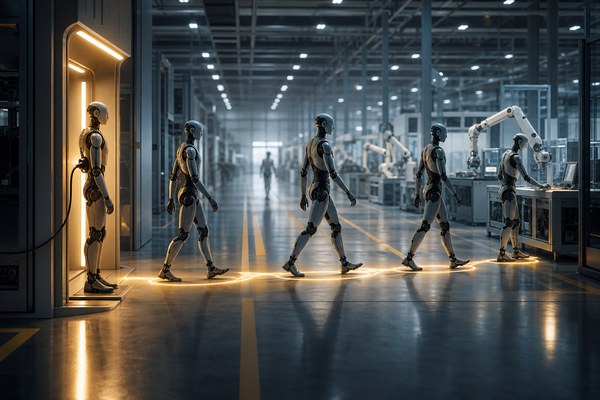
Figure AI has made the humanoid robotics race unusually simple today: show the shift. CEO Brett Adcock said on May 12 that Figure already runs fully autonomous shifts every day, then promised an eight hour livestream with zero human intervention after robotics veteran Scott Walter challenged the company to prove it.
That matters because the industry is moving past beautiful clips. A robot folding laundry, making a bed or unloading a dishwasher is interesting, but a commercial buyer is asking a colder question. Can this machine work long enough, reliably enough and cheaply enough to compete with human labor in a real environment?
According to RoboHorizon, the exchange began after Walter argued that humanoids have limited utility until they can survive a full work shift without human help. Adcock answered that Figure already does this daily and said the film crew was being texted for a livestream the next day. That makes the claim current, testable and risky in a way most robot demos are not.
Figure's own specifications make the promised livestream worth watching carefully. The company lists Figure 03 at 5-foot-8, 61 kg, with a 20 kg payload, a five hour runtime and a top speed of 1.2 meters per second. Those are useful numbers, but they also create an obvious tension. If a robot has a listed five hour runtime, an eight hour autonomous shift needs an explanation.
That explanation could be charging. It could be battery swaps. It could be a lighter duty cycle where the robot is not moving continuously for eight hours. It could also involve multiple robots or a task environment designed around the machine's limits. None of that would automatically make the demo meaningless, but it would change how investors, factory operators and competitors should read it.
This is why the phrase human speed needs more care than excitement. A walking speed of 1.2 meters per second is close to ordinary human walking pace, but a worker's value is not measured by walking pace alone. It is measured by recovery from errors, task switching, downtime, supervision, safety and how much useful work is completed in a shift.
Figure has earned attention because its recent demos are getting more complex. On May 8, the company published a Helix 02 bedroom reset showing two F.03 humanoids opening doors, hanging clothes, putting away headphones, closing a book, taking out trash, pushing a chair and making a bed in under two minutes. Figure said the robots used a single learned Vision-Language-Action policy with no shared planner, no message passing and no central coordinator.
That is not a small technical claim. Two robots handling a deformable comforter is harder than the finished video makes it look. Fabric changes shape constantly, one robot's pull changes the other robot's problem and both machines have to keep adjusting from vision alone. Business Insider also noted that Figure's AI director Corey Lynch said the footage ran at normal speed and was fully autonomous, with no teleoperation.
Autonomy has to become economics
The next phase for humanoids will not be won by the company with the most watchable clip. It will be won by the company that can make autonomy boring. A warehouse manager or manufacturing executive does not need a robot to look futuristic. They need it to show up, complete tasks, avoid creating new risks and justify its cost over many shifts.
Figure is trying to make that case at a moment when the category has become crowded. Tesla is still pushing Optimus. Agility Robotics has focused on warehouse work with Digit. Apptronik, Sanctuary AI and others are trying to prove that general purpose machines can leave the lab and enter paid operations. Figure also has a higher profile than most after raising more than $1 billion and reaching a reported $39 billion valuation.
The company's split with OpenAI on robotics models adds another layer. Adcock has said Figure is building its own AI systems, which puts more responsibility on the company to show that its hardware and models improve together. Helix 02, introduced in January, is presented by Figure as a full-body autonomy system that links perception, touch and proprioception to movement across the whole robot.
Still, a livestream should be treated as evidence, not a coronation. Viewers should watch for resets, off-camera pauses, charging behavior, human proximity, task variety and how failures are handled. A perfect eight hours inside a carefully prepared environment would be impressive. An imperfect eight hours with transparent recovery might be even more useful.
If Figure can show a humanoid working for a full shift without intervention, the conversation changes from whether humanoids can perform isolated tasks to how soon they can be priced into labor planning. If it cannot, the lesson is still valuable. The market will have a clearer line between autonomy that looks good online and autonomy that can survive a workday.
Also read: AgenticBrowser gives AI agents a real browser to work with • Tencent misses revenue estimates as it leans harder on AI • A Georgia data center exposed the water cost of AI growth