Fox is paying $22 billion for Roku because the living-room home screen has become one of the most valuable pieces of television real estate left.
Fox announced on June 15 that it will acquire Roku for $160 per share, with each Roku share exchanged for $96 in cash and 0.9693 shares of Fox Class A stock. The companies expect the deal to close in the first half of 2027, subject to shareholder and regulatory approval. The price is large, but the target is not hard to understand. Roku gives Fox a place on the screen before viewers choose Netflix, YouTube, Disney, Tubi, or anything else.
The Wall Street Journal reported that the deal is worth about $22 billion on an enterprise basis and that Fox plans to fund the cash portion with $12 billion in new debt along with cash on hand. That is a heavy move for a company whose core strength has been live news, sports, and broadcast television, not consumer hardware. Investors noticed. Barron's reported that Fox Class A shares fell 18% on Monday, while Roku shares traded below the $160 offer price.
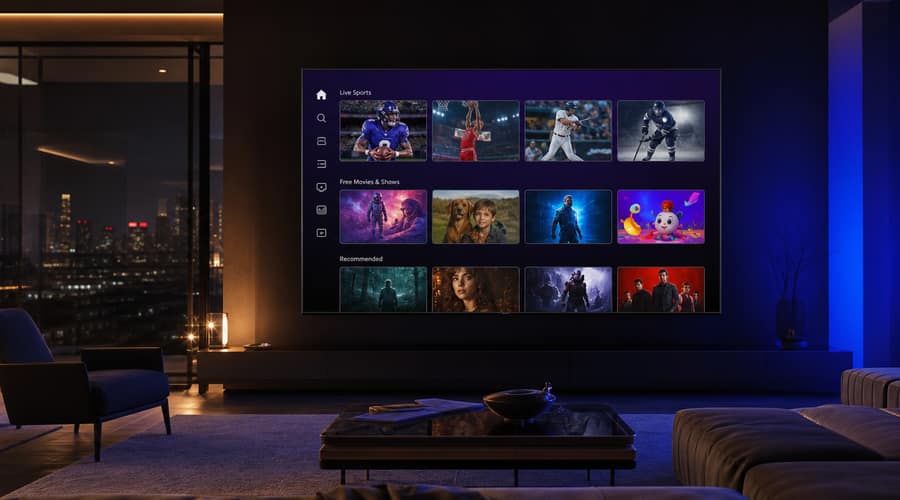
The logic is still clear. Roku reaches more than 100 million global streaming households, and the Journal, citing Parks Associates, reported that it has a 25% share of the connected TV platform market, ahead of Samsung's Tizen at 23%. That means Fox is not simply buying a streaming app or a box under the television. It is buying an operating system, a search and recommendation surface, a direct billing and advertising relationship, and first-party viewing data from a large base of households.
That home-screen position is what most traditional media companies do not have. Fox can make football and news programming valuable on linear TV, and it has built Tubi into a serious free streaming service since buying it in 2020. Roku adds the layer above the apps. It is the place where viewers decide what to watch before a network or streamer gets a chance to compete for attention.
Lachlan Murdoch called the transaction a defining moment for Fox, and the phrase is not just executive decoration. After selling most of 21st Century Fox's entertainment assets to Disney in 2019, Fox kept a narrower portfolio built around Fox News, Fox Sports, the broadcast network, local stations, and Tubi. Roku changes that shape. It gives Fox distribution and ad technology rather than another studio library.
The combined company also gets two major free ad-supported streaming properties in Tubi and The Roku Channel. The Hollywood Reporter, using Nielsen's Gauge data, reported that The Roku Channel accounted for 3% of U.S. TV viewing in March, while Tubi had 2.2%. Those are not small side projects anymore. They are among the services picking up viewers who do not want another $15 monthly subscription.
The real purchase is advertising control
Fox expects about $400 million in annual cost savings after the deal closes, according to the Journal. Cost cuts are useful, but they are not the heart of this acquisition. The better prize is advertising. Roku already sells ads across its platform and The Roku Channel, and it has spent years building tools that let advertisers target connected TV viewers and measure campaigns across streaming inventory.
Fox's linear advertising business still has powerful assets, especially live NFL games and Fox News. The problem is that the audience is moving. Roku gives Fox a more direct answer to advertisers who want streaming reach, data, and proof that their money did something. A broadcaster can sell a 30-second spot. A platform owner can sell placement, audience segments, attribution, and the path into the app itself.
Anthony Wood, Roku's founder and CEO, is expected to join Fox's board after the transaction closes. The Verge reported that Wood told investors Roku would remain an open, partner-friendly platform, while also acknowledging that Roku's own promotional areas would include more Fox properties, including deeper Fox Sports integration in Roku's Sports Zone. That is the tension regulators, streamers, and advertisers will watch. Roku has value because it is widely used by many services. Fox will be tempted to make that surface work harder for Fox.
Amazon and Google now have a different rival
This deal gives connected TV a cleaner competitive map. Amazon has Fire TV, Prime Video, and a large advertising business. Google has YouTube, Google TV, and its own ad machine. Samsung controls the TV operating system on many of its own sets. Fox was the odd one out: strong in live programming and free streaming, but without the operating system layer that shapes discovery.
Roku fills that gap. TCL, Hisense, and other TV makers have helped put Roku software into inexpensive smart TVs sold through mass-market retailers, which matters because platform power is won one living room at a time. Fox does not need to manufacture the screen to influence what happens on it. It needs the software people see when they turn the screen on.
There is still a lot to prove. Fox is taking on debt, entering deeper platform politics, and buying a company whose neutrality is part of its appeal. But the reason for the deal is sharper than the usual streaming consolidation story. Fox is not just trying to add another service to a crowded shelf. It is trying to own the shelf.
Also read: Nvidia sells $20 billion in bonds as AI demand outpaces its own cash generation • Sarvam AI is India's newest AI unicorn after raising $234 million from HCLTech • Salesforce spends $3.6 billion on Fin to buy proof it could not build in time