
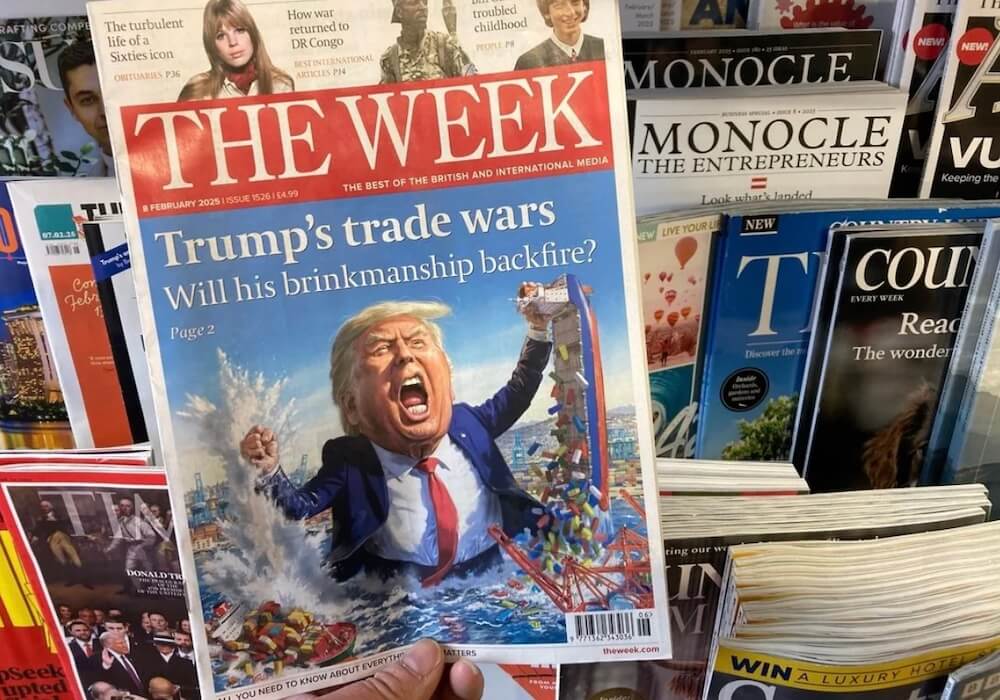
Donald Trump's aggressive new tariffs on China, Canada, and Mexico triggered immediate market panic, but the fallout may ultimately fuel a long-term rally for cryptocurrencies.
Donald Trump caught global markets off guard by imposing aggressive new tariffs on key U.S. trade partners like China, Canada, and Mexico. Markets panicked, Bitcoin struggled, and investors moved to safety. But amidst the chaos lies a fascinating prospect: these tariffs may, ironically, chart a bullish path forward for crypto in the long term.
When the tariff announcements hit, the blockchain space reacted exactly as expected. Bitcoin dropped sharply from around $88,000 to $83,000, while crypto stocks like Coinbase and Strategy saw immediate declines. Tariffs typically lead to higher costs, reduced economic growth, and increased market uncertainty. No surprise investors initially fled from risk assets, including crypto. The selloff was swift and indiscriminate, hitting everything from major tokens to smaller altcoins as traders rushed to liquidate positions and preserve capital.
But let's step back a bit. Could another force be at play beneath the surface?
One unforeseen consequence of Trump's tariffs might be a long-term erosion of the U.S. dollar's global dominance. Zach Pandl, Grayscale's Head of Research, recently stated that ongoing tariffs could undermine confidence in traditional fiat currencies. The logic is straightforward: when the world's largest economy starts throwing up trade barriers, trading partners begin seeking alternatives to a currency they can no longer rely on for predictable commerce. Investors seeking stable, predictable alternatives might increasingly turn to cryptocurrencies, particularly Bitcoin, which has consistently positioned itself as digital gold.
Tariffs directly lead to higher consumer prices, fueling inflation. However, not all inflation is equal. Unlike healthy inflation driven by strong economic growth, tariff-driven inflation is generally harmful, raising prices without the underlying economic strength that typically accompanies rising costs. Enter Bitcoin, a decentralized asset with a fixed supply ceiling of 21 million coins. This scarcity makes it particularly appealing as an inflation hedge, potentially attracting investors seeking shelter from tariff-induced economic volatility. When governments print money to offset trade war damage, assets with fixed supply suddenly look much more attractive.
Historically, financial volatility pushes investors toward safe-haven assets like gold and government bonds. But now, with the massive adoption of decentralized finance (DeFi), there's a new safety net powered by blockchain technology. As tariffs escalate tensions and shake confidence in traditional financial institutions, investors may increasingly move into DeFi for transparency, increased stability, and autonomy. The appeal is clear: no central authority can freeze your assets, no bank can deny you access, and no government policy can arbitrarily inflate your holdings away.
This shift could actually accelerate crypto's next phase, from merely a speculative asset to a staple component of the global financial system. We are already seeing institutional players take notice. The same firms that once dismissed Bitcoin as a fad are now studying how digital assets perform during geopolitical stress events. What they are finding is encouraging for the sector.
Yes, tariffs create initial uncertainty, but as we've repeatedly observed, short-term disruptions often mask long-term opportunities. Trade wars force capital to migrate toward stores of value that exist outside government control, and that is precisely what crypto was built to provide. Trump's tariffs might inadvertently set off shifts that make crypto an essential financial tool in an ever-evolving economic landscape. Investors who look beyond present disruptions may find themselves rewarded in a blockchain-powered future.