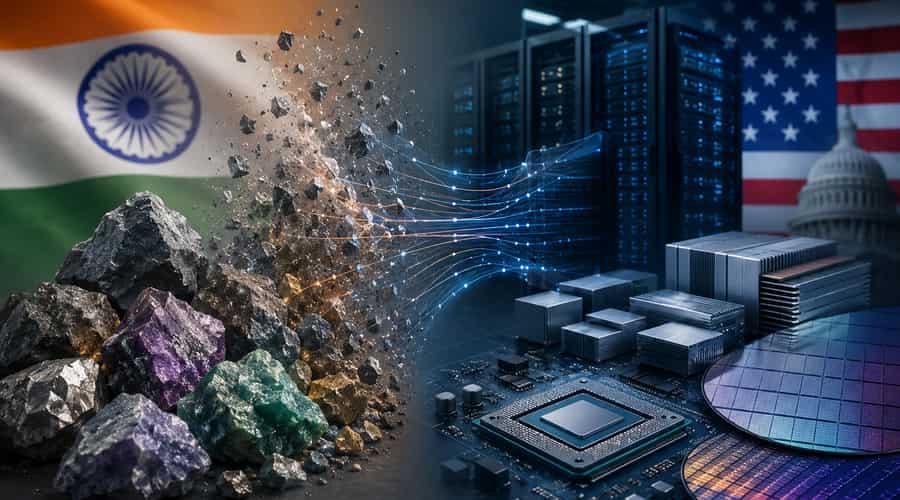
India and the United States are using rare earths to solve a much bigger problem: who controls the materials behind AI hardware.
The India-U.S. rare earths pact signed on Tuesday is not just another diplomatic document. It is a signal that Washington and New Delhi now see critical minerals as part of the same strategic map as chips, cloud infrastructure, electric vehicles and defense systems.
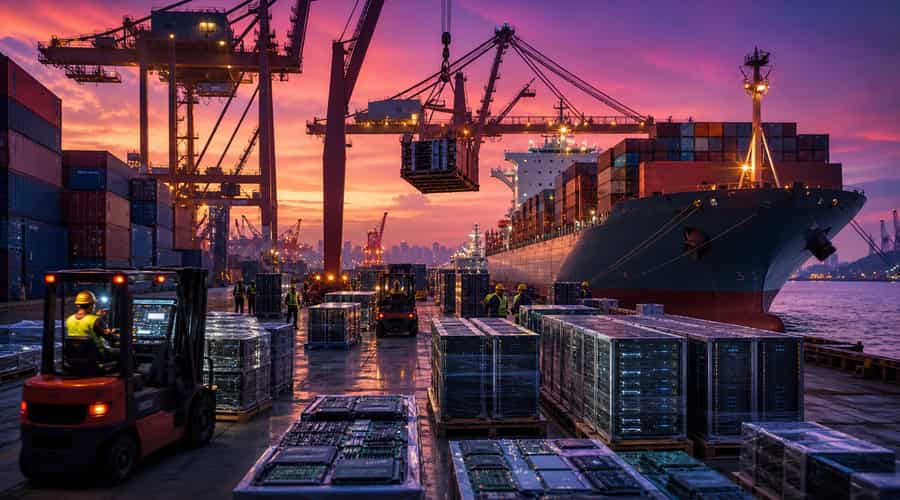
That matters because rare earths sit quietly inside the hardware economy. They help power high-performance magnets, precision components, cooling systems, advanced electronics and defense equipment. Without them, the AI boom starts to look less like a software story and more like a mining, processing and logistics story. The model may be trained in a data center, but the data center still depends on materials that have to be dug out, separated, refined and manufactured at scale.
The framework, announced during U.S. Secretary of State Marco Rubio's visit to New Delhi and meetings with External Affairs Minister S. Jaishankar, is aimed at cooperation across mining, processing, recycling and investment. It comes at a moment when China still holds powerful leverage over rare earth supply chains, especially in processing and magnet production. For the United States, that concentration is a strategic vulnerability. For India, it is an opening.
Rare earths are often discussed as if the main issue is who has the minerals in the ground. That is only the first layer. The real bottleneck is the middle of the chain: separation, refining, alloying and magnet production. A country can hold reserves and still remain dependent if it lacks the technology and commercial capacity to turn those reserves into usable industrial inputs.
India has long had a stronger resource position than its global rare earth industry suggests. It has monazite-bearing beach sand deposits and a state-backed presence through IREL (India), while KABIL was created to help secure critical minerals overseas. The problem has been building a full commercial chain that can serve advanced manufacturing customers, not just producing raw or semi-processed material.
That is where the U.S. partnership could become useful. If the pact leads to financing, technology transfer, processing partnerships and clearer rules for private investment, India could move from being a potential supplier to being a more credible alternative node in the global system. That is the part investors and founders should watch. The value is not only in extraction. It is in the firms that can process, recycle, certify and deliver materials to strict industrial standards.
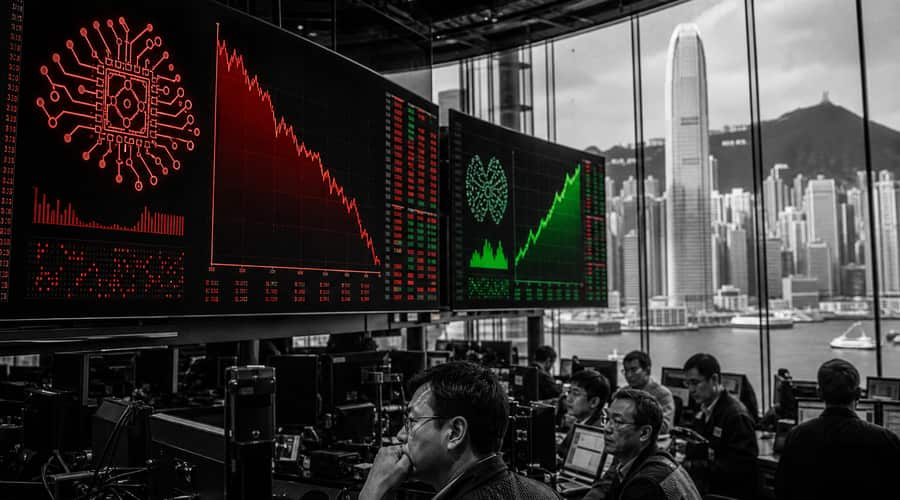
As the International Energy Agency recently noted, China accounted for an overwhelming share of rare earth magnet production in 2024, with its position in permanent magnets especially hard for other countries to replace quickly. That is why governments are not treating this as a normal commodities issue. The concern is not just price. It is whether a licensing decision in one country can slow factories, defense suppliers or AI infrastructure projects somewhere else.
What India gets from the shift
For New Delhi, the upside is clear. Critical minerals give India a way to deepen its technology relationship with the United States without relying only on chip fabrication announcements or software talent. The country wants a larger role in electronics, semiconductors and advanced manufacturing. Rare earth cooperation fits neatly into that ambition because it connects upstream resources with downstream industrial policy.
This also gives Indian mining and materials startups a more serious market signal. A founder working on mineral analytics, waste recovery, separation chemistry or magnet recycling now has a stronger geopolitical argument in front of investors. These are not glamorous businesses in the usual startup sense. They involve permits, plants, chemistry, patient capital and environmental scrutiny. But the market has changed. Strategic supply chains can make hard industrial companies more attractive than they looked a few years ago.
The details still matter. Reports on Tuesday did not provide a public list of specific minerals covered or projected volumes, which means the agreement should be seen as a framework rather than a supply guarantee. That distinction is important. A framework can open doors, but factories need contracts, technical standards, offtake agreements and predictable output. Until those arrive, the pact is best read as direction, not delivery.
Washington has already been building critical minerals partnerships with allies and resource-rich countries including Australia and Canada. India now enters that same logic with a different advantage. It is not only a resource holder. It is also a large manufacturing market, a technology services base and a country trying to position itself as a China-plus-one destination for global supply chains.
For AI companies, this may feel distant from model launches and GPU shortages. It is not. The next phase of AI infrastructure will depend on power equipment, servers, cooling systems, storage and semiconductor packaging as much as on frontier chips. Any material that affects those systems becomes part of the AI stack, even if it never appears in a product demo.
The practical takeaway is simple. The rare earth pact gives India a chance to move up the critical minerals value chain, but it will only matter if policy turns into processing capacity. The next things to watch are project financing, private sector participation, environmental clearances and the first serious offtake deals between Indian suppliers and U.S.-linked manufacturers. That is where this agreement either becomes industrial strategy or stays diplomatic paperwork.
Also read: SpaceX is asking public investors to accept Musk's rule • China's public AI optimism is becoming a strategic advantage • GSR Ventures is testing investor demand with a new $350 million fund