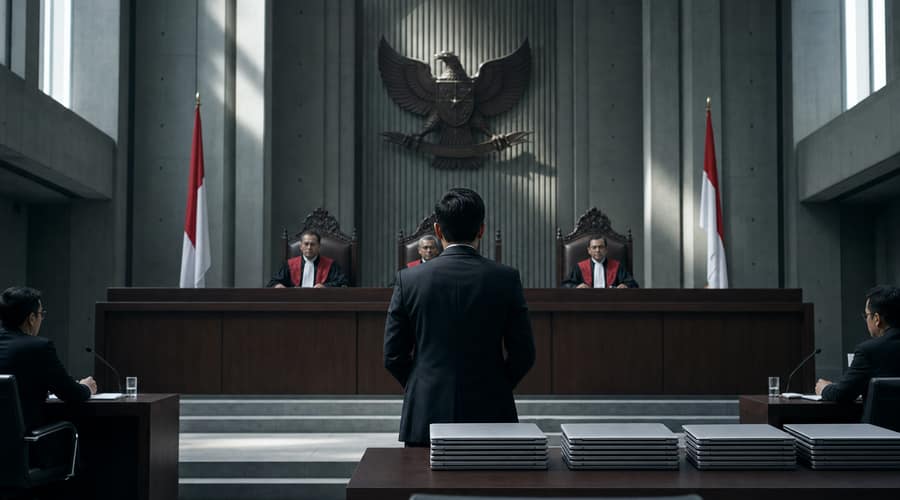
A Jakarta court has sentenced Nadiem Makarim to 10 years in prison over Indonesia's Chromebook school laptop program, turning one of the country's best-known startup stories into a hard test of public power, procurement and trust.
The verdict is current, and it is not a small one. As the Financial Times reported on June 30, 2026, the Central Jakarta District Court found Nadiem Makarim guilty of graft tied to the Ministry of Education's purchase of Chromebook laptops for schools and gave him 10 years in prison, less than the 18 years prosecutors had requested.
If you follow Southeast Asia's startup scene, the name matters. Makarim co-founded Gojek in 2010, helped turn it from a motorcycle taxi booking service into a regional super app, and left the company when Joko Widodo brought him into government in 2019. He was 35 when he became education minister. That appointment was sold as a bet on a new kind of Indonesian public official: younger, tech fluent, impatient with old bureaucracy.
Now the same biography sits inside a corruption judgment. That is why the case has landed well beyond Jakarta's legal circles.
According to the Associated Press, prosecutors accused Makarim of steering a school laptop procurement program toward Google's Chromebooks despite internal concerns that the devices were poorly suited to areas with weak internet access. The program was part of Indonesia's push to digitize schools during the COVID-era disruption to education, when the need for remote learning tools was real and urgent. Prosecutors alleged the decision caused state losses and tied their argument to Google's investment in PT Aplikasi Karya Anak Bangsa, Gojek's parent company before the GoTo merger.
Makarim has denied wrongdoing. His defense has argued that he divested from Gojek before joining the cabinet, did not profit from the laptop purchases and was not directly involved in procurement decisions. In earlier testimony reported by AP, former Google executives also challenged the prosecution's claim that Google's investment in GoTo was connected to the Chromebook purchases. That part is important. The court has convicted him, but the public argument around the case is still about whether this was corruption, bad procurement, political overreach, or some uncomfortable mixture of all three.
Look, procurement at this scale is exactly where governments get into trouble. The wider Chromebook investigation has been tied to a nearly IDR 10 trillion school digitalization program, and Indonesian investigators previously alleged losses in the trillions of rupiah. When a ministry buys devices for thousands of schools under pandemic pressure, every weak specification, vendor preference and rushed internal memo becomes expensive. A laptop program is not glamorous. It is cables, classrooms, invoices and operating systems. That is where the money goes.
The Google angle makes the case sharper for business readers. Gojek became part of GoTo, which listed on the Indonesia Stock Exchange in 2022 after the Gojek-Tokopedia merger. Google was among the global investors that had backed the Indonesian tech ecosystem. When prosecutors put those relationships beside a government Chromebook program, they were asking the court to treat the founder's old corporate world as relevant to his later public decisions. You do not have to accept every part of that theory to see why it matters. Startup founders who enter government carry reputations, networks and old cap tables with them. Divesting stock does not erase the political suspicion, even when it may erase the formal financial interest.
That is the uncomfortable lesson here. Makarim's defenders see a dangerous precedent for technocrats and entrepreneurs who might otherwise enter public service. His critics see a powerful former minister being held accountable for a procurement choice that prosecutors said damaged the state. Both readings can live in the same case, but the conviction gives one of them the force of law for now.
For President Prabowo Subianto's administration, the sentence also carries a signal. Indonesia has been trying to show investors that it can police graft without turning law enforcement into a political weapon. That balance is hard. The Financial Times noted that the case has raised concern among foreign investors about legal certainty in Southeast Asia's largest economy. They are right to watch it. Capital can live with tough rules. It has a harder time with rules that appear to move after the fact.
The appeal will decide the next stage. Makarim's lawyers now have to attack both the legal finding and the story the prosecution built around Google, Gojek and the ministry's choice of Chromebooks. The prosecution got less than it asked for, but it still got a decade-long sentence against one of Indonesia's most recognizable technology founders. That is enough to change the way every founder in the region thinks about crossing from business into government.
Also read: Ferrari and BMW are ditching copper wiring, and the implications run well beyond the factory floor • Meta secretly sent fake teen accounts to flood rivals' chatbots with thousands of crisis prompts • South Korea is treating nuclear construction speed as an AI infrastructure problem and it's right