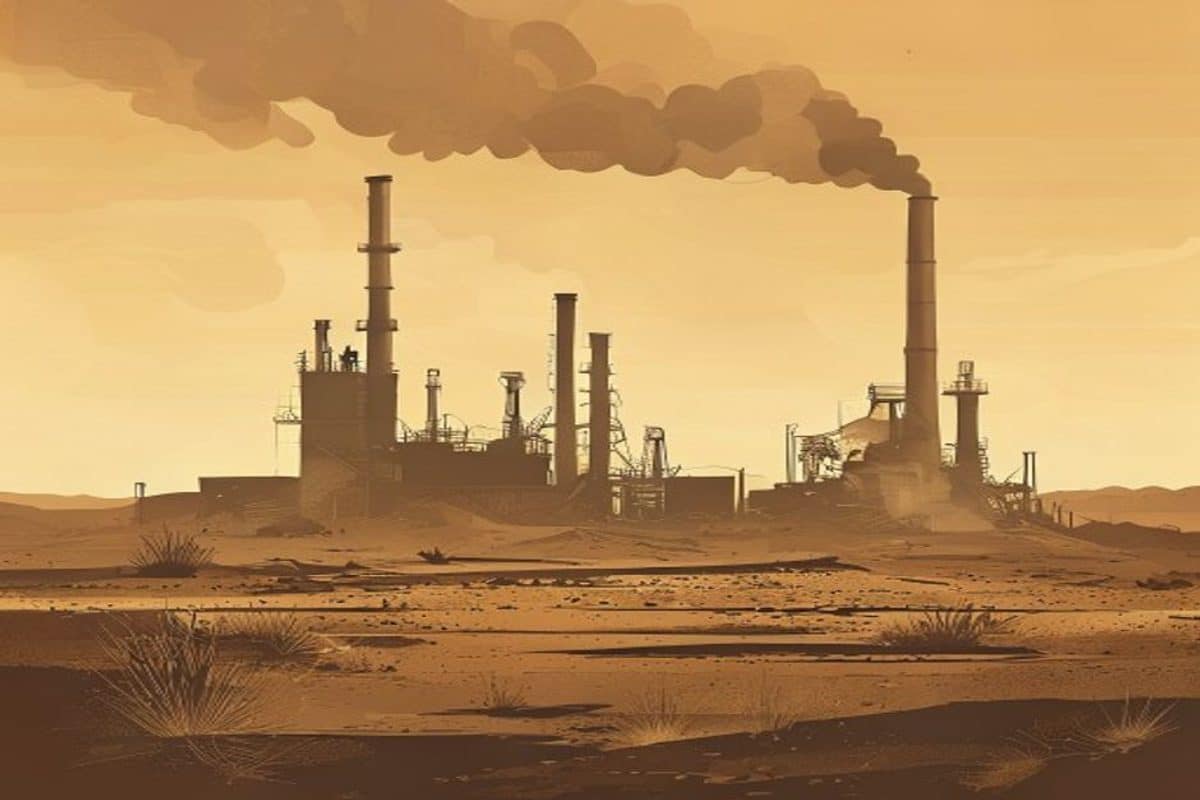
Iran's central bank has put a number on the devastation: up to 12 years to rebuild, with inflation at 180% and the rial in freefall, as collapsed peace talks in Islamabad push the conflict toward a prolonged economic stalemate with global consequences.
The Islamic Republic's central bank does not typically traffic in existential warnings, but on April 13 it issued one. Total war damages are estimated at roughly $500 billion, the rial has sunk to 1.58 million per US dollar, and the institution responsible for managing Iran's monetary policy is now openly questioning whether the government can meet public sector payrolls. That is the economic landscape confronting Tehran as it sends representatives to Islamabad for negotiations that, as of this writing, have already broken down without a deal.
The 12-year reconstruction timeline is not an abstraction. The International Energy Agency reports that more than 80 energy sites across the Middle East have sustained hits, with over a third suffering severe damage. Iranian oil and gas infrastructure is among the hardest hit, and analysts say it will take months just to restore basic flow once the security situation stabilizes, let alone years to rebuild refining and export capacity to pre-war levels. The World Bank is already warning of permanent scarring to Iran's productive capacity, a judgment that forecloses any quick-recovery scenario regardless of when hostilities end.
The collapse of the Islamabad talks has hardened the U.S. posture considerably. Washington confirmed it has begun a blockade of Iranian ports and is tightening its cordon around the Strait of Hormuz. Vice President JD Vance framed the next move as Iran's to make, asserting the U.S. holds the stronger hand. Whether that confidence is warranted depends heavily on how much economic pain Tehran's government can absorb before its domestic position becomes untenable.
Iran is simultaneously demanding war reparations from five Gulf Arab states, accusing them of enabling U.S. and Israeli strikes by intercepting roughly 83% of Iran's retaliatory missiles and drones before they could reach Israeli territory. Those states have rejected the demands, and their rejection matters strategically: they are central to the U.S. containment architecture in the region, which means Tehran's reparations push is less a serious negotiating position than a signal of how cornered the regime feels.
The Price the World Is Paying
Global oil prices have climbed back above $100 per barrel, driven by the blockade and the supply disruption from damaged infrastructure. The IEA has signaled it is prepared to release strategic reserves, though that offers limited relief against a physical supply squeeze of this magnitude. IMF Managing Director Kristalina Georgieva warned as recently as April 9 that the conflict will permanently reduce global economic output regardless of how it ends, and the fund is bracing for up to $50 billion in emergency support requests from affected economies.
The energy shock is moving through Western markets with particular force. The European Union is recording inflation above 3.2%, with officials warning of stagflation risk as energy costs push up prices while growth stalls. In the United States, the March inflation reading came in at 3.3%, driven almost entirely by the Hormuz-related energy spike rather than domestic demand pressures. That distinction matters for central bank policy, but it does not make the number any easier to absorb politically.
What this situation is now testing is the durability of economic pressure as a strategic instrument. The U.S. is betting the blockade accelerates a deal; Tehran is betting it can outlast the squeeze long enough to find a diplomatic off-ramp that does not look like capitulation. For the global economy, neither outcome arrives fast enough to prevent the kind of persistent inflationary drag the IMF is warning about. Oil above $100 is a tax on growth, and right now there is no obvious mechanism to bring it down. The number to watch is not the negotiating room in Islamabad, but the point at which $100 oil begins repricing recession risk in European and Asian markets.
Also read: Trump's nuclear bomb analogy lands at the worst possible moment as the Iran war he escalated drives inflation to a two-year high • Iran's Hormuz Gambit Rewrote the Rules of Economic Warfare and Sent Oil Markets Into Freefall • The Middle East war is turning the IMF and World Bank's spring meetings into a global crisis summit