
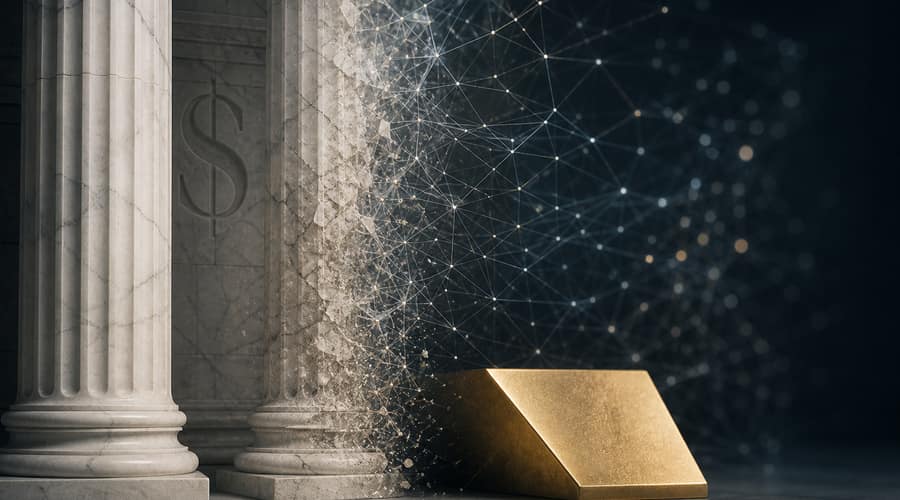
Kevin Warsh's confirmation gives crypto markets a Fed chair who is more familiar with digital assets, but the real story is still rates, liquidity and confidence in the dollar.
Kevin Warsh is officially moving into the most important monetary policy job in the world, and crypto traders are already trying to turn the appointment into a simple bullish signal. That is tempting. It is also too easy.
According to AP, the Senate confirmed Warsh, 56, as Federal Reserve chair on Wednesday in a 54-45 vote, putting the former Fed governor in position to succeed Jerome Powell when Powell's chair term ends on May 15. The Senate had confirmed Warsh to a new 14-year term on the Fed Board a day earlier, clearing the first procedural hurdle before the chair vote.
For Bitcoin and the wider digital asset market, the headline is not that a pro-crypto central banker has arrived to open the gates. The more useful reading is that the Fed will now be led by someone whose financial disclosures and past comments suggest more comfort with private digital finance, artificial intelligence and market experimentation than Powell ever showed in public.
That distinction matters. The Federal Reserve does not approve spot Bitcoin ETFs, write stablecoin laws or decide whether tokenized securities can trade around the clock. But it does set the price of money. It supervises banks. It shapes dollar liquidity. And in crypto, liquidity is often the difference between a serious rally and another false start.
Warsh's recent disclosure forms became a story of their own because they showed a large and complicated portfolio with exposure to technology, private markets, crypto-linked ventures and AI-related assets. Reports on the filing noted holdings tied to names such as SpaceX and Polymarket, along with crypto and fintech interests held through investment vehicles. That does not make Warsh a Bitcoin evangelist. It does mean he is not arriving at the Fed as someone who sees digital assets only as a compliance problem.
That is a different posture from the Powell era, when the central bank often sounded cautious, sometimes skeptical, and consistently focused on bank safety, consumer risk and the dangers of a central bank digital currency debate getting ahead of Congress. Warsh has also been reported as opposing a U.S. central bank digital dollar, a position that fits neatly with the current political mood in Washington and with crypto industry arguments that private stablecoins should do the work instead.
The practical question is whether that openness changes the operating environment for stablecoins, tokenized deposits and bank custody of digital assets. A Warsh Fed could be more willing to let regulated banks experiment, provided balance sheets, reserves and consumer protections are clear. That would not be a blank check. It would be a shift from treating digital assets as a side issue to treating them as part of the financial plumbing that already exists.
Stablecoins sit at the center of that shift. If dollar-backed tokens keep growing, the Fed will care about the reserves behind them, the banks that hold those reserves and the way stablecoin demand feeds into Treasury markets. The crypto industry may hear innovation. The Fed will hear payments, liquidity and systemic risk.
Rates Still Matter More Than Labels
The market reaction will ultimately depend less on Warsh's personal familiarity with crypto and more on whether investors believe he can deliver easier financial conditions without reigniting inflation. Bitcoin tends to perform best when liquidity is expanding, real rates are falling and investors are willing to move out on the risk curve. If Warsh signals faster rate cuts, crypto will listen.
But this is where the story becomes harder. Warsh has a reputation as a serious inflation critic and was skeptical of aggressive Fed asset purchases during his earlier time as a governor from 2006 to 2011. He is taking over after years of above-target inflation, with Powell's final meeting leaving rates unchanged and showing unusual internal disagreement inside the Fed. That makes a quick pivot less certain than the crypto market may want.
President Donald Trump has pressed for lower rates, and Warsh will face immediate questions about whether he can defend the Fed's independence while also changing its tone. If investors decide the central bank is cutting because inflation is genuinely easing, risk assets could benefit. If they decide cuts are political or premature, the dollar could weaken for the wrong reasons and long-term yields could push back.
That is where gold enters the conversation. A Warsh Fed that sounds more open to rate cuts and digital finance may support Bitcoin's hard-money narrative, but it may also strengthen gold's older inflation-hedge case if markets worry about central bank credibility. Bitcoin and gold can both benefit from distrust in fiat money, but they do not always attract the same buyers. Gold still has the institutional habit. Bitcoin has the higher-beta story.
For startups and investors building around tokenized finance, the appointment is more important than a one-day Bitcoin move. A Fed chair who understands the language of digital assets may lower the temperature around bank partnerships, settlement experiments and regulated tokenization. The opportunity is not just another speculative cycle. It is whether more of the financial system can move on-chain without pretending risk has disappeared.
The next signal to watch is not a slogan about crypto. It is Warsh's first policy language on inflation, bank supervision and dollar liquidity. If he can sound open to innovation while staying disciplined on prices, digital assets get a better backdrop. If he cannot, crypto will learn the same lesson every other market eventually learns: the Fed chair matters, but the cycle matters more.
Also read: Banks are trying to narrow the CLARITY Act stablecoin deal • UK Parliament probes Nigel Farage's £5m crypto gift • MARA is betting its future on power for AI data centers