MARA is trying to turn a bitcoin mining balance sheet into an AI infrastructure platform. The bet is simple: in the next phase of compute, power may be worth more than mining machines.
MARA Holdings is no longer asking investors to value it only as a bitcoin miner. After a brutal first quarter and a $1.5 billion agreement to buy Long Ridge Energy and Power, the company is making a much larger claim: the scarce asset in the AI boom is not just chips, it is controlled electricity in the right place.
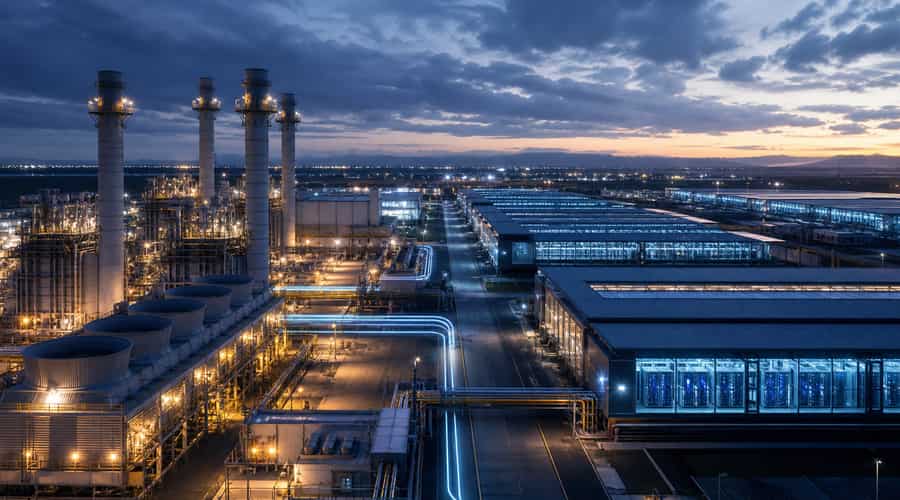
That is why the Long Ridge deal matters. MARA agreed on April 30 to acquire the Hannibal, Ohio, power and gas platform from FTAI Infrastructure for about $1.5 billion, including assumed debt. The asset includes a combined-cycle gas plant currently authorized to sell 485 megawatts, expected to reach 505 megawatts of nameplate capacity in the second half of 2026, plus more than 1,600 acres with water, fiber, fuel access and grid interconnection.
In its April 30 filing, MARA said the site can support more than 1 gigawatt of total potential capacity and would increase the company's owned and operated power capacity by roughly 65%. That is the strategic heart of the transaction. A bitcoin miner with low-cost power can mine bitcoin. A power owner with land and interconnection can sell into a much wider market, including AI, high-performance computing, critical IT loads and wholesale power.
For years, bitcoin miners were judged on hash rate, machine efficiency and the price of bitcoin. Those still matter. But the AI data center boom has changed the conversation because large customers now need enormous quantities of reliable power, and they need it quickly. New data center projects can get stuck waiting on permitting, transmission upgrades, utility queues and local opposition. Sites that already have generation, land and grid access are becoming difficult to replicate.
MARA is trying to sit on that bottleneck. The company already operates a data center at the Long Ridge site, and it says the campus has drawn inbound interest from potential investment-grade AI and critical IT tenants. It expects construction on an initial AI and critical IT buildout to begin in the first half of 2027, with initial capacity targeted for service in mid-2028. That is not immediate revenue, but it is a clearer path than simply hoping bitcoin prices rise faster than mining difficulty.
The economics explain the pivot. Long Ridge is expected to add about $144 million of annualized adjusted EBITDA based on second-half 2025 performance, with all-in operating costs below $15 per megawatt-hour. MARA also says the site has a line of sight to as much as 600 gross megawatts of AI and critical IT load over time. If those numbers translate into signed leases, the company could start to look less like a miner and more like an energy-backed digital infrastructure owner.
The balance sheet tells a harder story
The timing is not comfortable. MARA reported first-quarter revenue of $174.6 million on May 11, down from $213.9 million a year earlier. Its net loss widened to about $1.3 billion, with roughly $1.0 billion tied to unrealized mark-to-market losses on digital assets after bitcoin fell during the quarter. Shares slipped after the earnings release because the AI story does not erase the pressure in the core business.
Still, the quarter also showed how MARA plans to fund the transition. The company sold about $1.5 billion of bitcoin during the period, using the proceeds to retire more than $1.0 billion of face value from 2030 and 2031 notes and reduce its line of credit by $200 million. It ended the quarter with 35,303 bitcoin, down by 12,228 from the prior year, and said it had not used its at-the-market equity program since the end of 2025.
That matters because the AI pivot is capital intensive. MARA is not simply adding a software product or signing a small hosting contract. It is buying a gas-backed power platform, assuming debt and preparing a multi-year campus buildout. Bitcoin gives the company optionality, but selling reserve assets to fund infrastructure also makes the stock more complicated. Investors have to judge both the value of the bitcoin remaining and the probability that MARA can turn megawatts into durable data center cash flow.
The company is also changing internally. On the earnings call, management said it had realigned the business toward AI and critical IT and reduced its workforce by 15%, with expected annualized savings of about $12 million. That is a practical admission. The organization built to scale bitcoin mining is not necessarily the same organization needed to develop, lease and operate infrastructure for large enterprise tenants.
The risk is execution, not just demand
Demand for AI infrastructure is not the weak part of the argument. The harder question is whether MARA can deliver a gas-backed AI campus on time, on budget and through regulatory review. The Long Ridge transaction is expected to close in the second half of 2026, subject to approvals including Federal Energy Regulatory Commission clearance and other conditions. Any delay pushes the AI timeline further out.
There is also a public policy angle that should not be ignored. Gas generation can offer reliability that data center customers want, but it will face scrutiny as AI power demand becomes a political issue. MARA says it does not expect to reduce Long Ridge's current supply of power into the PJM grid and plans to pair behind-the-meter compute demand with incremental generation over time. That will be an important claim to prove, especially if local consumers and regulators worry that data centers are competing with the grid.
The bigger market lesson is already visible. Bitcoin miners spent years hunting for cheap power. Now that same power, along with land and interconnection, may be the more valuable asset. MARA's Long Ridge deal is a test of whether miners can move up the stack before mining economics squeeze them again.
If MARA can convert Hannibal into a credible AI campus, the company may get credit for owning scarce infrastructure rather than simply running machines against bitcoin difficulty. If it cannot, investors will be left with a leveraged miner, a gas plant and a long construction story. The next thing to watch is not another hash rate update. It is whether real AI tenants sign on the dotted line.
Also read: Origin Lab raises $8M to make game data useful for AI world models • Fractile raises $220 million as inference chips become the next AI fight • Adaption launches AutoScientist to make model training more adaptive