A Mayo Clinic AI model has shown it can spot pancreatic cancer signals on CT scans long before doctors can see a tumor. The result is early, but it points to one of the clearest commercial uses for vertical AI in healthcare.
Pancreatic cancer is exactly the kind of problem AI companies say they are built to solve: rare enough to be missed, deadly enough that time matters, and buried inside medical images that already exist in hospital systems. Mayo Clinic's new model, REDMOD, now gives that argument a sharper edge.
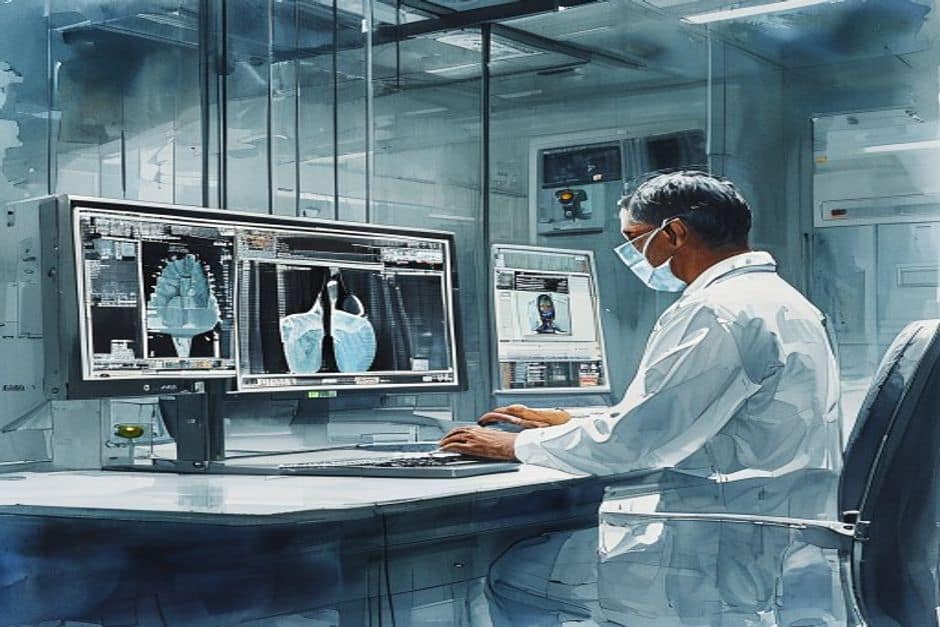
The Radiomics-based Early Detection Model was designed to find subtle tissue patterns in routine abdominal CT scans before a visible tumor appears. In testing, it identified signs of pancreatic ductal adenocarcinoma, the most common form of pancreatic cancer, up to three years before clinical diagnosis. The median lead time was about 16 months, which is not a small gain in a disease where many patients are diagnosed after the cancer has already spread.
As Mayo Clinic and the journal Gut recently reported, REDMOD was trained on a multi-institutional cohort of 969 CT scans, including 156 pre-diagnostic scans and 813 controls. It was then tested on an independent set of 493 scans, with 63 pre-diagnostic cases and 430 controls. The validation was retrospective, meaning researchers looked back at scans that had already been read as normal and then checked whether the model could detect patterns linked to cancer that appeared later.
The results were strong enough to get attention. REDMOD detected 73% of pre-diagnostic cancers, compared with 39% for experienced radiologists reviewing the same scans. For cases more than two years before diagnosis, the gap was wider: 68% for the model versus 23% for radiologists. That is the promise of AI in diagnostics in one sentence. It is not simply faster reading. It is pattern recognition at a level that may sit outside ordinary human perception.
But the caveat matters just as much. The model correctly identified disease-free patients 81.1% of the time in the main independent test set, while radiologists reached 92.2%. Put differently, REDMOD's false-positive rate was about 18.9% in that setting, higher than the physicians it was compared with. External specificity testing was also reported across independent cohorts of 539 patients and an 80-patient NIH-PCT dataset, with specificity of just over 81% and 87.5%, respectively. That is promising, but in clinical practice false positives are not abstract errors. They mean follow-up imaging, anxiety, specialist referrals, biopsies, costs and liability.
For startups, this is why cancer diagnostics remains one of the most credible paths for vertical AI. The buyer has a painful problem. The workflow is highly specialized. The data is structured enough to train useful models, and the economic value of earlier detection can be explained in plain language to providers, insurers and patients.
That does not mean the product path is easy. A benchmark result is not a hospital deployment. To become useful, a tool like REDMOD has to fit into radiology systems, integrate with electronic health records, route alerts to the right clinician, and produce explanations clear enough for physicians to trust. It also has to avoid creating a pile of uncertain findings that nobody has time to manage.
This is where the market has already offered some lessons. PathAI helped show that diagnostic AI companies can build around narrow clinical expertise rather than general-purpose automation. AI triage companies such as Viz.ai and Aidoc have pushed a similar idea in urgent imaging workflows, where the value is not replacing doctors but moving the right case to the front of the line. REDMOD sits in a different lane because pancreatic cancer screening is not broadly performed for the general population. The likely first use is in higher-risk groups, including patients with family history, new-onset diabetes, unexplained weight loss or genetic risk markers.
That narrower market may actually help. General screening for a relatively uncommon cancer is a difficult commercial and clinical argument. Targeted surveillance is more realistic. If an AI tool can run quietly on CT scans already being taken for other reasons, then it creates a new layer of clinical intelligence without asking the health system to invent an entirely new screening program.
The Gap Between Science And Product
The next test is prospective validation. Retrospective studies can prove that a signal existed in old data, but hospitals need to know what happens when a model is used on real patients in real time. Does it improve survival? Does it lead to more curative surgeries? Does it produce too many unnecessary workups? Does performance hold across more ethnically diverse populations, scanner types and community hospital settings?
Regulators will also care about how the model is used. A tool that flags elevated risk for physician review is a different proposition from software that effectively makes a diagnostic call. Insurers will ask whether earlier detection changes outcomes enough to justify reimbursement. Providers will ask who is responsible when the model misses a cancer or flags a patient who turns out to be healthy.
That is the uncomfortable part of medical AI. The most impressive demo is usually the beginning of the work, not the end. The real product is not the algorithm. It is the clinical pathway wrapped around it.
Still, REDMOD is an important signal for the sector. AI is most useful when it expands what trained professionals can see, not when it pretends medicine is just another automation problem. If prospective trials confirm these results, pancreatic cancer could become one of the strongest examples of AI moving from clever retrospective performance to a deployable diagnostic tool. For investors and founders, the message is simple: the opportunity is real, but the winners will be the companies that understand hospitals as deeply as they understand models.
Also read: AI has pushed the exoplanet search into a much larger data era • OpenAI image users are testing where the new limits now sit • AI is making the open web more expensive to remember