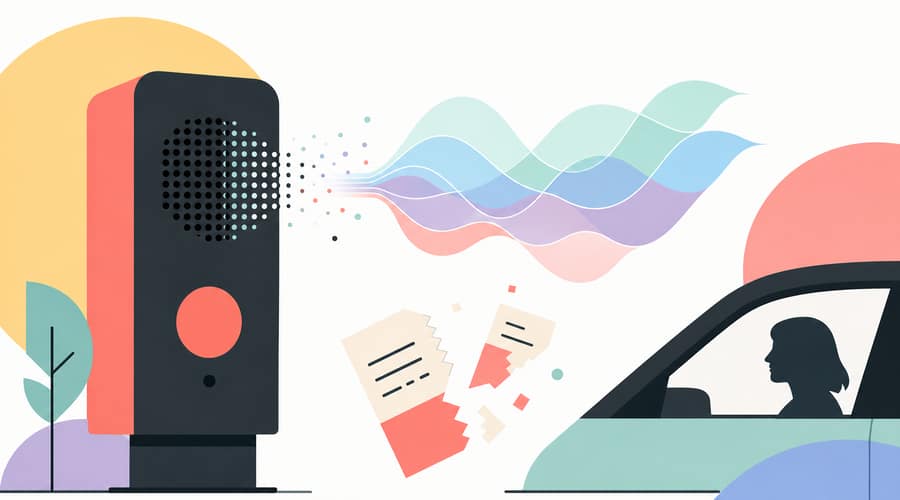
McDonald’s is testing drive-thru voice AI again, but this time the important story is restraint. After its IBM pilot stumbled, the company appears to know that speed matters only if customers trust the speaker.
McDonald’s is back at the AI drive-thru window, and the return says a lot about where enterprise AI really stands. The company is not blasting voice bots across its U.S. system. It is testing voice-activated order taking in five drive-thrus with Google, a much smaller move than the customer backlash around the old IBM trial might lead people to expect.
That distinction matters. A restaurant drive-thru is not a demo stage. It is noisy, rushed, local and unforgiving. Customers change their minds, speak over passengers, ask for substitutions, use regional slang and expect the order to be right the first time. If the system fails, the mistake is not abstract. It is in the bag.
As Restaurant Business reported this week, the new test is part of a broader McDonald’s Next strategy unveiled at the company’s semi-annual convention in Las Vegas. The voice assistant is reportedly nicknamed Archy and is being tested with Google as McDonald’s folds AI into a wider set of restaurant technology upgrades.
McDonald’s has reason to move carefully. The company tested automated order taking with IBM starting in 2021 after earlier technology work that included McD Tech Labs, built from assets such as Apprente. That test reached more than 100 restaurants, but it became known less for operational savings than for viral mistakes.
Customers posted videos of the system misunderstanding orders, adding unwanted items and apparently picking up words from nearby cars. The Associated Press reported in June 2024 that McDonald’s decided to end the IBM partnership and shut the technology off in test restaurants no later than July 26, 2024. The company still said then that voice ordering would be part of its future.
That is the difficult part for McDonald’s. The idea did not go away because the first version disappointed customers. If anything, the business case became more tempting. Drive-thrus capture a large share of quick-service sales, labor remains expensive, and a reliable bot would never forget to suggest fries, a drink or a promotion.
But reliability is the whole question. A pilot can survive with humans watching closely in the background. A national rollout cannot depend on constant rescue. The difference between 90 percent accuracy and true restaurant readiness is the difference between a clever system and a damaged lunch rush.
Google gives McDonald’s a larger AI base
The Google relationship is broader than a speaker-box experiment. McDonald’s and Google Cloud announced a multi-year global partnership in December 2023 to connect cloud technology across thousands of restaurants, using hardware, data and AI tools to support operations. Google Distributed Cloud was expected to bring computing into restaurants, giving McDonald’s more local processing power for equipment insights, restaurant software and AI use cases.
That makes this test different from a standalone chatbot. McDonald’s is trying to build an operating layer that can touch kiosks, loyalty, equipment maintenance, crew workflows and customer ordering. The company has more than 40,000 locations globally, and roughly 95 percent are owned and operated by independent local business owners. Any system that reaches scale has to work for franchisees, not just corporate technology teams.
For franchisees, the math is practical. Voice AI has to reduce pressure on workers, increase throughput or raise the average check without creating more remakes, refunds and angry customers at the second window. If a human employee must constantly intervene, the savings become harder to prove. If the bot annoys customers, the brand pays for that in a different way.
This is why the backlash risk is bigger than a few awkward videos. McDonald’s is also trying to improve hospitality, and the drive-thru greeting is one of the few human moments left in a highly optimized transaction. Replacing that moment with software may be efficient, but it changes how the brand feels. Customers notice when a company treats service as a cost to remove.
McDonald’s is not alone. Wendy’s has worked with Google Cloud on FreshAI, while Yum Brands has pushed AI across Taco Bell, KFC and Pizza Hut through work with Nvidia. Taco Bell already showed how quickly customers can stress-test these systems when reports surfaced of prank and edge-case orders, including one widely cited case involving 18,000 waters.
The lesson is not that restaurants should abandon AI. It is that consumer-facing AI has a higher bar than back-office automation. Predicting equipment failure, checking order accuracy with scales or helping managers forecast staffing can happen quietly. Asking customers to negotiate dinner with a bot is much more exposed.
McDonald’s latest test should be watched less as a novelty and more as a measure of enterprise AI discipline. If Archy can handle real voices, real pressure and real mistakes without making the customer feel like unpaid quality assurance, McDonald’s may have a path back to broader deployment. If not, the company will have confirmed a lesson many operators are learning the hard way: AI at scale is only valuable when the boring parts work.
Also read: Google turns to SpaceX for the compute it cannot build fast enough • Utah residents take Kevin O'Leary's data center fight to court • AI is testing founders instead of banning hiring