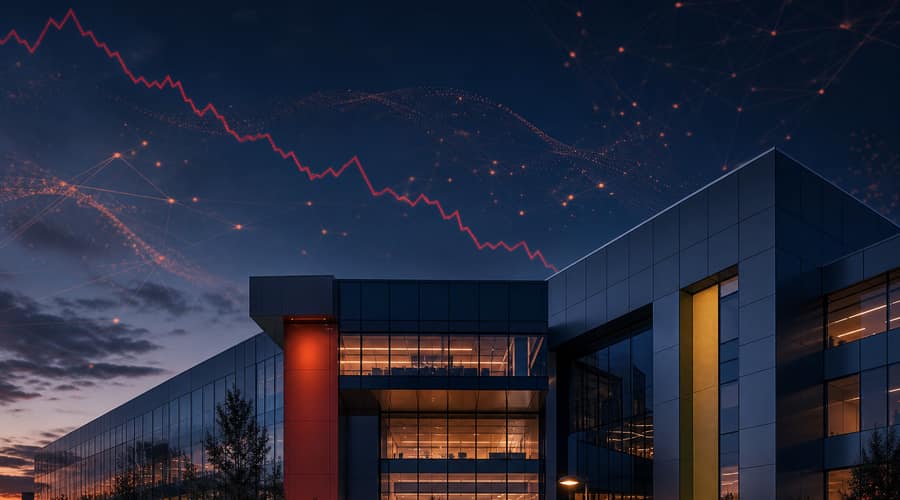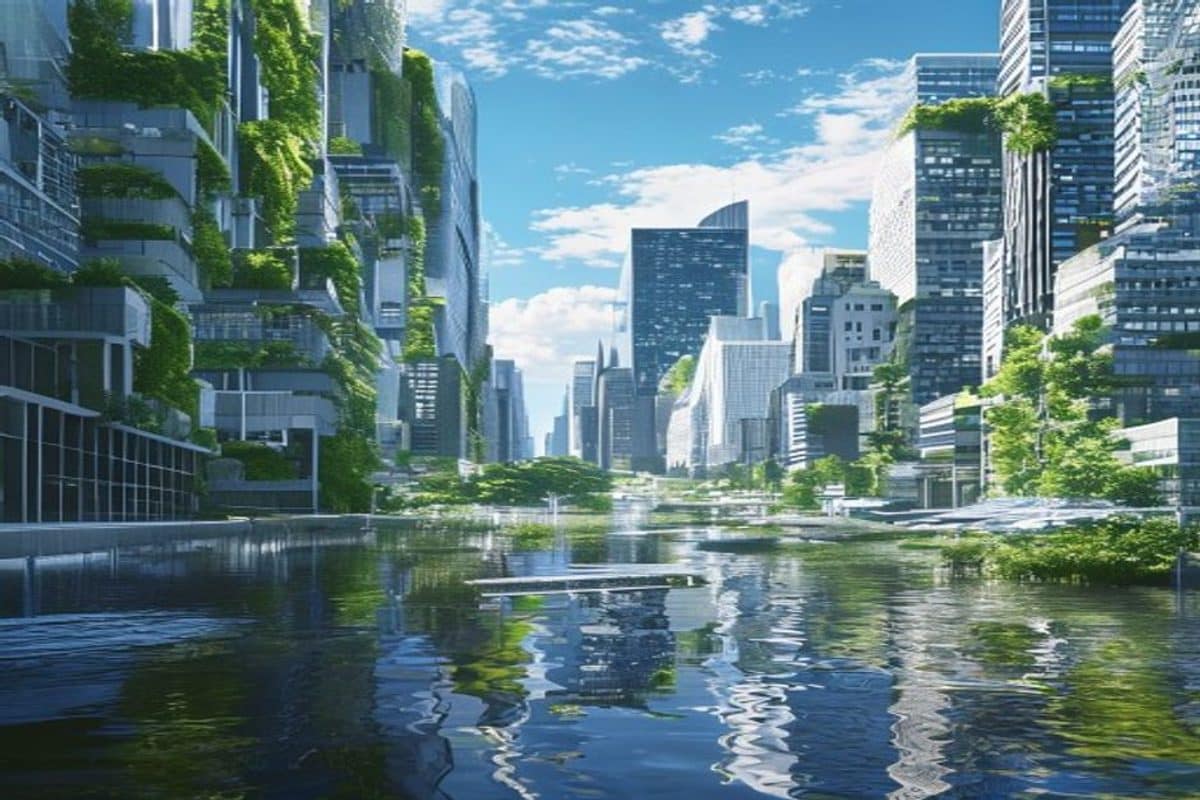
A viral AI image trend is turning ChatGPT into an urban oracle, with millions prompting GPT-4o to visualize New York City and Los Angeles a century from now , and the results say as much about our anxieties as they do about the technology.
The images are everywhere right now. Scroll Reddit or X on any given afternoon this week and you will find them: Lower Manhattan half-submerged beneath a glassy sea, its remaining towers draped in cascading vertical gardens. Venice Beach reimagined as a floating district of solar-paneled platforms. Hyperloop tubes threading through a smog-free LA basin where the 405 freeway used to be. Users are feeding prompts into ChatGPT's multimodal interface , specifically the GPT-4o and DALL-E 3 integration that OpenAI rolled out broadly across 2024 and 2025 , and asking a simple question: what do our biggest cities look like in 100 years? The answers are going viral, and the conversation they're sparking is bigger than any single image.
What's striking is the consistency of the aesthetic that keeps emerging. Across thousands of independent prompts from users with no coordination between them, the AI repeatedly lands on what the design world calls Solarpunk: dense, biodiverse, climate-adapted urbanism where green infrastructure and technology coexist rather than compete. These aren't dystopian wastelands. They're aggressively utopian, which itself tells you something about the cultural mood being fed into the machine. The training data reflects decades of climate anxiety filtered through architectural optimism, and GPT-4o is essentially serving that back to us at scale.
No product launch triggered this. No marketing campaign seeded it. The trend emerged organically, which makes it one of the more honest stress tests multimodal AI has faced in public. ChatGPT Plus subscribers discovered that the image generation embedded directly in the chat interface handles complex geographical and speculative prompts remarkably well , better, many users argue, than asking it to write a short story about the same scenario. That gap between visual and textual fluency is worth noting. For a large portion of the public, seeing is more convincing than reading, and OpenAI's tool is now very good at showing.
The competitive commentary has been sharp. Threads comparing GPT-4o's city renders against Midjourney's equivalents have drawn serious engagement, with users debating photorealism, geographical accuracy, and how faithfully each model respects the actual topography of Lower Manhattan versus a generic skyline. Midjourney still earns praise for raw aesthetic quality, but the friction of using a separate tool matters. ChatGPT's advantage here is distribution: it sits inside an interface hundreds of millions of people already use daily, and the bar to generating an image is a single conversational prompt.
What the algorithm reveals about market appetite
The downstream implications for technology investment are worth watching. When millions of people independently conjure the same vision of climate-adapted cities , vertical farms, renewable grids, elevated transit, managed coastlines , it reinforces and arguably accelerates public appetite for exactly those solutions. Smart city infrastructure, green construction technology, and coastal resilience startups have an unusual marketing asset right now: a viral cultural moment that is making their core thesis feel inevitable rather than speculative. Venture dollars follow narrative momentum, and this trend is generating a lot of it without anyone in the sector spending a cent.
There is a harder question sitting underneath the spectacle, though. When the public's vision of the future is increasingly shaped by algorithmic synthesis rather than urban planners, climate scientists, or civic institutions, the line between informed imagination and confident hallucination gets blurry. GPT-4o does not know what New York will look like in 2126. Neither does anyone else. But the images carry a visual authority that prose speculation never quite achieves, and that authority is now circulating at a scale no think tank report could match.
The trend will fade, as trends do. But the behavior it has normalized , using generative AI as a first-resort tool for visualizing complex, long-horizon scenarios , will not. For investors tracking the visual internet economy, the more interesting signal is not which city looked cooler submerged. It is that text-based interfaces just proved, at massive public scale, that image generation is now the stickiest feature they have.
Also read: Meta is harvesting mouse movements and keystrokes from 25,000 engineers to train AI that could replace them • OpenAI's Images 2 Model cracks the two problems that have haunted AI image generation for years • How the US government is quietly building a mass surveillance machine out of your apps, your data brokers, and AI