Monako Glass is trying to turn smart glasses into a command layer for AI coding agents. The more important question is whether developers want that workflow outside the laptop at all.
Smart glasses have spent years looking for a job. Monako Glass has picked one: let developers talk to Claude Code, OpenAI Codex, and other agents while the device sits on their face like a light wearable computer.
That is a narrower promise than the usual consumer pitch around smart glasses, and it is probably the reason this launch is getting attention. The product is not being sold as another lifestyle camera or notification screen. It is being presented as a wearable Linux machine for people who already work with AI coding tools and want those agents closer to their normal workflow.
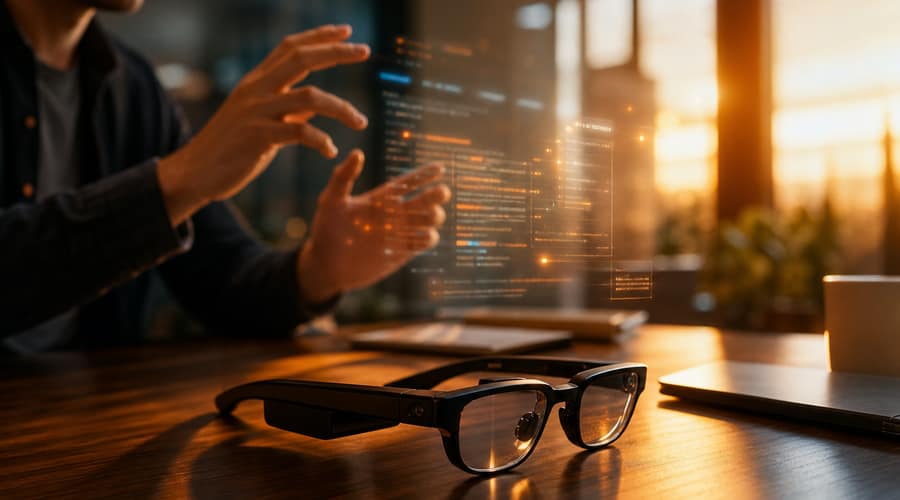
According to Mint's report on the launch, Monako Glass was unveiled by creator Candy Yue in a video posted on X, with the device aimed at developers, researchers, and AI power users. The company says the glasses weigh 48 grams, include a waveguide display, camera, speakers, and a bone-conduction microphone, and run a custom Linux-based operating system called MonoOS.
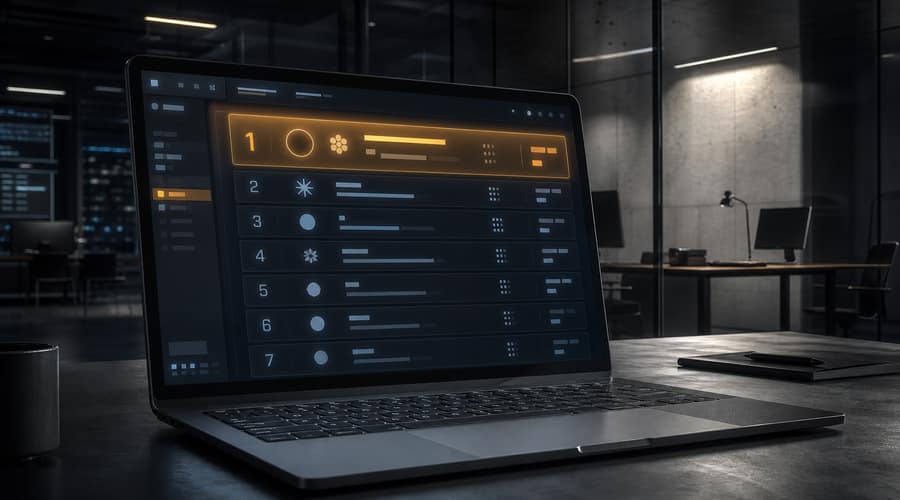
The headline feature is not the hardware alone. It is the agent terminal. Monako's own site says the glasses include connectors for Claude Code, Codex, Unreal Engine, Blender, After Effects, and other tools, turning the device into a front end for technical and creative work. That matters because coding agents are already moving beyond autocomplete. Claude Code can read codebases, make changes across files, run tests, and deliver committed code. OpenAI describes Codex as an agent that helps write, review, and ship code across files and tools.
The old software workflow was built around the screen, the keyboard, and the IDE. AI coding agents have already loosened that structure. A developer can now ask for a bug fix, a refactor, or a prototype in plain language, then supervise the result. Monako is betting that once the work becomes more conversational, the interface can move away from the desk as well.
That is why the microphone matters. Monako says its bone-conduction system captures nasal vibrations rather than ordinary airborne sound, which should help isolate the user's commands in noisy places. If that works in practice, it could solve one of the obvious problems with voice-first development: nobody wants a coding assistant that misunderstands a prompt because a coffee shop is loud.
The gesture system is the other piece. Monako calls it Vision Engine, using a small NPU to support hand-based navigation. In the launch material, the wearer can raise a hand to bring up a menu and use gestures to interact with apps. That does not replace the precision of a keyboard or mouse, but it may be enough for choosing tasks, reviewing status, approving simple actions, or moving between agent sessions.
MonoOS is also worth watching. The company says the operating system uses a Lua application layer, with apps requiring only 200KB to 500KB of RAM, and that agents can generate small apps on the fly without a build step. That sounds ambitious, but the direction is clear. Monako wants the glasses to become a place where tiny, personalized tools can appear quickly for a specific job, then live on the home screen.
The China angle is bigger than the glasses
The launch also shows something interesting about Chinese AI hardware startups. Instead of presenting the product only around domestic models, Monako is highlighting Western coding agents by name. Claude Code and Codex are not side details in the pitch. They are central to why the glasses sound useful.
That strategy makes sense. Hardware startups can move faster if they build around the strongest software platforms already in demand. Developers are familiar with Claude Code, Codex, Cursor, GitHub Copilot, and similar tools. A new wearable does not need to win the model race if it can become a better interface for the agents developers already trust.
But this is also where the product will face real pressure. API access, regional availability, latency, authentication, enterprise controls, and data handling all become more important when a wearable camera and microphone are attached to software repositories. A developer using smart glasses to supervise an agent is not just asking for calendar reminders. They may be exposing source code, screenshots, voice commands, and visual context from a workplace.
That is why Monako will need more than a strong demo. It needs clear answers on what runs locally, what runs in the cloud, what is routed through a Mac or PC, and how the camera is controlled. The product's most credible role may not be as a standalone computer, but as a wearable command layer across local machines, cloud sandboxes, and AI agents.
This is still early. There is a big difference between showing that an agent can generate a small app from a voice prompt and proving that professionals will wear glasses for serious development work. Long sessions, screen readability, battery life, privacy norms, and fatigue will decide whether this is useful or just memorable.
Still, Monako Glass points to the next fight in AI productivity. The question is no longer whether agents can write code. The question is where people will supervise them. If developers start managing work from phones, glasses, and ambient interfaces, the winners may be the companies that make agent oversight feel natural, not the ones that simply add another screen.
Also read: Apex shows investors are moving deeper into the space supply chain • Raspberry Pi shows how far the AI hardware boom has spread • AirTrunk makes India the next big test for AI infrastructure