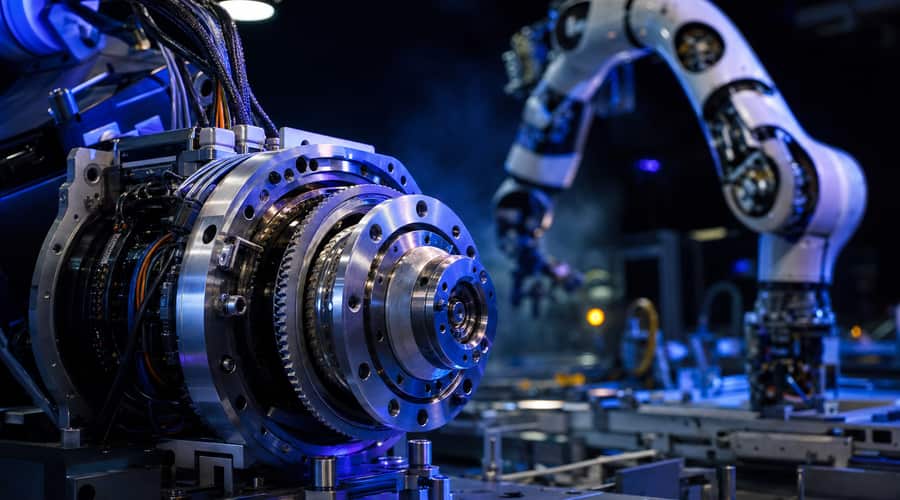
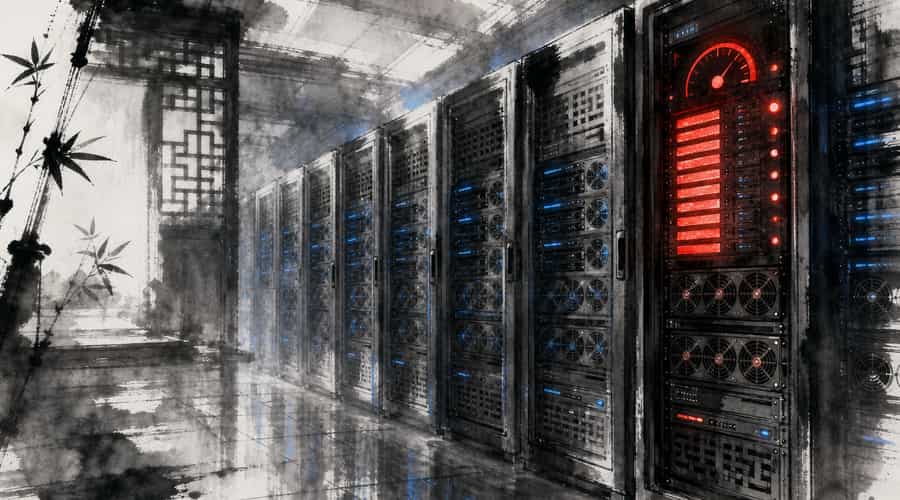
Moonshot AI's Kimi K3 is popular enough to expose the harder truth behind frontier AI: a strong model still isn't much use when the GPUs are already spoken for.
On July 19, Moonshot's Kimi account posted on X that "Kimi K3 has received far more love than we expected, and our GPUs are feeling it." Over the previous 48 hours, the company said demand had pushed close to the limits of its current capacity. New subscriptions stopped. Existing subscribers stayed in. That's not a vague capacity warning. It's a frontier lab saying the bottleneck is physical hardware.
Kimi K3 had only just arrived. Moonshot released the model on July 16 or July 17, depending on the source's time zone, with 2.8 trillion total parameters, a one million token context window and a mixture-of-experts setup that activates 16 of 896 experts per token. Tom's Hardware reported that K3 topped LMArena's Frontend Code Arena with a score of 1,679, ahead of Anthropic's Claude Fable 5 at 1,631. That win is real, but keep it narrow. The same report said K3 still trails Claude Fable 5 and OpenAI's GPT-5.6 Sol on broader measures of overall performance.
The price explains why developers rushed the door anyway. Kimi K3 costs $15 per million output tokens, with cached input as low as 30 cents and uncached input at $3, according to the published Kimi pricing cited by Tom's Hardware and independent access trackers. Anthropic's own Claude Fable 5 page lists $10 per million input tokens and $50 per million output tokens. You don't need a procurement team to see the gap. If you're building UI code all week, the cheaper model that just won the frontend board gets a serious look.
The subscription pause goes further than access. According to KuCoin's summary of Kimi's official announcement, Moonshot is splitting memberships into two products: Kimi Membership for the web app, mobile app and Kimi Work, and Kimi Code Membership for programming workflows. That distinction matters because coding agents can burn through capacity in a way ordinary chat use doesn't. One user asks for a summary. Another lets an agent read a repository, edit files and run tests for half an hour. Those aren't the same workload.
The Benchmark Wasn't the Whole Story
Frankly, the cleanest read on Kimi K3 isn't that China suddenly solved AI and America didn't. That's too neat. The better read is that a Chinese lab has put a very large open-weight model into the part of the market where developers feel pain immediately: speed, coding quality and token cost. Axios reported this weekend that Chinese models now occupy the top five spots by weekly token usage on OpenRouter, a marketplace developers use to route prompts across competing models. Kimi K3 arrived into a market that was already testing cheaper Chinese alternatives.
There is a caveat, and it's not small. Tom's Hardware noted that Kimi K3's full model weights are expected by July 27, so outside researchers still have work to do before the model's broader claims can be treated as settled. Public leaderboards are useful. They aren't a complete audit. If you're choosing a model for production, you still have to test it on your own tasks, your own latency requirements and your own failure cases.
Anthropic's Fable 5 situation shows the other side of the same pressure. Anthropic restored Fable 5 access on July 1 after a June export-control suspension, then kept extending included access for paid plans through July 19, according to its own announcements and support updates reported by BleepingComputer. That wasn't identical to Moonshot's GPU pause. Still, the customer experience rhymes: the strongest models are being managed, rationed, packaged and repriced in real time.
Investors Heard the Message
The market reaction was immediate because Kimi K3 hit an old assumption in a sore place. Business Insider reported that Moonshot's release helped deepen a selloff in semiconductor shares, with the Philadelphia Semiconductor Index dropping 4% and the Nasdaq 100 falling nearly 2%. Investors were asking whether AI infrastructure spending would keep paying off. That's the nerve K3 touched. MarketWatch reported a 1.4% drop in the Nasdaq and framed K3 as the latest Chinese model to rattle the US tech trade.
That doesn't mean Nvidia demand is dead. Don't bother with that simple story. Kimi's own subscription freeze says the opposite: capable models create more inference demand, not less. But it does challenge the idea that only the biggest US labs can turn huge GPU budgets into usable frontier products. Moonshot is based in Beijing, operates under US chip restrictions, and still produced the model now sitting at the top of a major frontend coding leaderboard.
Moonshot also has the balance sheet to keep pushing. Bloomberg reported in May that the company raised about $2 billion in a Meituan-led round valuing it at more than $20 billion, and reported in June that Moonshot was seeking a new round at a valuation as high as $30 billion. Those figures put the subscription freeze in the right context. This isn't a small lab knocked offline by a viral demo. It's one of China's best-funded AI companies finding that demand can outrun even serious money.
That's the tension worth watching. Moonshot has the model, the developer attention and the investor interest. What it doesn't have, at least this week, is enough capacity to let everyone in at once. For you, that is the practical lesson hiding under the geopolitical noise: the AI race is no longer only about who has the smartest model. It's also about who can serve it when customers actually show up.
Also read: US Companies Now Run Nearly Half Their AI Traffic on Chinese Models • China Publicly Rejects Anthropic's Claim That Alibaba Stole Claude's Data • Hugging Face Says an Autonomous AI Agent Swarm Breached Its Systems Over a Weekend