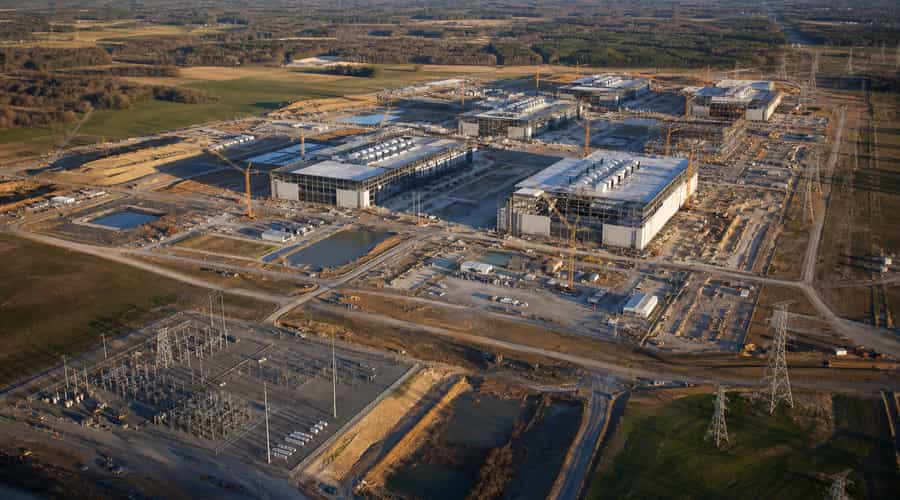
AI is colliding with the grid, and NRG thinks the answer is to make the largest data-center buyers bring more of their own power. That shift could change who gets access to compute, and who pays for the strain.
NRG Energy is leaning into one of the clearest bottlenecks in AI: electricity. The company is pitching a bring your own power model, or BYOP, alongside virtual power plants as a way to help data centers scale faster without pushing the full cost of new infrastructure onto households and smaller businesses, according to recent reporting from Reuters and coverage of Larry Coben's comments on NRG's latest earnings call.
That is not just a utility story. It is a signal that AI infrastructure is moving from a chips-and-cloud conversation into a power-and-permits conversation, and that matters to startups that need compute but do not have the balance sheet of a hyperscaler.
The basic problem is simple. AI data centers need huge amounts of electricity, and the grid is already tight in many markets. Reuters reported on May 12 that U.S. power use is expected to hit record highs in 2026 and 2027 as demand from data centers keeps rising, while another Reuters story the same day examined how policymakers are increasingly allowing utilities to charge customers for grid upgrades before projects are finished, a move that can lift bills for households and businesses. That is the backdrop for NRG's pitch.
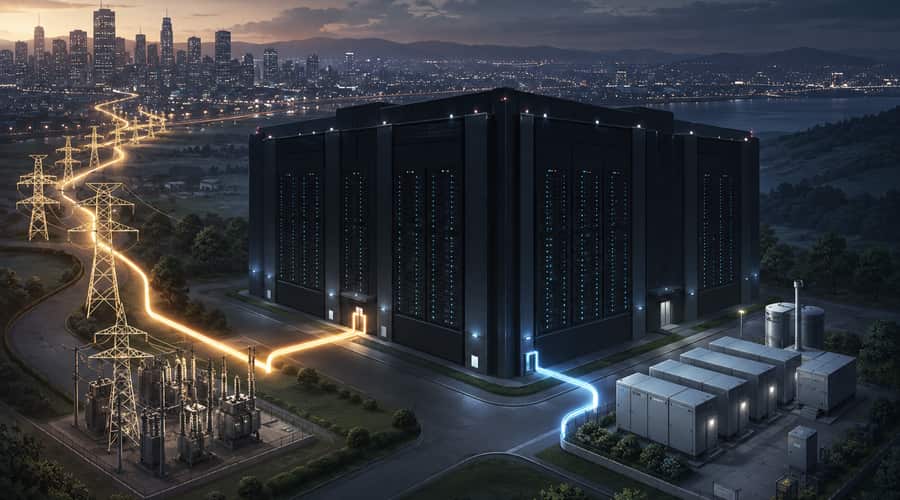
NRG CEO Larry Coben has argued that the biggest data-center operators are also the ones best able to support new generation, and that the traditional model of pushing all the load onto the existing system is not sustainable. In his framing, BYOP is a practical answer because it lets a large customer pair new demand with dedicated power while staying tied to the grid, which can speed up deployment and reduce pressure on everyone else.
That matters for where AI companies build. If power is scarce or expensive, startup teams will not just choose a data center based on latency or tax incentives. They will also ask whether the local utility can support the load, whether a project can get interconnected quickly, and whether the surrounding market can absorb the strain without raising costs.
Why BYOP changes the deal
BYOP is attractive because it changes the financing logic. Instead of a utility having to build out all the generation and transmission first, a hyperscaler can arrive with a clearer power solution and connect to the existing system more quickly, which Reuters and power-market analysts have described as part of a wider shift in data-center interconnection proposals.
That model could also be appealing to smaller AI firms indirectly. Most startups will not build their own plants, but they can benefit if BYOP expands the total amount of capacity available in a market, shortens queue times, and frees up new clusters that would otherwise sit on hold for years. In practice, it could mean more colocated compute options, more private deals between energy providers and large cloud tenants, and slightly less competition for scarce grid headroom.
There is a catch. A system that works well for the biggest buyers may still leave everyone else exposed if it is used to justify higher bills or if utilities shift too much risk onto consumers. That is why the political reaction matters as much as the engineering. Reuters noted that consumer and business groups have criticized advance-cost recovery policies for exactly that reason, arguing they push financial risk onto ratepayers before the benefits of new infrastructure are proven.
Virtual power plants add flexibility
NRG is not relying on generation alone. The company completed its acquisition of LS Power's portfolio in January 2026, adding 13 gigawatts of quick-start natural gas generation and 6 gigawatts of commercial and industrial virtual power plant capability through CPower. That deal gives NRG more physical supply, but it also gives the company more tools to manage demand when the grid is under stress.
For startups and data center operators, VPPs matter because they can help balance peaks without waiting for a brand-new power plant to come online. That can include commercial and industrial load management, distributed batteries, and other resources that shave demand when the grid is tight. The practical benefit is not just resilience. It is speed. If an AI cluster can be paired with flexibility, it may be easier to get approved, easier to operate, and less disruptive to the surrounding market.
This is where the story becomes bigger than one utility. Reuters has reported that AI-driven demand is helping push power markets into a new phase, while utilities, grid operators, and regulators scramble to adapt. NRG is trying to position itself as the company that sits in the middle of that shift, serving both the massive customers driving demand and the retail customers who still expect affordable power.
For founders, that means the next constraint in AI may not be model quality or even access to capital. It may be access to dependable electricity at a location where the grid can actually cope. The winners will likely be the teams that plan for energy as early as they plan for GPUs.
Also read: Anthropic's Mythos Appears on Google Vertex, signaling a high-stakes Claude upgrade and deeper GCP tie-up • Mustafa Suleyman's 18-month warning forces startups to rethink work • Mustafa Suleyman's 18-Month Claim Forces Startups to Rethink Hiring and Product Bets