OpenAI's release of Apollo-5 open weights and a $0.40 per million token price signals the end of high-margin API exclusivity, forcing competitors to accelerate or consolidate in a compute-abundant world.
On April 24, Sam Altman and Jakub Pachocki unveiled Apollo-5: a 200-billion parameter dense model and 1.5-trillion parameter MoE variant, multimodal from the ground up with voice, vision, and code execution baked in. The white paper and initial weights hit GitHub immediately, a sharp break from the API-only fortress OpenAI built with GPT-4. Epoch AI's early benchmarks clock it at 96.8% on MMLU-Pro, blowing past GPT-4o's 87.4% and closing in on human-expert baselines.
Public attention split fast. Anthropic dropped Claude 4.0 two days earlier, introducing context-unlimited architecture with dynamic memory compression for effectively infinite windows. Apollo-5 sticks to 2M tokens. The contrast crystallises the fork in AI strategy: OpenAI bets on scaling laws and commoditised access; Anthropic on architectural leaps for enterprise workflows where context depth matters most.
OpenAI's response was immediate and brutal. Apollo-5 input tokens now cost $0.40 per million, an 92% cut from GPT-4o's $5. The MoE variant targets high-volume reasoning at scale, undercutting open-source giants like Llama 4 and Mistral Large on both performance and price. Microsoft partnership reaffirmed in January takes the hit on Azure margins, but the play is clear: flood developers with cheap, capable weights to own the agentic stack before standards solidify.
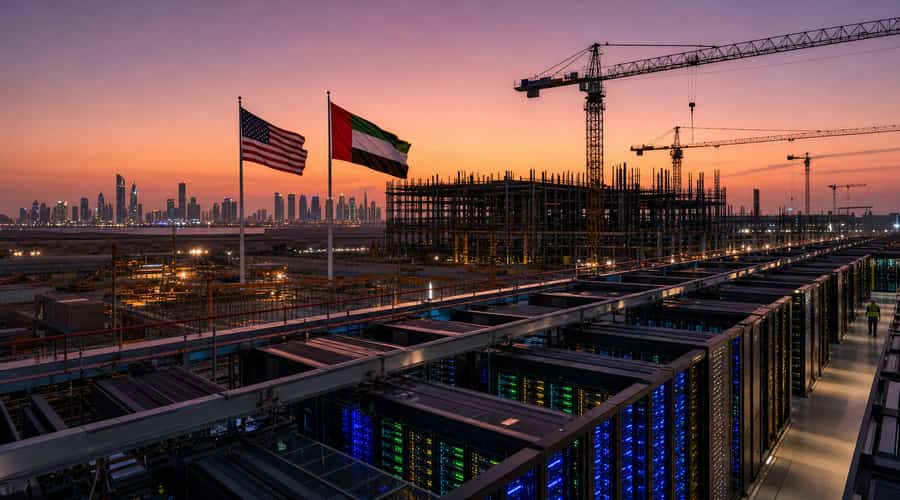
This isn't charity. Compute constraints eased with NVIDIA's B200 ramps and Stargate coming online. Data quality and post-training now define edges. Apollo-5's release saturates the ecosystem, letting startups fine-tune and deploy without API dependency. Developers get provenance, benchmarks, and low-cost inference; OpenAI gets ubiquity and data flywheels from downstream usage.
Claude Forces the Issue
Anthropic's timing landed perfectly. Claude 4.0's compression lets enterprises feed entire codebases or legal corpora without truncation, a killer for RAG pipelines and long-form analysis. Apollo-5 lacks it, but counters with tighter multimodal integration,real-time voice that rivals ElevenLabs, vision matching GPT-4V, code execution rivaling Cursor. Benchmarks favour Apollo on creative synthesis; Claude wins depth.
Enterprise buyers face a fork. Pay Claude's premium for context innovation, or Apollo's volume play for agent swarms. OpenAI's pricing forces the math: a $100k Claude bill converts to $4k on Apollo for equivalent reasoning volume. That spread accelerates consolidation. Mid-tier labs without OpenAI-scale data or Anthropic's safety moat exit stage left.
Consolidation Accelerates
The Great AI Consolidation of 2025-2026 was predictable once compute democratised. H100 shortages forced rationing; B200 abundance unleashes it. Apollo-5 commoditises frontier capability, mirroring Linux's effect on proprietary Unix. Developers fork, fine-tune, and deploy; labs compete on services around the core.
OpenAI knows the history. Exclusive access built the moat; ubiquity cements it. Weights release pulls talent and innovation into the orbit. Microsoft handles infra; startups build apps. Anthropic holds the high ground on safety and context, but faces pricing pressure. Watch Q2 API volumes and fine-tune repos. The pivot succeeds if Apollo derivatives power the next wave of agents. Fail, and Claude defines the standard. Either way, the field narrows.
Also read: Singapore steps ahead of the global pack with formal governance rules for agentic AI systems • GPT-5.5 edges Claude Opus 4.6 and Gemini 3.1 Pro in latest community benchmarks • OpenAI drops GPT-4.5 Omni and o3, igniting the next AI pricing war