Orbital has raised $5 million to prove that AI infrastructure can leave the ground. The first test is modest, but the bet behind it is not.
Euwyn Poon has already built one company around a strained urban system. Spin, the e-scooter startup he co-founded, was sold to Ford in 2018 after cities began wrestling with a new kind of transportation demand. His next company is aiming at a much larger bottleneck: the power, land and cooling constraints now pressing against AI data centers.
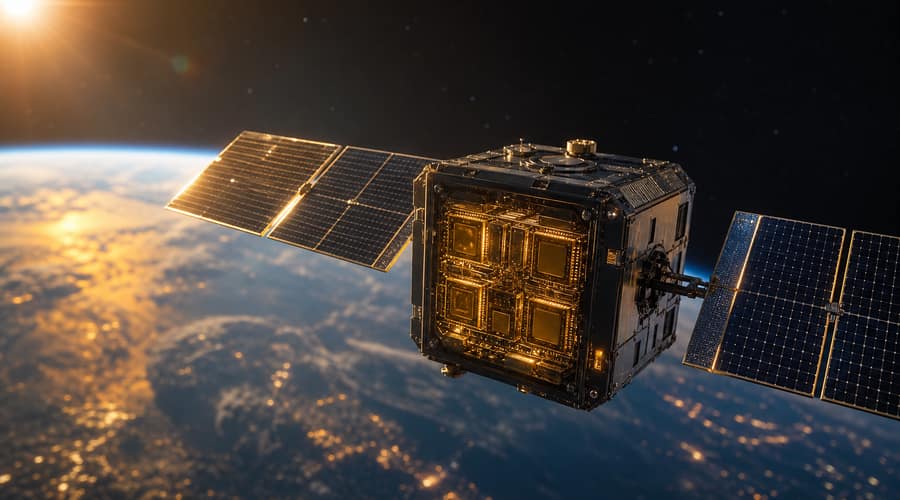
Orbital, a Los Angeles-based space infrastructure startup, said on June 9 that it raised an oversubscribed $5 million pre-seed round led by a16z speedrun, with backing from Basis Set, Human Element, Wayfinder, Antler, Anti Fund and other investors. The money is meant to fund Pathfinder, a hosted GPU payload planned for a SpaceX Falcon 9 rideshare in 2027, and early development of Orbital-1, its first purpose-built compute satellite.
This is not a story about putting a giant warehouse in orbit next year. It is a story about whether a small team can prove enough of the stack, power, thermals, radiation tolerance, downlink and GPU operation, to make space look like a serious extension of AI infrastructure rather than an eccentric science project.
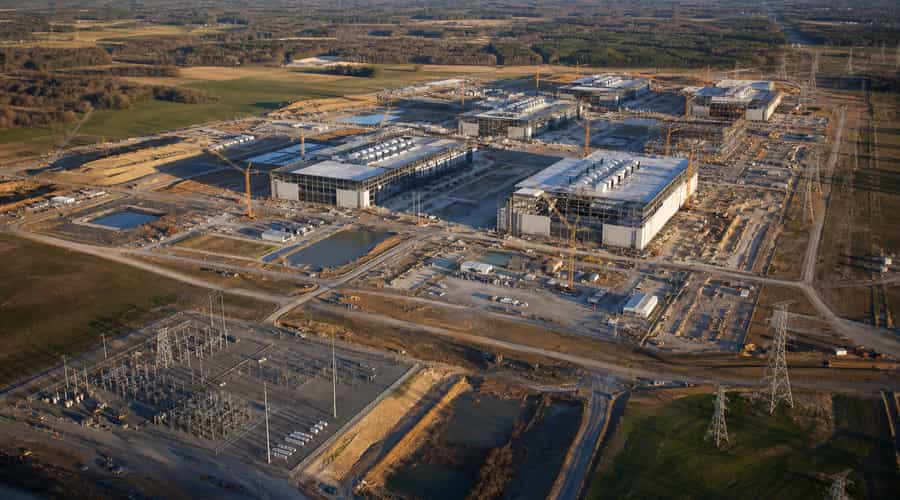
The basic logic is simple. AI demand is growing faster than the grid can comfortably support. New data centers need enormous power allocations, cooling systems, land, transmission upgrades and local approvals. Each of those can become a delay. Sometimes the chips are available before the electricity is.
Orbital is trying to move part of that problem into low Earth orbit, where solar energy is more constant, land does not need to be bought and permitting fights look very different. The company says sunlight in orbit delivers 1,361 watts per square meter and that space offers radiative cooling without the same operating cost structure that comes with terrestrial cooling. That does not make the engineering easy. It does change the starting point.
According to Orbital's June 9 announcement, the International Energy Agency projects global data center electricity consumption will more than double to 945 terawatt-hours by 2030, roughly the annual electricity use of Japan. That number explains why investors are willing to entertain ideas that would have sounded far too distant just a few years ago. When the market needs more compute and the grid becomes the gating factor, unusual infrastructure suddenly becomes practical to examine.
Orbital is focusing on inference, not AI training. That matters. Training large models often depends on tightly linked clusters of GPUs working together with very low latency. Inference is different. Requests can be spread across many independent nodes, which makes a distributed satellite architecture more plausible. A chatbot response, code-generation request or agent workflow already carries enough latency that a low Earth orbit hop may not be the decisive problem.
A small round in a capital-heavy race
The most interesting part of the raise is its size. Five million dollars is real money for software. It is not much in space hardware. A rideshare payload, satellite development, thermal testing, radiation work and ground communications can burn capital quickly, especially when the company is not only flying a demo but also planning Factory-1, a satellite assembly and testing facility in the Los Angeles area.
That means Pathfinder is less a destination than a financing bridge. If the payload shows that GPUs can operate usefully in orbit, Orbital has a stronger case for a much larger round. If the demo slips, underperforms or reveals harder thermal limits, investors will have a cleaner view of what still needs to be solved. In deep tech, proof is often the product before revenue exists.
The market around Orbital is already moving faster than one startup. Starcloud raised $170 million in March at a reported $1.1 billion valuation, after building around the same idea that solar-powered orbital compute could relieve pressure on Earth-based infrastructure. Cowboy Space, formerly Aetherflux, raised $275 million in a Series B in May to pursue solar-powered AI data centers in orbit using an integrated rocket and satellite approach. These are no longer isolated experiments. They are competing views of where the next layer of compute infrastructure might live.
Still, capital does not remove physics. Launch costs must keep falling. Satellites need to survive radiation, manage heat without air or water, communicate large volumes of data back to Earth and justify replacement cycles as GPU generations age. A terrestrial data center can be repaired by technicians. A satellite has to be designed with a much colder kind of discipline.
That is why Orbital's first milestone matters more than its first valuation. Pathfinder does not need to prove that space will replace terrestrial data centers. It needs to prove that useful AI inference can run in orbit with believable economics and a path to repeatable manufacturing. If it does, Orbital-1 becomes a prototype for a new category. If it does not, the company will still have helped define the real limits of orbital compute.
The practical takeaway is that AI infrastructure is becoming a power business as much as a chip business. The next winners may not be the companies with the flashiest models, but the ones that secure the cheapest, most scalable energy for running them. Orbital is betting that some of that energy is overhead, moving around the planet every 90 minutes.
Also read: Palantir is taking Sadiq Khan's Met Police veto to court • Kalshi is making traders disclose jobs to police insider bets • TSMC says AI chip demand will keep prices under pressure