PaXini's reported Hong Kong IPO plans show how quickly China's embodied AI trade is moving from private funding rounds to public market tests.
PaXini is no longer just another Chinese robotics startup with a clever sensor story. The BYD-backed company is exploring a Hong Kong initial public offering, Bloomberg reported, putting one of China's more important tactile sensing players into the same public market queue as a growing list of artificial intelligence and robotics companies.
That timing matters. In March, Caixin reported that PaXini Tech raised more than 1 billion yuan, about $145 million, in a Series B round that pushed its valuation above 10 billion yuan. For a company founded in 2021 and built around the less glamorous layer of robotics, touch, that is a striking amount of money in a short period of time.
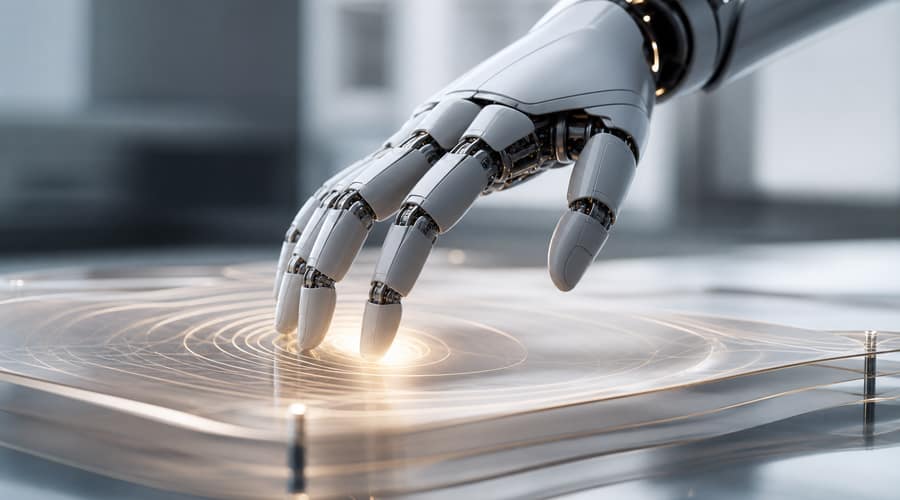
The market has spent the past two years staring at humanoid robots, walking demos and factory videos. PaXini sits underneath that spectacle. Its pitch is that robots need force and tactile sensing if they are going to handle objects reliably, not just move through space with cameras and motors. That is a harder thing to show in a viral clip, but it is central to whether humanoids become useful machines or stay expensive showcases.
PaXini's own materials describe the company as a haptic technology and humanoid robotics business, with products including the PX-6AX multi-axis tactile sensor, the PX-3A consumer tactile sensor, dexterous robotic hands and its TORA-ONE tactile-oriented humanoid robot. That product mix gives the company two possible stories for investors: it can sell components into the robotics supply chain, and it can also demonstrate full robot systems that prove those components work.
That is exactly why BYD's backing is important. The electric vehicle giant made a strategic investment of more than 100 million yuan in PaXini last year, according to 36Kr, tying the startup to one of China's most aggressive manufacturers. JD.com has also appeared in PaXini's financing history, with Chinese media reporting that the e-commerce group led an A-round investment as it widened its embodied intelligence bets.
The logic is straightforward. Car plants, appliance factories, logistics warehouses and electronics lines are full of tasks that are easy for people because fingers feel pressure, resistance and slippage. Robots can already see more than they can feel. If tactile sensors become cheap, durable and consistent enough for mass production, the addressable market broadens from premium humanoids to ordinary industrial automation.
That does not mean PaXini has an easy path. Sensor suppliers often face the toughest part of a hardware value chain. They need high reliability, deep manufacturing discipline and constant price improvement, while the robot OEMs usually control the customer relationship and the brand. The best component companies can become indispensable. The weaker ones become replaceable parts.
Hong Kong is becoming the venue to test the story
Hong Kong has already become a useful stage for China's AI hardware and robotics pipeline. Bloomberg has reported this year on Hong Kong listing plans or preparations involving companies such as Baidu's Kunlunxin, autonomous driving startup Momenta, BrainCo, Galbot and Alibaba-backed Zelos. Shanghai Biren Technology's January debut also showed the upside of investor demand, after the AI chip designer raised $717 million and its shares jumped 76 percent on the first day of trading.
That backdrop helps PaXini, but it also raises the bar. Public investors are not venture investors with ten-year patience. They will want to know whether PaXini's valuation reflects real customer adoption, repeatable manufacturing and margins that can survive as robotics buyers push for lower prices. A good story about embodied AI will not be enough once quarterly reporting begins.
There is also the question of supply chain position. If humanoid robot makers consolidate around a few dominant platforms, PaXini could benefit from being a core supplier. If large manufacturers decide to bring tactile sensing in-house, the economics become less attractive. BYD's presence can be read both ways: it validates the technology, but it also reminds investors that powerful industrial customers rarely leave too much profit on the table for suppliers.
For China, the broader signal is clear. Embodied AI is moving from policy language and lab demonstrations into financing structures that public markets can price. Unitree's A-share IPO application was accepted by the Shanghai Stock Exchange in March, while other robotics startups have continued raising large rounds at multibillion-yuan valuations. PaXini's reported Hong Kong plan fits that same pattern.
The next test is not whether investors like robots. They already do. The test is whether they can separate the companies selling a future from the companies building the parts that make that future work. PaXini's tactile sensing focus gives it a serious claim. A Hong Kong listing would show how much that claim is worth outside the venture market.
Also read: Bilt faces a harder test as regulators review payment failures • Megaport is raising $594 million to turn AI demand into infrastructure • Palantir's NHS contract has become a test of AI sovereignty