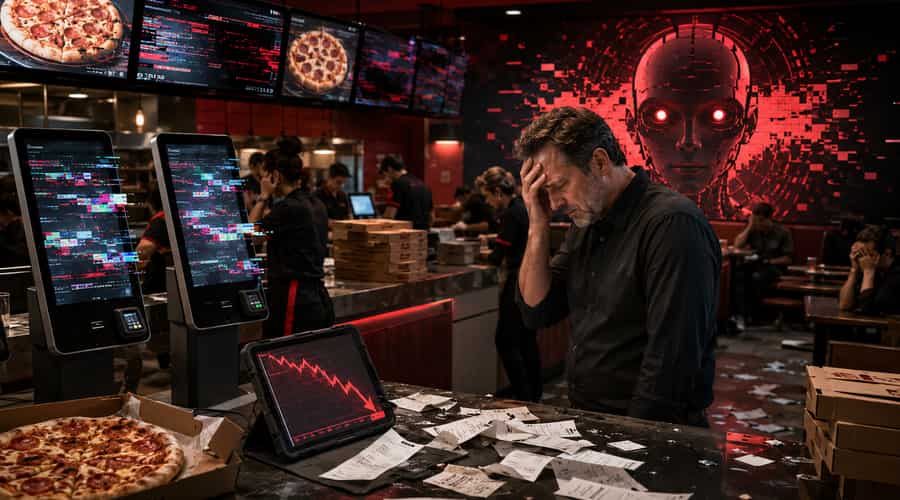
One of Pizza Hut's largest operators says an AI rollout turned its kitchens and delivery network into a liability, and the suit could reshape who bears risk when enterprise AI goes wrong.
Chaac Pizza Northeast, which runs 111 Pizza Hut restaurants in the Northeast and Mid-Atlantic, filed a lawsuit in Texas this month claiming the chain's new Dragontail artificial intelligence system produced "cascading operational breakdowns" that materially damaged its business, causing lost revenue, colder product, slower deliveries and a decline in enterprise value the operator pegs at no less than $100 million, according to court filings and coverage of the complaint. According to the complaint, the system's behaviors slowed order processing, disrupted integrations with third-party delivery aggregators and produced order "stacking" that pushed rack time and delivery times far beyond Pizza Hut standards, with on-time delivery falling to roughly half of orders within 30 minutes in some stores, the suit says, and Chaac is seeking damages plus fees and interest. Restaurant Business covered the filing and cited the specific claims about delivery times and operational impact.
The suit argues Dragontail, introduced by Pizza Hut's parent Yum Brands, was mandated across the system and deployed without adequate training or safeguards, leaving franchisees to bear the operational consequences, according to reporting that reviewed the court record. Chaac says it was a top-performing operator before the rollout, with double-digit sales growth, and that the mandated technology reversed those gains by increasing rack time from under five minutes to as much as 20 minutes and by increasing delivery time averages from around 30 minutes to more than 45 minutes, the complaint alleges.
Pizza Hut has declined to comment on specifics while the litigation proceeds, telling reporters it is reviewing the claim and will respond through legal channels, which is the standard refrain in active litigation.
Why startups building enterprise AI should pay attention
This case is one of the first franchise-level lawsuits that squarely pins large financial harm on an operational AI deployment, and it lands as enterprise AI becomes mainstream in restaurants, retail and hospitality. Industry coverage frames the suit as an early test of how liability will be allocated between brands, vendors and franchisees when AI becomes the load-bearing part of revenue-generating operations.
For startups, the lesson is straightforward. When your software controls staffing, order flow, dispatching or other revenue-critical processes, failure modes produce real business harm and therefore real legal risk. Contract language that limits exposure to performance failures, indemnities, and clear operational rollback plans now matter as much as algorithmic accuracy metrics, and the Chaac complaint highlights how franchise agreements and mandatory deployments can expose operators to outsized losses.
Where liability may go next
The complaint raises questions that lawyers and franchisors will now be parsing: does the brand that mandates and configures the AI bear primary responsibility when a centrally controlled system degrades franchisee performance, or do franchisees remain on the hook because they control day-to-day operations? The answer will turn on franchise agreements, the specifics of the implementation and whether the franchisor can show it provided reasonable training and technical support, commentators and sources in the coverage suggest.
If courts give weight to claims that a mandated, centrally controlled AI produced systemic failures, brands may face new pressure to shore up warranties, tighten QA before rollouts and buy broader insurance for downstream operator losses. Vendors and startups may be asked to accept tougher indemnities or to supply stronger SLAs for mission-critical deployments.
There is also an operational playbook element. Buyers should insist on fallback modes that let stores sever or bypass central AI routing without breaching agreements, plus predeployment A/B testing on live traffic and clearer training and remediation obligations, all steps that reduce the chance a rollout becomes a systemic failure that spawns litigation.
Chaac's suit will not settle the broader liability questions overnight, but it signals that franchisees are prepared to litigate where they see mandated technology harming unit economics. For software startups aiming at enterprise and franchise customers, the practical implications are already clear: contractual clarity, robust prelaunch validation and insurance-minded engineering are not optional, they are a business requirement.
As the case proceeds, expect more scrutiny from franchise operators and insurers, and watch whether Yum Brands seeks to insulate itself contractually or offers remediation to operators to blunt the claim. The outcome could set useful precedents about where obligation and risk live in centrally managed, AI-driven operations.
Also read: Eric Schmidt's boos expose the AI message students are no longer buying • AMD's tiny AI PC points to a more local future for model inference • Torvalds' AI complaint exposes a growing problem in open source security