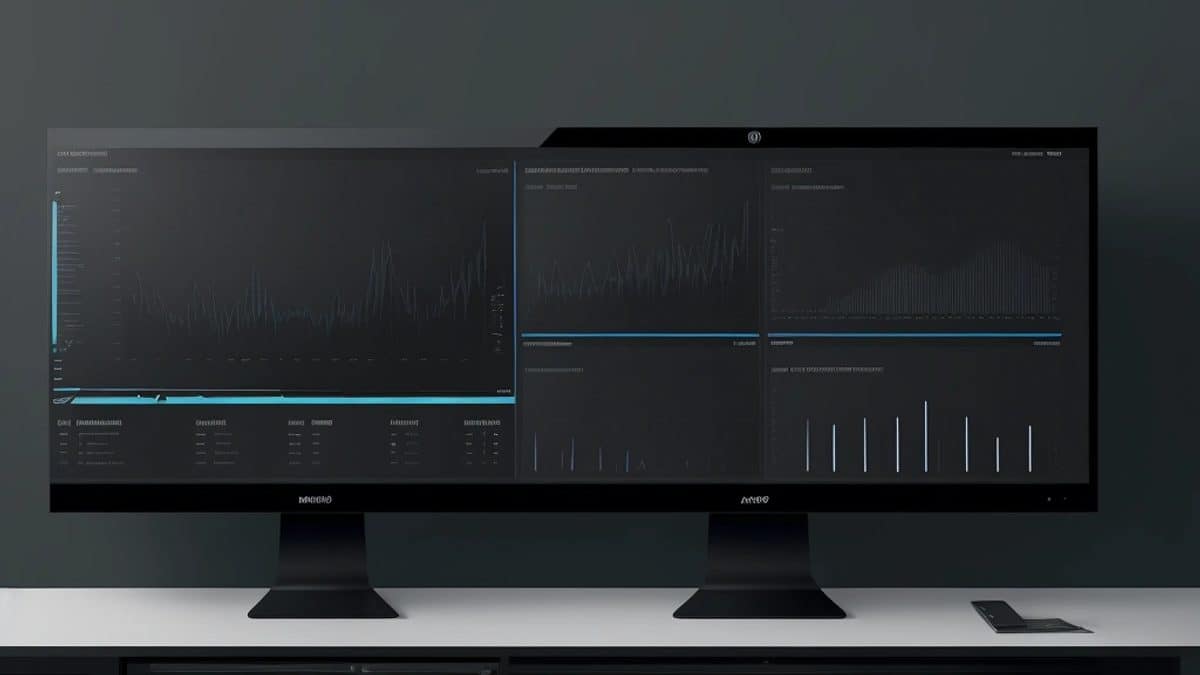
As prediction markets move from niche trading curiosity to mainstream analytical tool, Prediction.Express has built a unified dashboard that aggregates live markets from Polymarket, Kalshi, and others into a single interface, giving traders and researchers a cleaner way to read crowd intelligence at scale.
Anyone who has tried to track prediction markets seriously knows the friction. You are toggling between Polymarket tabs for crypto and election probabilities, checking Kalshi for economic event contracts, cross-referencing volume figures manually, and still not getting a clean picture of where aggregate sentiment actually sits. Prediction.Express is a direct answer to that problem, and the timing is not accidental. Prediction markets are growing fast enough that the infrastructure layer around them is now a legitimate business in its own right.
The platform aggregates thousands of live markets into a single dashboard organized by category, covering politics, crypto, AI developments, and sports. The design priority is clarity. Rather than replicating the trading interfaces of the underlying platforms, Prediction.Express functions as an analytics layer, surfacing real-time probabilities, liquidity comparisons, and volume data in a format built for analysis rather than order execution. That distinction matters because the audience it serves is broader than active traders alone.
Researchers tracking crowd sentiment on geopolitical events, journalists following prediction market probabilities on election outcomes, and quantitative analysts comparing implied probabilities across platforms all have use cases here that a standard prediction market interface does not serve well. Polymarket and Kalshi are built for people who want to place positions. Prediction.Express is built for people who want to understand what the aggregate market believes, quickly and without noise.
That analytical framing positions the platform in a space that has real commercial precedent. Financial data terminals built their value not by executing trades but by aggregating and clarifying market information that was otherwise scattered and hard to compare. Prediction.Express is making a structurally similar bet on the prediction economy, that as the number of active markets and platforms grows, the aggregation and interpretation layer becomes as valuable as the markets themselves.
The comparison of liquidity and volume across platforms is one of the more practically useful features for anyone approaching prediction markets with analytical seriousness. A market showing a 72% probability on one platform and 68% on another is carrying information about depth and confidence that a single-platform view misses entirely. Surfacing those discrepancies in a unified view gives users a more honest read of where genuine conviction sits versus where thin liquidity is distorting a number.
The Broader Context
Prediction markets have had a significant credibility moment over the past eighteen months. Their performance during major political and economic events, often tracking ahead of traditional polling and media consensus, brought a wave of new users and mainstream attention that Polymarket and Kalshi in particular were not fully prepared for in terms of interface and accessibility. The platforms that serve as the underlying venues are improving, but their primary focus remains the trading experience rather than the analytical one.
That gap is exactly where aggregator tools find their footing. The prediction economy's infrastructure is still early enough that a well-executed dashboard with clean data access and sensible categorization provides genuine value that the market venues themselves are not prioritizing. Prediction.Express benefits from that timing, building an audience and usage habit during a period when the underlying markets are growing but the tooling around them remains sparse.
Regulatory clarity has also been a factor in prediction market growth, particularly in the United States where Kalshi's legal victories have opened the door to a wider range of event contracts. As the addressable market for prediction platforms expands, the argument for a dedicated aggregation layer strengthens proportionally. More platforms, more markets, more data fragmentation, more need for something that pulls it together coherently.
The question for Prediction Express going forward is how it builds durable competitive advantage as the space matures. Aggregation is a strong early-mover position, but it is replicable. The platforms with staying power in financial data have typically layered proprietary analytics, unique data products, or deeply embedded workflows on top of their aggregation core. Whether Prediction.Express moves in that direction, toward unique sentiment scoring, historical tracking, or API access for institutional users, will determine whether it remains a useful tool or becomes essential infrastructure. Right now it is clearly the former, and the trajectory toward the latter is visible.
Also read: Prediction Markets News Proton maps out an ambitious 2026 roadmap as privacy demand hits new highs • Xiaomi's MiMo V2.5 Pro matches the best open-weights models in the world and costs half as much to run • NoVoice malware hit 2.3 million Android devices through apps Google never should have approved