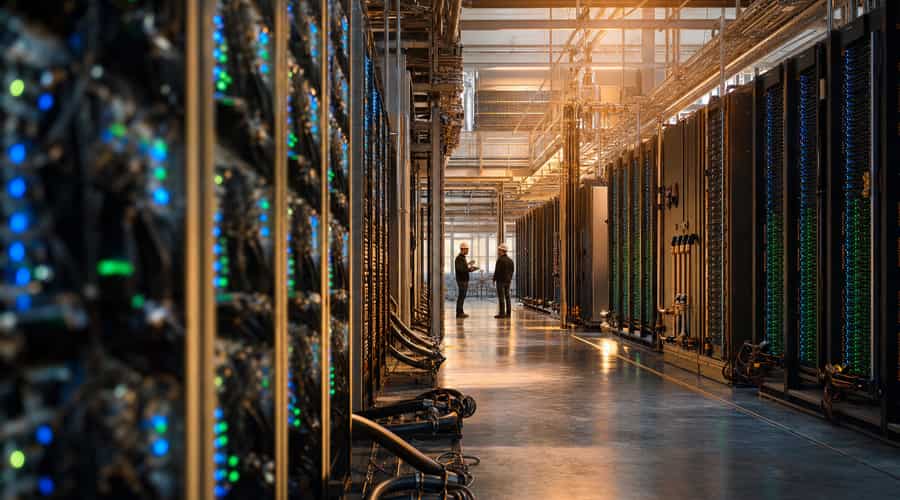
Ramp's June 2026 AI Index, drawing on transaction data from more than 70,000 businesses, shows the top 1% of companies spending $7,500 per employee per month on AI tools while the median firm spends $11.38. The distance between those two numbers is the real story.
When Ramp published its latest AI Index on June 10, the headline figure was hard to process: the most aggressive AI adopters in its dataset, the companies Ramp labels "AI-pilled," are spending $7,500 per employee per month on AI tools. The top 10% spend $611. The median company, across more than 70,000 businesses tracked through Ramp's corporate card and bill pay platform, spends $11.38. That's roughly the price of a single seat on a standard software subscription. The gap between the top 1% and the median is 680-fold.
That number alone should reframe how most executives think about competitive risk. The companies at the top of this distribution aren't experimenting. They're building. And they've been at it long enough that the 14.1% month-over-month spending growth Ramp recorded for this cohort isn't a first-mover spike; it's a compounding rate. Each passing month, those firms are embedding AI deeper into workflows, collecting proprietary data, and training their teams on tools the median company hasn't meaningfully budgeted for at all.
The conventional wisdom about technology adoption is that laggards eventually catch up. The diffusion curve flattens, prices fall, and even slow movers gain access to the same capabilities. That logic may not hold here, because the advantage being built at $7,500 per employee per month isn't just software access. It's institutional knowledge, custom workflows, and operational muscle memory. A company that starts spending $611 per employee tomorrow isn't joining the current top 10% of spenders. It's joining where the top 10% was months ago. The leaders will be somewhere else by then.
For context on how substantial the $7,500 figure really is: Ramp notes it still sits below the roughly $16,000 average monthly cost of a software engineer. The most aggressive AI spenders haven't yet crossed the threshold where AI tools cost more than human labor. But the trajectory matters. If top-cohort spending keeps growing at 14.1% per month, that crossover point stops being theoretical fairly quickly. The more interesting question, once spending exceeds the cost of a headcount, is whether the output justifies it. The companies already in this cohort are likely the ones running that experiment in real time.
The multi-model strategy and what it means for vendors
What the heavy spenders are actually buying is worth examining. According to Ramp's data, the top 1% aren't wedded to a single platform. They mix frontier models from providers like Anthropic and OpenAI with cheaper open-source alternatives accessed through inference platforms including Fireworks AI, fal AI, and DeepInfra. The approach is deliberate: use expensive frontier models for high-stakes tasks that demand maximum capability, then route routine workloads through open-source models at a fraction of the cost.
The pattern is wider than just the top spenders. Ramp's adoption data now puts Anthropic at 41% of US businesses with paid AI subscriptions, making it the most adopted model provider in enterprise, while OpenAI held flat. Deepseek led Ramp's trending vendor list for June 2026, reflecting strong appetite for price-competitive alternatives even among companies already spending heavily. The picture that emerges is one where the most sophisticated AI buyers are also the most aggressive about avoiding lock-in to any single provider.
That's a structural problem for AI vendors whose enterprise strategies depend on stickiness. Every major lab has built its commercial model around the assumption that deep integration creates durable switching costs. The Ramp data suggests the most capable buyers have already learned to sidestep that trap. They treat models as interchangeable infrastructure rather than platforms. Abstraction layers between workloads and model providers make switching frictionless, and the fastest-growing inference platforms are making those layers easier and cheaper to build each month. A vendor expecting to monetize lock-in is selling to exactly the customers least likely to stay locked.
What to watch
The Ramp AI Index carries more signal than most AI adoption surveys because it measures actual transactions rather than self-reported intentions. Seventy thousand businesses processing spend through Ramp's platform gives the index unusual ground-level accuracy, and the monthly cadence means trends appear quickly.
What June's numbers leave open is the ROI question. Spending and returns aren't the same thing, and companies can be enthusiastically wrong at scale. But the compounding nature of the gap points toward something harder to dismiss than a software budget discrepancy. The median company spending $11 a month on AI isn't just behind on subscriptions. It's behind on institutional infrastructure: the workflows, the data, the internal fluency that takes months to build. That kind of lead is far slower to close than a line item on a procurement approval.
Also read: Amazon's $17.5 billion no-covenant loan tells you everything about how Wall Street is betting on AI • Mastercard's Agent Pay for Machines puts blockchain infrastructure at the center of the emerging AI transaction economy • Niteshift raises $7 million to be the cloud layer under every AI coding agent, not just the winning one