SkyPilot just raised $20 million to make cloud GPUs interchangeable, and the money came from people who would know: the CEOs of Databricks and Hugging Face, plus Google's chief scientist, all wrote checks.
SkyPilot announced on July 21 that it's emerging from stealth with a $20 million seed round, according to a report from Fortune. Lux Capital led the round. Amplify Partners, Coatue Management, Foundation Capital, Race Capital and The House Fund also put in money.
You don't usually see this list of names on a seed round. Databricks CEO Ali Ghodsi, Google chief scientist Jeff Dean, Vercel CEO Guillermo Rauch, Replit CEO Amjad Masad, Hugging Face CEO Clem Delangue and dbt Labs CEO Tristan Handy all wrote personal checks into the company, according to SkyPilot's funding announcement carried by PR Newswire. That's not a normal seed round. That's a guest list.
The Problem With Renting GPUs
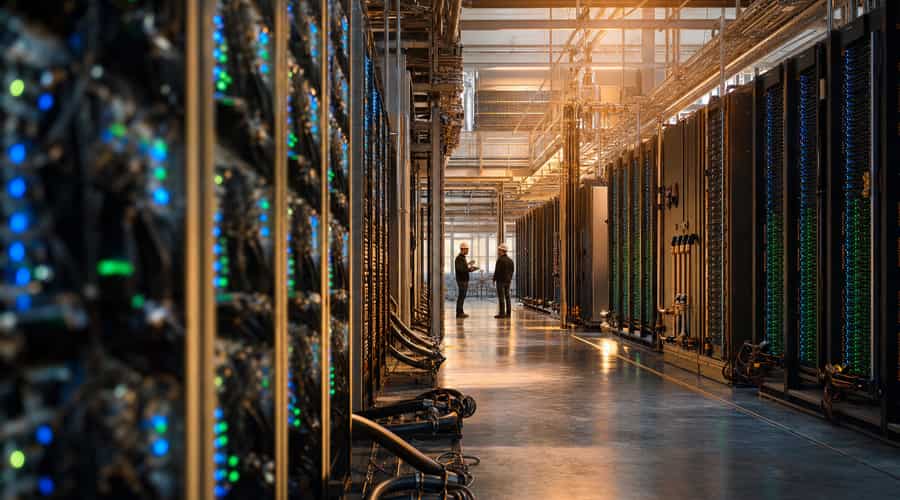
If you've tried to book GPUs anywhere in the last two years, you already know the problem SkyPilot is chasing. Capacity shows up on one cloud and not another. Prices swing depending on which provider has chips sitting idle that week. Teams end up locked into whoever they signed with first, even when a competitor has better hardware sitting open next door.
SkyPilot's answer is its new SkyPilot Platform, which lets AI teams run training and inference jobs across AWS, Google Cloud, Azure, smaller GPU-focused "neoclouds" and Kubernetes clusters through a single interface. Fortune described the company's ambition bluntly: it wants to be the "Switzerland of AI compute," neutral ground in a market where every hyperscaler would rather you stayed locked into its own stack.
Neutrality is the whole business model.
In practice, a team writes one YAML file describing what it needs: GPU type, node count, whether it wants spot or on-demand pricing. SkyPilot's scheduler finds the cheapest available match across whichever providers the team has enabled, then manages the job through completion. That's the same core idea from the company's original research, just extended from academic clusters to enterprise training runs.
The company didn't appear out of nowhere. It traces back to a 2023 paper out of UC Berkeley, "SkyPilot: An Intercloud Broker for Sky Computing," presented at the USENIX NSDI conference. Zongheng Yang, Zhanghao Wu and Romil Bhardwaj built the original project as Berkeley researchers, working alongside Ion Stoica, the Databricks co-founder, and Scott Shenker, a longtime Berkeley networking professor. Both are now SkyPilot co-founders.
The open source project already has traction to show for it. It's been downloaded more than 14 million times and drawn over 280 contributors, according to the company's announcement. That's the kind of adoption most funded startups spend years chasing before they ship a paid product at all.
Betting the Scramble Is Permanent
GPU capacity stopped being something teams simply provisioned. It became something they hunt for. Frontier labs book chips a year in advance. Smaller AI teams negotiate with whatever cloud happens to have capacity that month, whether or not it's the cheapest or fastest option for the job. SkyPilot is betting that scramble is permanent, not a shortage that resolves once more data centers come online.
It's not the only company making that bet. Fluidstack, CuspAI and Etched have all closed funding rounds in recent months as investors chase a similar thesis, that GPU access, not model architecture, is becoming the real bottleneck for AI companies. SkyPilot's angle is narrower than most of them: it doesn't own chips or build them, it just routes work to whoever already has them.
SkyPilot hasn't disclosed a post-money valuation for the round. What it has disclosed is a platform still ramping toward broader availability, an open source base already measured in the tens of millions of downloads, and a roster of AI industry CEOs betting that renting compute beats owning it right now.
Also read: London startup Humanoid becomes Europe's first humanoid robotics unicorn • Moonshot AI Is Chasing A $50 Billion Valuation After Its GPUs Ran Out • SentinelOne Founders Raise $100 Million to Secure AI Agents Inside the Enterprise