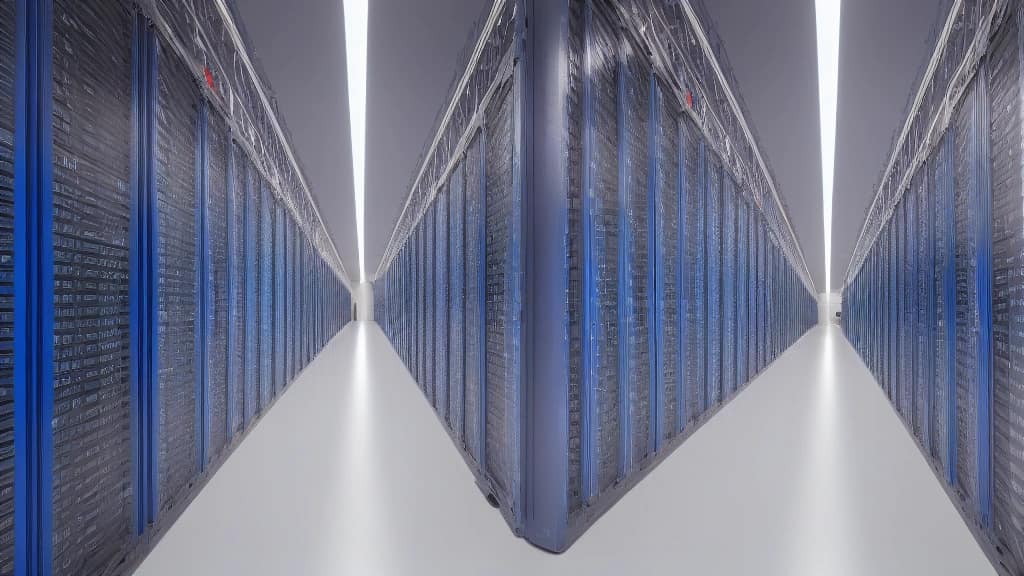
SanDisk has reportedly surged more than 4,000 percent over the past year, a move tied to AI-driven demand for NAND flash, enterprise SSDs, and data center storage that has turned memory into one of the market's hottest second-order winners, even as consumer-device weakness still hangs over the business.
The move is extreme enough that it changes how investors think about the AI capex boom. The story is not just that Nvidia sells the chips that train the models. It is that every larger model, every retrieval-heavy enterprise application, and every inference pipeline needs somewhere to keep data that is fast enough, dense enough, and efficient enough to keep up. SanDisk sits squarely in that layer. Reuters reported in late January that the company forecast fiscal third-quarter revenue of about $4.4 billion and earnings per share of roughly $14, both well above Wall Street expectations, after extending a major supply agreement that reflected surging AI storage demand. Other reports since then have described a data center revenue surge, a massive share buyback, and a valuation repricing that has made the stock one of the most violent winners in the market.
The catalyst appears to be both operational and structural. SanDisk was spun out of Western Digital in 2025, which means some of the share-price move reflects a fresh public-market listing effect as investors reassess the company on its own balance sheet and product mix. But the scale of the rally suggests that the market is also repricing the underlying memory cycle. The company remains deeply exposed to NAND flash and enterprise SSDs, the very products AI data centers need for high-throughput storage, log retention, vector databases, and retrieval-augmented systems. That demand is distinct from the consumer-device market that once defined SanDisk. In other words, the old business is still there, but the new one is what is moving the stock.
That matters because AI workloads are storage-intensive in a way the first wave of cloud computing was not. Training giant models requires massive datasets and checkpointing. Inference requires fast access to embeddings, user histories, and application state. Enterprise AI systems, especially those built around search and retrieval, can be even more storage hungry because they rely on persistent indexes and high-availability data pipelines. SanDisk's reported data center revenue growth, which one summary put at 233 percent to $1.47 billion, is a sign that investors are not just betting on higher volumes, but on tighter supply and better pricing power across the stack.
The consumer side of the business is the counterweight. Flash storage for phones, cameras, and PCs is a much less exciting market than AI data centers, and it remains tied to weaker demand in consumer electronics. That tension is important. SanDisk is not a pure AI company. It is a storage company being pulled upward by one part of the market while still carrying exposure to an older segment that has not recovered at the same pace. The rally suggests the market is willing to ignore that drag for now because the AI cycle is so dominant. Whether that is justified depends on how long AI customers keep locking in supply through multi-year contracts and how quickly competitors add capacity.
For SF readers, the bigger lesson is that the AI infrastructure trade is broadening. GPUs get the headlines, cloud landlords get the capex budgets, and memory and storage suppliers are becoming the next layer of scarcity. That creates a familiar pattern. A technology wave starts with software and compute, then works its way down into power, cooling, memory, networking, and land. Each layer becomes a bottleneck. Each bottleneck gets repriced. SanDisk is now part of that repricing. The company is not building models or selling agents. It is selling the physical substrate that lets those systems operate at scale.
The open question is whether storage becomes the next bottleneck after GPUs and power, or whether the market has already run too far ahead of fundamentals. If the AI buildout continues, flash storage could remain tight for years, especially if hyperscalers and enterprise buyers keep signing long-term supply agreements and front-loading orders. If capex slows or a supply wave arrives faster than expected, the market could reverse just as quickly. That is why the rally is both understandable and dangerous. It is a clean story, but clean stories often get the highest multiples right before they become crowded trades.
SanDisk's move says something useful about the current market structure. AI is not only creating winners among the obvious names. It is creating second-order winners in hardware categories that ordinary software investors used to ignore. The hard part now is separating genuine scarcity from exuberance. The stock market has decided that storage belongs in the former camp. The next few quarters will show whether fundamentals agree.
Also read: Ondo, JPMorgan, Mastercard and Ripple execute the first 24/7 tokenized Treasury cross-border redemption • SpaceX's IPO terms are a test of how much governance investors will sacrifice for scarce infrastructure exposure • Hyperliquid claims its prediction market topped Polymarket on day one and the details behind that claim matter more than the headline