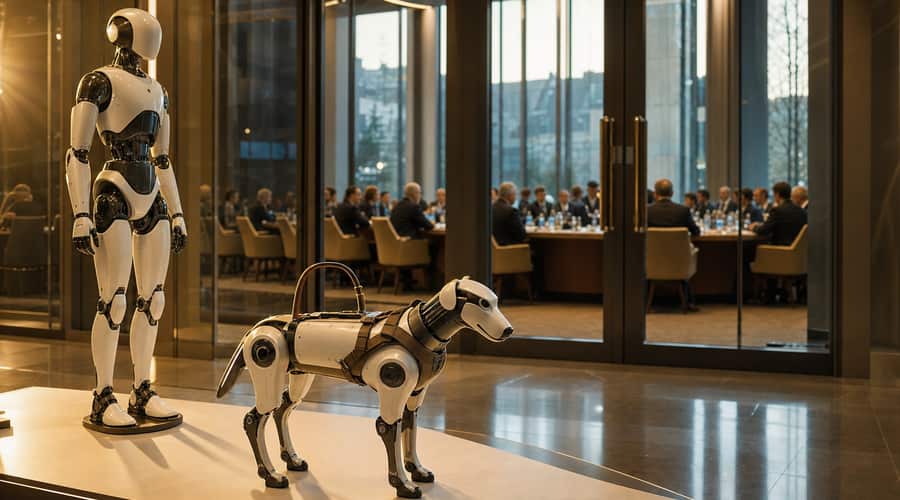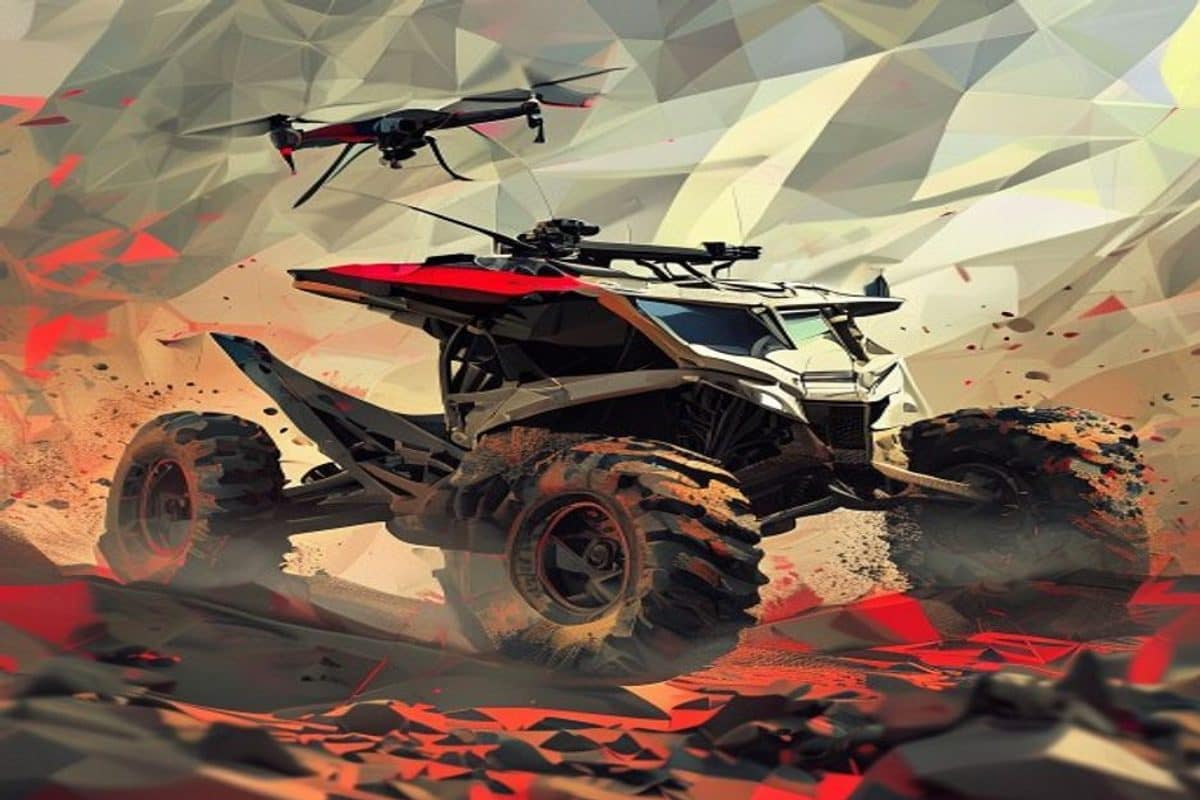
Scout AI has raised a $100 million Series A to build what it calls a frontier lab for defense robotics, a sign that the AI race is moving from chatbots and copilots into physical systems where the cost of failure is measured in hardware, procurement, and national security.
The startup pitch here is not subtle. Scout wants to be the OpenAI of defense robotics, only the product is not a text box or a coding assistant. It is a model called Fury that can control military vehicles in environments where GPS fails, communications drop out, and the terrain itself becomes part of the test. TechCrunch reports that Scout has now raised $100 million in Series A funding to push that vision forward, after first emerging with a $15 million seed round and Pentagon-linked contracts last year. That is a big jump in capital, but the bigger shift is strategic. Investors are no longer just funding software that sits on screens. They are funding AI that has to move through dirt, weather, interference, and combat conditions without breaking.
That makes Scout more than another defense tech story. It is a signal that frontier AI is broadening into physical autonomy, and that the commercial logic for the sector is changing with it. In enterprise software, a bad model can waste time or money. In defense robotics, a bad model can strand a vehicle, ruin a mission, or create a safety incident that invites political backlash long before the procurement cycle is complete. The company is trying to solve that by training autonomous ATVs and other systems on military terrain, then layering in a model that can interpret natural language commands and convert them into vehicle behavior. That is a much harder problem than building a chatbot. It is also a much more valuable one if it works.
Scout's core technology, Fury, is best understood as a vision-language-action model for defense. It is designed to take in sensory input, understand mission intent, and issue real-time actions to a vehicle or fleet of vehicles. In practical terms, that means a commander can give high-level instructions while the system handles navigation, coordination, and adaptation on the fly. Scout has already shown an autonomous vehicle orchestrator that can coordinate a ground vehicle with drones, adjust priorities during a mission, and finish with a battle damage assessment. That is not a demo built around a single canned path. It is an attempt to create a reusable control layer for military robotics.
The company says Fury is hardware-agnostic and lightweight enough to run on modest onboard systems, which matters because military procurement rarely starts with a clean-sheet build. The real market is often retrofitting existing vehicles with better autonomy, not replacing entire fleets. If Scout can insert Fury into current hardware without requiring a complete redesign, the addressable market gets larger very quickly. That is where venture capital starts to get interested. The software is not just a product. It becomes a layer that can sit across multiple platforms, which is how a defense startup turns one prototype into a category.
Scout's timing is also notable. Defense spending is shifting toward autonomous systems just as the broader AI market is hitting physical infrastructure limits. The easy wins in software are getting crowded. Companies that want the next wave of value need environments where model performance is difficult to fake and harder to commoditize. Military robotics offers exactly that. It is messy, expensive, and highly regulated, which is precisely why a startup with a technical edge can still matter. The procurement bar is high, but once a vendor is trusted, switching becomes difficult.
The Venture Bet Behind The Mission
A $100 million Series A is not a casual round. It says investors believe the product is no longer a science project. Scout has now moved from stealth, seed funding, and initial DoD contracts into the scale-up phase where the real test is whether the model can perform outside the proving grounds. That is where the startup's claims will be judged. The company says its first prototypes, the G01 unmanned ground vehicle and A01 UAV, are already operating autonomously at its Santa Cruz Mountains test site. That is useful, but the market will care about repeatable performance in more chaotic conditions, with more interference, more edge cases, and more varied hardware.
This is also where defense and AI economics start to intersect in a new way. Chatbots are easy to demo and hard to defend when they fail. Defense robotics is the opposite. It is hard to demo, but once a system proves itself, the stickiness is enormous. If Scout can show that Fury works across ground vehicles, drones, and potentially other platforms, the upside is not just one contract. It is a model for the robotic layer of the defense stack. That is the kind of ambition that draws capital even when the technical risks are obvious.
The company is backed by a list of investors and partners that suggests the defense ecosystem is willing to take the bet. Booz Allen Ventures was part of the original seed round, and Scout already had multiple Department of Defense contracts before this latest raise. That gives the company something many startups do not have, a direct line from prototype to procurement. The challenge is that defense customers are conservative for good reason. They want reliability, auditability, and operational control. If AI is going to sit in the loop of military vehicles, it has to be trustworthy under pressure, not just impressive in a video.
From Software To Physical AI
What makes Scout important is that it sits inside the broader migration of AI from digital assistants to physical systems. That shift changes everything. Safety now matters in a literal sense. Model performance is no longer measured just by latency or output quality. It is measured by whether a vehicle can adapt to a blocked route, handle missing signals, or coordinate with other machines in a contested environment. Public backlash also looks different when the technology is attached to battlefield hardware rather than office productivity. The ethical and political debate becomes much harder to separate from the product itself.
That is probably why Scout's founders talk about a frontier lab rather than a conventional startup. The phrase signals that they understand the problem is not merely building a feature set. It is building the infrastructure for a new class of machine intelligence, one that can act in the world rather than describe it. If they are right, the implications go well beyond defense. The same techniques that let a vehicle navigate a battlefield could eventually reshape logistics, industrial inspection, disaster response, and any other domain where autonomy has to survive uncertainty. For now, though, the market is watching a much narrower question. Can a defense robotics startup turn $100 million into a credible physical AI platform before competitors, procurement delays, or one bad demo catch up with it? That answer will determine whether Scout becomes a category leader or just the latest company to discover that moving from code to combat is where the real difficulty begins.
Also read: The AI companies said to kill office demand are now signing London's biggest leases • TIME's new AI A-list shows the race is now global even if the money is still American • Evan Spiegel sees the AI backlash coming before most of Silicon Valley does