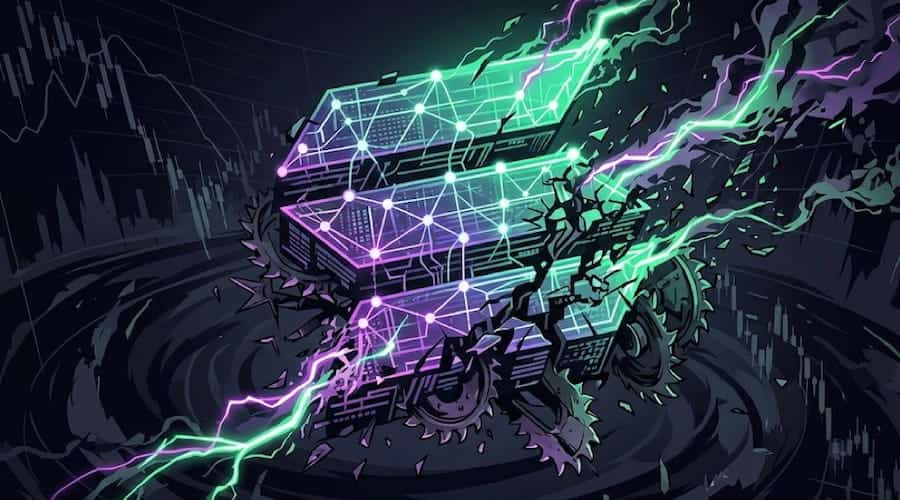
Solana's problem is not that speculation exists on the network. It is that speculative activity has become one of the loudest measures of its success.
Solana still has the speed, liquidity, and developer base that made it one of the most important blockchain networks in crypto. But the published version of this argument leans too hard on collapse language and makes several claims that current data does not support cleanly. The sharper story is more uncomfortable: Solana is not dead, but its most visible consumer activity is increasingly shaped by memecoin launchpads, celebrity tokens, and high-leverage trading products that can burn through retail confidence faster than the network can replace it.
That distinction matters. A blockchain can process millions of transactions and still leave ordinary users feeling that the main thing being optimized is their appetite for risk. Solana's low fees and fast settlement are genuine technical advantages. They also make it cheap to launch thousands of tokens, automate trading strategies, and recycle attention from one micro-cap coin to the next. The same architecture that helps serious builders move quickly can also make bad incentives scale.
Pump.fun Shows the Strength and Weakness of Solana's Model
Pump.fun remains the clearest example of this tension. The Solana-based launchpad made token creation simple enough for almost anyone to use, and that accessibility helped turn it into one of the network's most powerful revenue engines. According to Blockworks data from the first quarter of 2026, Solana launchpad revenue reached about $95.2 million, with Pump.fun accounting for the large majority of that activity.
The user experience, however, tells a less flattering story. Most Pump.fun tokens never graduate from the bonding curve into deeper market liquidity. Research and market dashboards commonly put the failure rate near 99 percent, which means the typical participant is not discovering the next durable community project. They are entering a crowded, extremely fast market where insiders, bots, and early wallets often have the better position before regular buyers even understand what they are buying.
This is not just a moral complaint about speculation. It is a product problem. When a platform can generate huge fees from thousands of short-lived tokens, the economic reward goes to throughput, not quality. Pump.fun has made attempts to share value through buybacks and token burns, and CoinDesk recently reported that it had generated more than $1 billion in lifetime revenue before changing its burn policy in April 2026. Still, the bigger question for Solana is whether that revenue strengthens the ecosystem or simply proves how much money can be extracted from attention.
Celebrity Tokens Damaged the Retail Narrative
The celebrity-token cycle added another layer of reputational risk. In 2024, tokens connected to figures such as Iggy Azalea and Caitlyn Jenner helped bring mainstream attention to Solana memecoins. The attention was real, but so were the losses. Many of these tokens followed the familiar pattern of a violent early spike followed by a steep collapse, leaving late retail buyers holding assets with little utility and fading liquidity.
The official Trump memecoin, launched on Solana in January 2025, showed the same broader dynamic on a much larger stage. It helped drive attention and trading volume back to the network, but it also reinforced the idea that Solana had become the chain of choice for politically and culturally charged speculation. That may be good for short-term volume. It is much less helpful for the network's long-term claim that it is becoming serious financial infrastructure.
There is a practical consequence here. Retail users do not separate every launchpad, wallet, promoter, and exchange venue when they lose money. They remember the chain where the loss happened. If Solana becomes associated mainly with celebrity launches and one-day tokens, strong infrastructure work in payments, stablecoins, and real-world assets has to fight through a much noisier public story.
Leverage Raises the Cost of Bad Timing
Solana's derivatives market adds another source of risk for inexperienced traders. Perpetual platforms such as Jupiter Perps give users access to leverage that can reach 100x on major assets. These tools are not inherently abusive. Professional traders use derivatives to hedge, manage exposure, and price risk. The problem comes when products built for speed and precision are marketed into an environment where many users are already chasing quick recoveries from memecoin losses.
At high leverage, a small price move can erase a position. In a market as volatile as crypto, that turns ordinary noise into a liquidation event. Solana's fast execution helps these systems function efficiently, but efficiency is not the same as investor protection. A trader who misunderstands funding costs, liquidation thresholds, or pool mechanics can lose money before the lesson has time to register.
This is where Solana's leadership and developer community face a harder editorial test. The network has real signs of institutional progress, including stablecoin growth, tokenized fund activity, and payment-related adoption. Those developments make the original article's claim of an existential dead end too sweeping. But they do not erase the retail trust problem. If the most visible consumer flows remain dominated by disposable tokens and extreme leverage, Solana risks building credible infrastructure underneath an increasingly cynical user experience.
The next phase for Solana will not be decided by whether it can process more trades. It already can. The more important question is whether the ecosystem can make serious applications more visible than the casino layer that currently grabs so much attention. If builders, wallets, launchpads, and exchanges push users toward clearer risk signals and more durable products, Solana can keep its infrastructure story intact. If not, the network may continue to grow while a large share of ordinary users conclude that growth was never meant for them.