The Franco-Italian chipmaker raised its 2026 data center revenue outlook to roughly $1 billion on Tuesday, nearly doubling prior guidance, as AI infrastructure demand spreads well beyond the GPU giants.
STMicroelectronics does not make GPUs. It does not design custom AI accelerators. It is not in the spotlight at every hyperscaler earnings call. But on June 2, 2026, the European semiconductor manufacturer became one of the strongest movers in the region after raising its data center revenue target for this year to approximately $1 billion, nearly double its previous guidance of "nicely above $500 million." According to Reuters, shares rose as much as 9.8% in Europe and reached their highest level since September 2000. The market's reaction was not about a single quarter. It was about what the revision signals for the broader AI infrastructure supply chain.
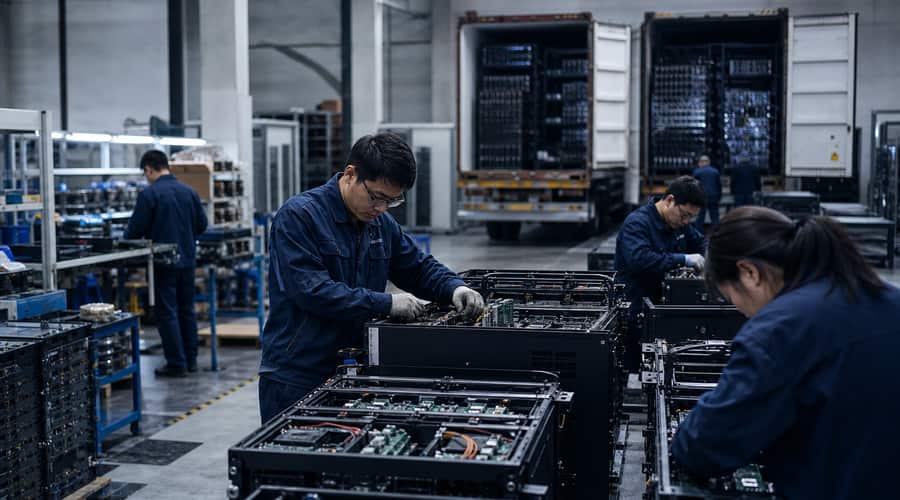
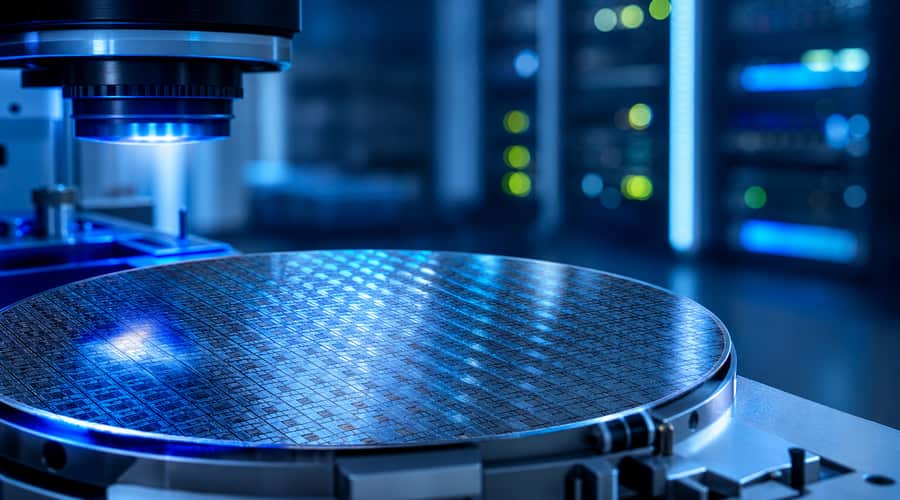
The upgrade is directly tied to AI. STMicro makes the unglamorous but indispensable chips that keep hyperscale data centers running: power semiconductors that regulate energy flow, microcontrollers that manage infrastructure, and, increasingly, silicon photonic components that move data between thousands of AI accelerators. Roughly two-thirds of the upgraded data center revenue is expected to come from optical components, including photonic integrated circuits, BiCMOS electronic ICs, and high-performance microcontrollers for optical modules. The remaining third comes from power chips. That split matters because the AI infrastructure buildout is no longer just a GPU procurement story. It is a system-level expansion reaching into every layer of the stack.
The cornerstone of STMicro's revised outlook is its February 2026 strategic collaboration with Amazon Web Services, a multi-year, multi-billion-dollar commercial agreement positioning ST as a preferred supplier for AWS's high-performance compute infrastructure. The deal spans silicon photonics for high-bandwidth connectivity, mixed-signal processing components, advanced microcontrollers for intelligent infrastructure management, and analog and power ICs optimized for hyperscale energy efficiency. AWS also received warrants tied to purchase volumes, giving both companies a financial incentive to scale together. That is not a simple purchase order. It is a long-term architectural commitment by one of the world's largest cloud operators to embed STMicro's technology deep into its infrastructure roadmap.
Looking further out, STMicro has indicated that 2027 data center revenue could double the 2026 level if current engagement dynamics hold. That would put the business north of $2 billion within 18 months. For a company that generated about $13.3 billion in revenue in 2024 and has faced pressure in automotive and industrial markets, the data center pivot is becoming a genuine growth engine rather than a footnote.
STMicro is not alone in this revision cycle
What makes this moment particularly worth watching is that STMicro's upgrade appears to be part of a broader pattern of mid-tier semiconductor suppliers quietly showing stronger AI-linked demand. Texas Instruments reported that its data center revenue grew about 90% year-on-year in the first quarter of 2026, with growth led by industrial and data center demand. Analog Devices said its data center business, now more than three-quarters of communications revenue, grew more than 90% year-on-year in its latest quarter, driven by both optical and power portfolios. Neither company trades on AI hype the way Nvidia does. Both are seeing the demand wave hit their order books in real time.
The pattern suggests that hyperscalers including Microsoft, Amazon, Google, and Meta are not just buying more GPUs. They are building out the entire physical layer of AI infrastructure: power delivery, thermal management, optical interconnects, and edge compute control. Every GPU cluster requires power conversion hardware. Every optical transceiver needs precision analog and photonic components. That demand has to land somewhere in the supply chain, and it is increasingly landing at companies like STMicro, Texas Instruments, and Analog Devices.
The trade restriction question
There is a reasonable debate about whether this demand surge reflects genuine long-term structural growth or is at least partially front-loaded. U.S. export controls on advanced chips have created powerful incentives for large customers to secure supply chains early, and the risk of further restrictions on semiconductor components reaching certain markets could be accelerating procurement timelines. If a meaningful portion of the revised guidance is driven by customers building inventory buffers rather than deploying capacity, the 2027 doubling narrative could come under pressure once those buffers normalize.
That said, the AWS partnership structure, with volume-linked warrants and multi-year commitments, suggests Amazon at least is betting on sustained demand rather than a procurement sprint. Silicon photonics in particular has long runway ahead. Co-packaged optics, which embed optical interconnects directly alongside compute dies, is still early in its adoption curve and could drive years of volume growth for companies like STMicro that have invested heavily in the technology.
For investors tracking the AI trade, STMicro's 25-year stock high is a useful reminder that the infrastructure buildout rewards breadth. The next revision cycle to watch is not another GPU company. It is the analog and optical suppliers whose order books quietly fill as hyperscalers wire up the next generation of AI clusters. Texas Instruments reports next in late July. Analog Devices follows in August. If their data center commentary echoes what STMicro just said, the signal becomes harder to ignore.
Also read: Jensen Huang called Marvell the next trillion-dollar company and the market believed him immediately • SoftBank is in early talks to anchor an $800 million round for Agile Robots as the humanoid race enters its capital-intensive phase • Nvidia's $1 trillion GPU order pipeline comes into focus as Jensen Huang puts Vera Rubin into production