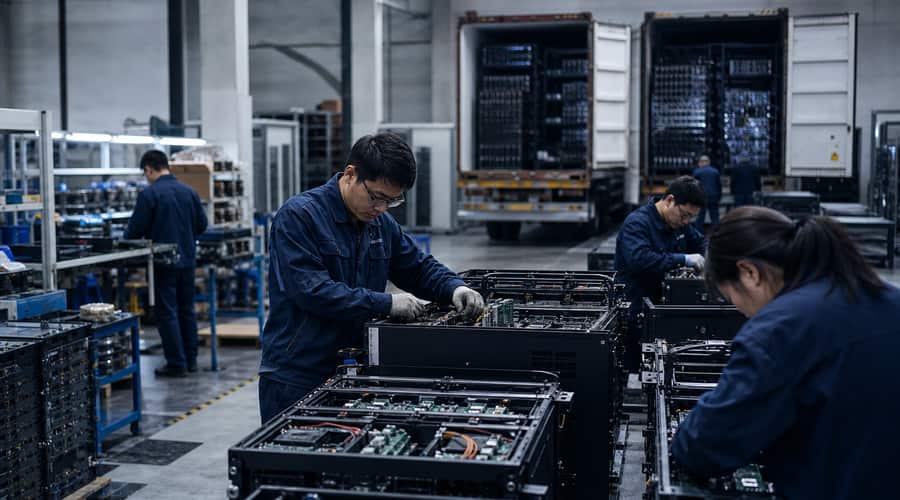
Yih-Shyan "Wally" Liaw, co-founder of Super Micro Computer, was arrested and indicted by the US Attorney's Office for the Southern District of New York in March 2026 on charges that he conspired with Supermicro's Taiwan general manager and a third intermediary to route servers containing Nvidia H200 and B200 GPUs through an unnamed Southeast Asian company to Chinese buyers, generating an alleged $2.5 billion in sales in violation of the Export Control Reform Act, in the highest-profile criminal case yet brought under the US government's effort to prevent advanced AI compute from reaching China.
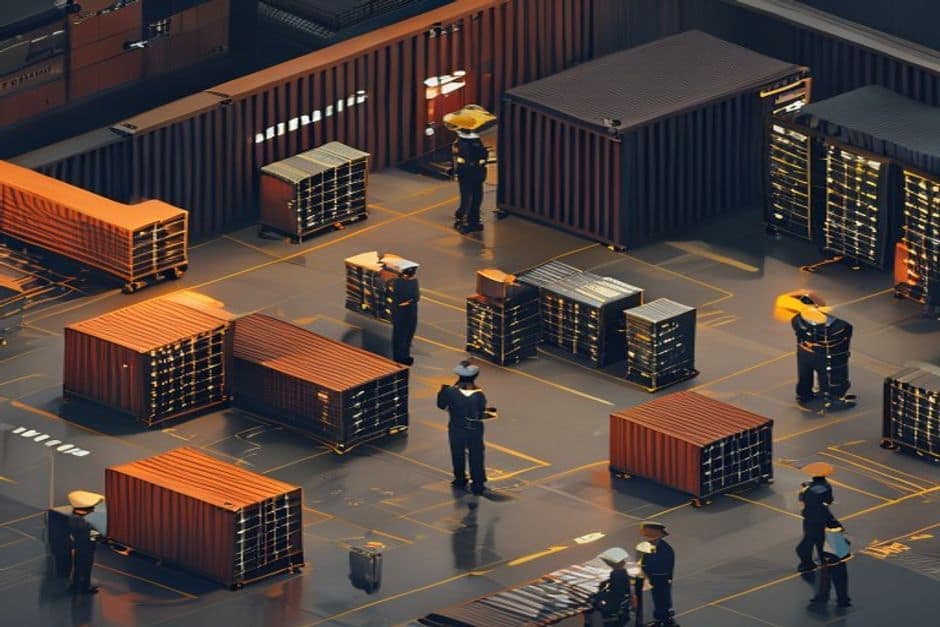
The mechanics of the alleged scheme are worth understanding because they illustrate exactly how sophisticated export-control circumvention operates at scale. US-assembled Supermicro servers containing Nvidia's most advanced GPUs were shipped to facilities in Taiwan, then routed to a Southeast Asian intermediary company that served as the transshipment vehicle, before reaching Chinese customers who wanted the chips but could not legally receive them under US export controls. The indictment describes $510 million in servers sold to the Southeast Asian company and subsequently forwarded to China between late April and mid-May 2025 alone. The full alleged scheme spans the period from 2024 to its detection. Liaw and one of the co-defendants were arrested. The Taiwan general manager remains at large, according to the Department of Justice, and Liaw has pleaded not guilty. Supermicro is not named as a defendant in the indictment and is not accused of corporate wrongdoing, but the company has placed the two employees on administrative leave, terminated the contractor relationship, launched an independent investigation using a forensic accounting firm, and is simultaneously managing an ongoing SEC inquiry that predates the export control charges.
Supermicro's stock has dropped approximately 60 percent over the six months preceding the indictment, reflecting a compounding series of governance and compliance concerns that now includes the criminal charges. The Hindenburg Research short report from August 2024, a 19,000-word investigation alleging accounting red flags, undisclosed related-party transactions, and prior export control failures, had already introduced significant investor uncertainty before the March 2026 indictment. The company's history includes a 2020 SEC charge for widespread accounting violations related to over $200 million in improperly recognised revenue. The March indictment arrives as the third major governance event in an 18-month period, and the forensic accounting investigation the company has initiated, which extends beyond routine compliance review into a targeted examination of transactions, controls, and financial reporting, signals that the board takes the potential scope of the problem seriously rather than treating it as a contained personnel matter. An earnings call approaching in this environment creates investor communication pressure that the company has navigated imperfectly before.
The broader implication for the AI hardware supply chain is not primarily about Supermicro's individual situation. It is about what this case reveals as a systemic risk category for any company positioned in the server assembly, rack integration, or hardware distribution layer of the AI compute stack. Supermicro is not a marginal participant. It is one of the largest AI server suppliers globally, a key assembly partner for hyperscaler data center buildouts, and a company whose revenue grew substantially during the AI infrastructure boom of 2023 through 2025. The fact that export-control violations of this alleged scale could occur at a company of that prominence and public profile, under regulatory scrutiny following prior compliance failures, demonstrates that the enforcement gap between US export control law and actual hardware flows to China was substantial enough to sustain a $2.5 billion scheme. Nvidia responded to the charges by stating that strict export control compliance is a top priority and that it works closely with customers and the government on compliance programs. The statement also noted that unlawful diversion to China means Nvidia provides no service or support for those systems, which is a legal distancing measure but also a genuine operational risk for Chinese buyers holding hardware they cannot get supported.
For founders and investors building companies that sell into the AI compute stack, the Supermicro case makes three categories of risk newly concrete in ways that demand attention rather than assumption. The first is customer concentration combined with geographic compliance exposure. Supermicro's business model involves assembling servers for a relatively concentrated set of large buyers across multiple geographies. When a compliance failure of this scale is attributed to individuals operating within that supply chain, the customer relationships built on trust and delivery performance become contingent on the company's ability to demonstrate clean compliance going forward. Enterprise and government buyers that depend on Supermicro servers for their AI infrastructure now face supplier risk that was not priced into their procurement decisions when they awarded contracts. Second, companies selling tooling, services, or components into hardware supply chains where export-controlled items move through multiple jurisdictions need to build compliance due diligence into their customer onboarding and transaction monitoring processes rather than treating it as a legal formality. The Southeast Asian transshipment route described in the Supermicro indictment is a pattern that has appeared in other export control enforcement actions, and any company whose products could plausibly end up in a similar routing structure faces regulatory inquiry risk that scales with the commercial value of the exports involved. Third, investor diligence on AI infrastructure companies now requires explicit assessment of export control compliance programs, not just revenue growth and customer lists. The companies in the server, rack, and hardware distribution layer that have invested in compliance infrastructure, documented their global trade programs, and demonstrated clean enforcement histories are increasingly differentiated from those that have not, and the valuation premium for clean compliance will become more visible as enforcement actions generate headlines through the remainder of 2026.
The US government's decision to bring this case as a criminal indictment rather than a civil penalty signals how seriously the export control enforcement apparatus is treating AI hardware diversion. Prior enforcement actions against companies that allowed controlled technology to reach China were typically resolved through administrative penalties and enhanced compliance programs. Charging a co-founder criminally, alongside a company sales manager and an intermediary, in the Southern District of New York where maximum enforcement resources and reputational impact converge, is a deliberate signal to the entire AI hardware industry that the Department of Justice views advanced GPU diversion as an existential supply chain security issue rather than a technical customs violation. The message to every other server assembler, distributor, and logistics company in the AI hardware stack is straightforward: the enforcement regime has teeth, it is using them, and the cost of a compliance failure at this scale is criminal prosecution, not a fine and a remediation plan.
Also read: Former ironSource Executives Raised at a $500 Million Valuation for AI Startup Zyg Before Showing Public Traction and That Bet Is Entirely About Who Is Building It • Norway Joins the US-Led AI Supply Chain Alliance and the Deal Turns a Nordic Nation Into a Strategic Infrastructure Node for Allied Compute • DeepSeek V4 Pro Matched GPT-5.2 on a Real-World Agentic Benchmark and Costs 17 Times Less Which Is the Only Number That Matters for AI Startup Economics