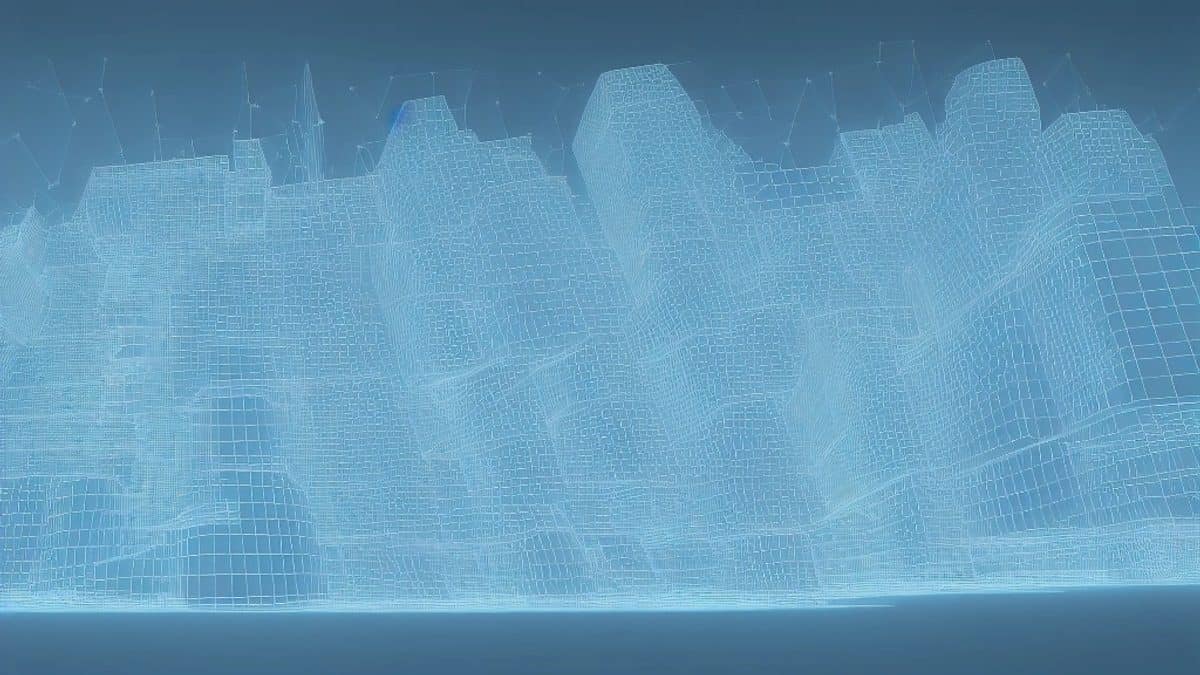
Tencent has quietly pushed the boundaries of spatial intelligence by releasing HY-World 2.0 into the open-source ecosystem, a framework capable of turning text and 2D visuals into navigable 3D environments.
Today marks the public release of a technical heavyweight in the world model arena. While the industry chatter often centers around chatbots and image generators, Tencent has dropped a codebase that tackles a far thornier problem by turning static, flat inputs into dynamic, volumetric spaces. The HY-World 2.0 framework is now available for developers to dissect, refine, and implement, marking a significant pivot from proprietary research to accessible infrastructure.
What sets this release apart is its aggressive handling of data diversity. Most existing pipelines struggle if you feed them anything other than a specific type of prompt, but HY-World 2.0 is built to digest a chaotic mix of inputs simultaneously. You can feed it descriptive text, a single photograph, or a flurry of video frames, and the system normalizes this disparity into a cohesive spatial understanding without requiring separate models for each media type. This matters because real-world data is messy. A platform handling user-generated content cannot demand perfectly formatted inputs. By removing that constraint, Tencent has made the framework practical for production environments, not just research labs.
The core utility lies in its dual capability for generation and reconstruction. Unlike standard generative models that hallucinate pixels based on training data, this framework constructs world representations using Gaussian Splattings and meshes. This approach allows for the creation of environments that maintain geometric consistency, meaning the 3D space holds up from multiple angles rather than collapsing when viewed from the side. For anyone who has watched a neural radiance field produce shimmering artifacts the moment you rotate a camera, the distinction is meaningful. Structural integrity in a generated scene is what separates a tech demo from something you can ship to users.
For startups and developers, the economics of this release are arguably more important than the technical specifications. Building a multi-modal world model from scratch requires a capital expenditure that few bootstrapped teams can afford. The compute costs alone for training on diverse spatial datasets can run into hundreds of thousands of dollars. By open-sourcing the heavy lifting, Tencent has effectively lowered the barrier to entry for any company looking to build spatial applications, from virtual tourism platforms to advanced game design tools to architectural visualization services.
We are seeing a clear shift in how tech giants leverage open source. It is no longer just about altruism or community building. It is a strategic move to define the infrastructure standard before the market settles. If Tencent can make HY-World the foundational layer for 3D generation, they secure a powerful moat as the ecosystem of tools and services grows on top of their architecture. The network effects are real. Once developers build workflows around a particular framework, switching costs become prohibitive.
Looking ahead, the impact will likely be felt hardest in the gaming and simulation sectors. The ability to rapidly reconstruct real-world locations from video footage or generate entirely new environments from text prompts compresses development timelines that used to take months into days. That compression does not just save money. It changes what is possible for small studios that previously could not afford environmental art teams. The pressure is now on competitors like Google or Meta to respond, as the standard for what constitutes an open world model has just been raised.
Also read: Anthropic Finds Emotion-Like Structures Inside Claude That May Actually Be Driving Its Behavior • Anthropic Is Hiring a Chemical Weapons Expert and the Internet Lost Its Mind • The Numbers Are In, Small Publishers Are Losing Search Traffic at an Alarming Rate