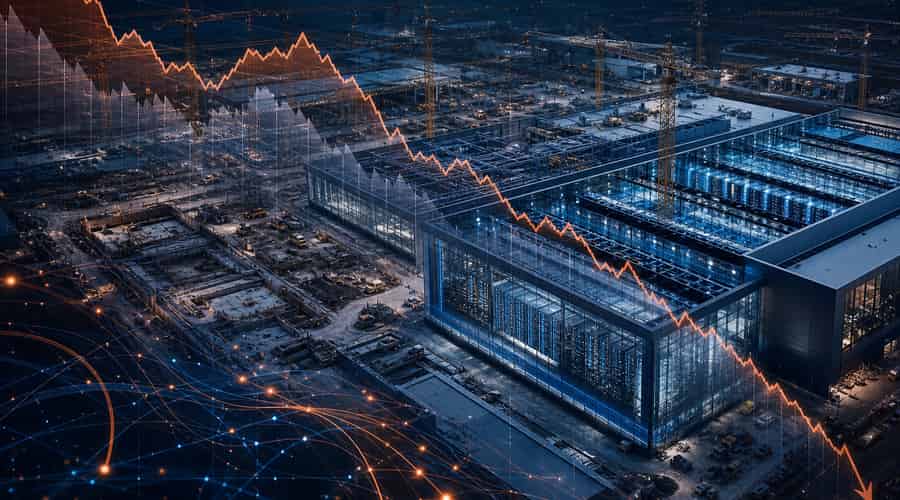
Big Tech's AI buildout is no longer just a growth story. It is changing what shareholders own, because the cash that once funded buybacks is being pulled into chips, data centers and debt.
For most of the past decade, Alphabet, Microsoft, Meta and Amazon gave public investors a simple bargain. They generated enormous cash, bought back shares, and let shareholders treat them as growth companies with a capital-return machine attached. That bargain is being rewritten in real time.
Goldman Sachs put a number on it last month, and MarketWatch picked up the point plainly: the largest AI hyperscalers are expected to spend about $755 billion on capital expenditures in 2026, up 83% from 2025. Goldman was talking about five companies, not four: Amazon, Alphabet, Meta, Microsoft and Oracle. That distinction matters, because the headline number is too large to hang only on the familiar four names. Still, the pressure on those four is exactly where many public investors feel it.
The buyback pullback is already visible. According to the same Goldman analysis cited by MarketWatch, hyperscaler buybacks fell by nearly two-thirds in the first quarter, with Microsoft the major exception among the group investors usually compare most closely. Alphabet bought back no stock in the latest quarter after repurchasing about $15.1 billion in the same period a year earlier. Amazon has not been a regular repurchaser for years. Meta has been pushing more cash into infrastructure. If you owned these companies partly because buybacks kept shrinking the share count, you now own a different animal.
The spending itself is not vague. Amazon laid out a roughly $200 billion capital spending plan for 2026, with Chief Executive Andy Jassy tying the buildout to AI infrastructure, custom chips, data centers and robotics. Alphabet has been guided by analysts into the $175 billion to $185 billion range. Meta lifted its 2026 capital expenditure guidance to $125 billion to $145 billion, after already blaming higher infrastructure costs and memory pricing for the increase. Microsoft is still spending at a level that sits above the $88.2 billion it recorded in fiscal 2025. Oracle belongs in the larger Goldman bucket too, and that is why the group total reaches the mid-$700 billion range.
Here is the thing: this is not just a story about management teams being ambitious. It is a cash flow story, and cash flow has less patience than a slide deck.
Amazon's free cash flow for the 12 months through March 31, 2026 fell to $1.2 billion from $25.9 billion a year earlier, MarketWatch noted from the company's latest earnings report. The cause was not hard to find: purchases of property and equipment rose by $59.3 billion year over year. The Wall Street Journal reported today that free cash flow for the five big hyperscalers is expected to drop 91% in 2026 to about $16 billion, even as net income is projected to rise 25% to $506 billion. That gap is the AI buildout in one sentence.
Accounting makes the picture look calmer than the cash ledger feels. Nvidia and other suppliers book revenue when they sell the chips and systems. The hyperscalers put the hardware on the balance sheet and depreciate it over years, sometimes after facilities are actually ready for use. The Wall Street Journal quoted Morgan Stanley accounting analyst Todd Castagno calling this a period where everyone looks good. He is right, but you should read that as a warning, not a compliment. The bills arrive before the depreciation fully does.
For shareholders, buybacks were never just a nice extra. They reduced share count, supported earnings per share and gave investors a technical cushion when sentiment turned. Remove that support and valuation leans harder on the promise that AI revenue arrives on schedule. Azure, AWS and Google Cloud all have real demand signals. Nobody serious can pretend enterprise AI usage is imaginary. But demand and payback are not the same thing, especially when the spend is counted in hundreds of billions before the revenue curve has proven it can carry the depreciation.
Founders should pay attention too. If Microsoft, Alphabet, Amazon or Meta becomes your strategic investor, cloud partner or preferred infrastructure provider, you are dealing with companies whose internal capital allocation has changed. Their AI teams may still write large checks, but every check now competes with data center leases, power contracts, GPUs, memory and debt service. The bar for strategic value gets higher when the parent company is rationing cash more tightly.
The debt market is becoming part of the model. Axios reported this week that Goldman analysts now see hyperscaler capital expenditures near $770 billion in 2026, roughly equal to cash flows from operations, and that the companies have increasingly turned to debt and equity issuance while pulling back on buybacks. J.P. Morgan, according to Investor's Business Daily, estimates AI capital spending could reach $5.5 trillion by 2030, with $4.1 trillion financed through debt. Nvidia's own bond sale this week shows the funding call is spreading beyond the cloud platforms.
Frankly, investors need to stop treating this as the old Big Tech model with a temporary AI surcharge. The five largest AI spenders are starting to look more like infrastructure companies: heavy capex, long payback periods, rising financing needs and less excess cash to hand back. That does not make the bet wrong. Railroads, utilities and telecom networks built valuable businesses this way. But it does mean the shareholder contract has changed.
The AI buildout may still justify the money. If enterprise customers keep moving workloads into AI systems and if cloud pricing holds, the cash flow rebound analysts expect for 2028 and 2029 could arrive. The uncomfortable part is the word if. Anyone still pricing Alphabet, Microsoft, Meta, Amazon or Oracle as though the 2017 to 2022 buyback machine is still humming is working from an outdated model.
Also read: Accenture's revenue miss and guidance cut signal a structural reckoning for enterprise IT consulting • NextEra Energy is becoming the infrastructure layer that powers the AI economy • Apple's deal with Intel to make chips in the United States hands the struggling foundry its most credible endorsement yet