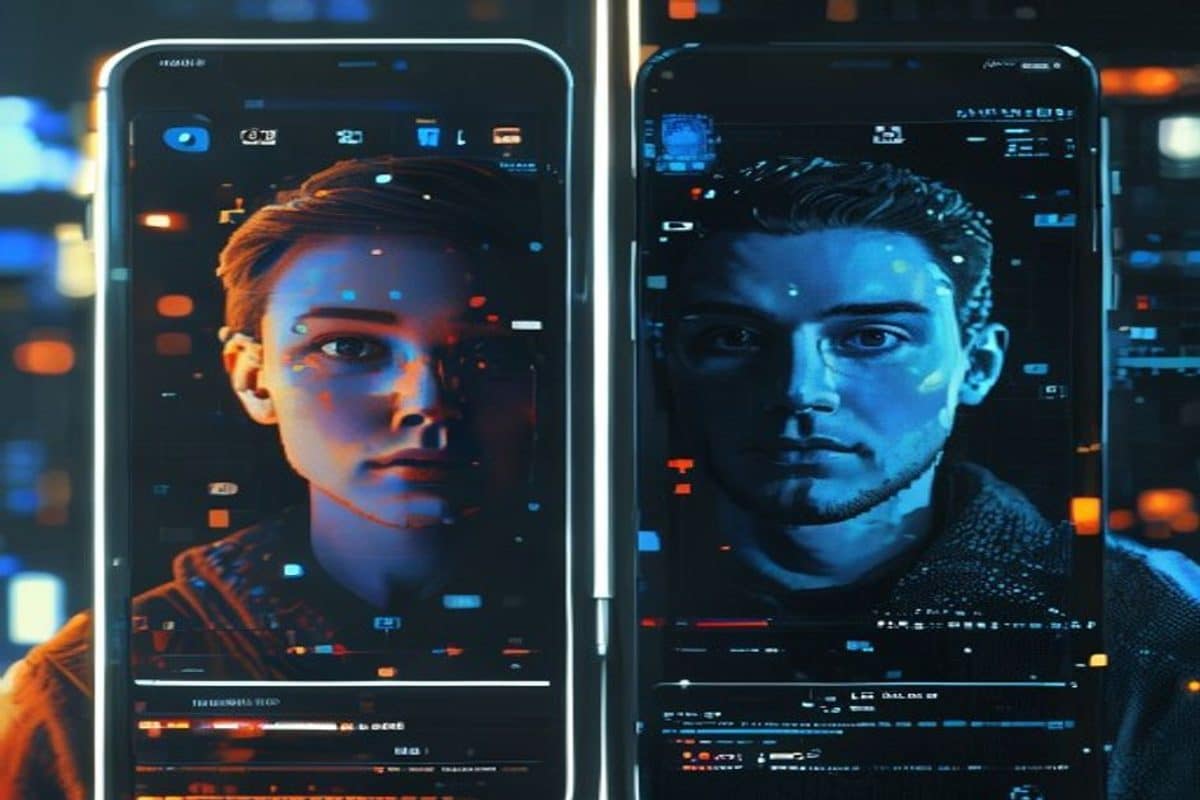
OpenAI's RealityForge 2.0 has made AI-generated video indistinguishable from human footage, and rather than triggering a flight to authenticity, it's accelerating a market that simply doesn't care about the difference.
The tech industry has been telling itself a comforting story for the past three years: as artificial intelligence gets better at mimicking human creativity, people will eventually recoil and pay a premium for the real thing. Handmade goods, unfiltered photography, the rough edges of human imperfection. It made intuitive sense. It also appears to be wrong. Since OpenAI launched RealityForge 2.0 on April 15, AI-synthesized content uploads on YouTube Shorts and TikTok have surged 40% in a single week. Viewers aren't fleeing. They're clicking.
RealityForge 2.0 is the inflection point this debate needed to get serious. The platform generates photorealistic video in real time with latency so low that the average consumer cannot reliably distinguish it from human-captured footage. That's not a marginal improvement on previous tools. It's the moment the goalposts disappear entirely. The question is no longer whether AI can fool you. It's whether you care that it did.
AI ethicist Dr. Elena Vance has been one of the more credible voices challenging the authenticity-premium narrative, and her recent contribution to this debate draws on hard numbers rather than cultural intuition. Citing the Global Content Consumption Report, she points out that 73% of viewers under 30 rank entertainment value and visual fidelity above the verified human origin of content. That's not a fringe finding. That's a supermajority of the audience that advertisers, platforms, and media companies are most aggressively courting.
The 'return to authenticity' thesis was built partly on the assumption that disclosure would matter, that once people knew content was synthetic they would downgrade it emotionally. The consumption data suggests that assumption was always more projection than evidence. People don't watch content to verify its origins. They watch to feel something, to be entertained, to be informed. If a photorealistic AI avatar delivers that more reliably than a sleep-deprived creator filming themselves in a ring light, the audience will not mourn the creator's absence.
What this means for the influencer economy
The financial stakes are substantial. A Vanguard Digital report released just two days ago estimates that AI-generated personalities could represent 50% of brand ambassador content by Q4 2026, redirecting roughly $15 billion away from human creators in the process. That figure will strike many as aggressive, but given the adoption curve RealityForge 2.0 has already demonstrated in its first week, it no longer reads as speculative. Brands operate on margin and scale. A synthetic ambassador requires no travel budget, no contract renegotiation, no reputation management when a personal scandal breaks on a Friday afternoon.
Sam Altman has been notably measured in public commentary about RealityForge's social implications, but the product launch itself is the statement. OpenAI isn't building tools for a world retreating from synthetic media. It's building infrastructure for a world that has absorbed it as standard production utility, the same way Instagram filters normalized digital image manipulation without triggering any lasting consumer revolt.
That comparison is worth sitting with. When Instagram launched filters in 2010, critics predicted that once people realized how heavily images were processed, trust in visual media would crater. Instead, the filter became the expectation. Authenticity got redefined to mean emotional honesty rather than technical rawness. The same cognitive flexibility is almost certainly at work now, and it moves faster in 2026 than it did in 2010.
The real disruption is quieter than the debate suggests
What's actually being disrupted isn't authenticity as a cultural value. It's authenticity as a market positioning strategy. The creators and brands who built audiences on the premise that human-made meant better are facing a direct competitive challenge from synthetic content that is cheaper to produce, infinitely scalable, and increasingly indistinguishable in quality. The response that survives this moment won't be a philosophical defense of human creativity. It will be a practical pivot toward what AI genuinely cannot yet replicate: lived expertise, real-time credibility, community trust built over years. Those things are still scarce. Photorealistic video no longer is. Watch which human creators double down on depth rather than production value, and which platforms find commercial reasons to certify and surface genuinely human voices. That certification market, not the authenticity backlash, is where the real defensive moat gets built.
Also read: The backlash against Anthropic reveals a deep fracture in the logic of local AI agents • Google opens its Gemini Enterprise Agent Platform to the world and bets the agentic era starts now • OpenAI is in talks to deploy up to $1.5 billion into a private equity joint venture