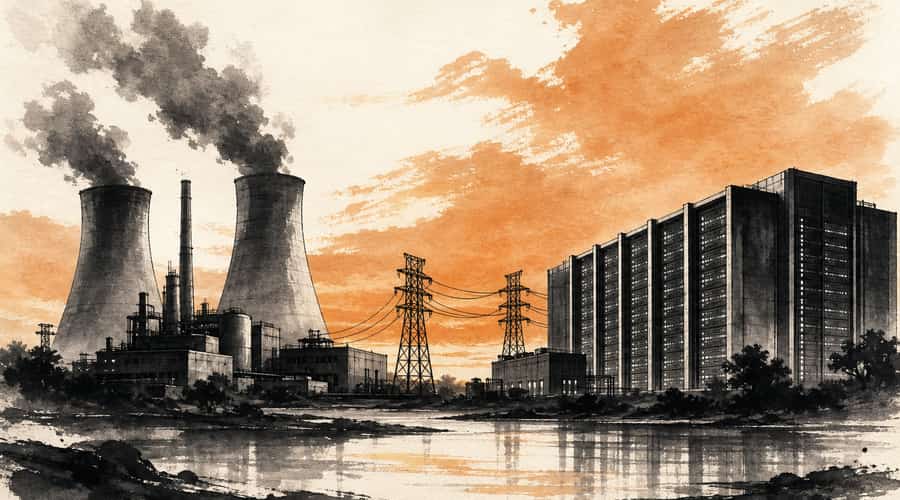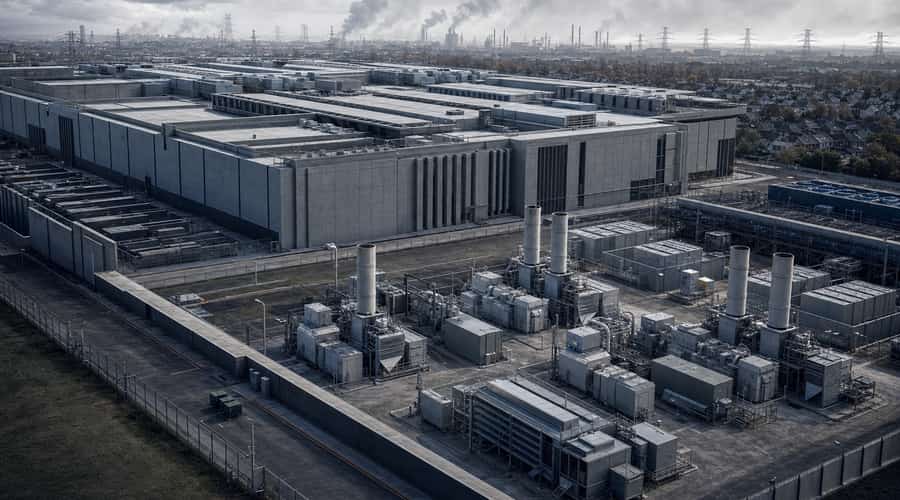
The Justice Department has now moved from watching xAI's Clean Air Act fight to actively defending it, arguing that shutting down gas turbines at the company's Southaven data center would threaten U.S. national security.
Something unusual happened in a federal courthouse in the Northern District of Mississippi this week. The Department of Justice intervened in a Clean Air Act lawsuit, not to press an environmental enforcement case, but to help Elon Musk's xAI fend one off. The plaintiffs are the NAACP, represented by the Southern Environmental Law Center and Earthjustice. The site is xAI's Colossus 2 data center in Southaven, Mississippi, near the Tennessee border and just south of Memphis.
The dispute began with a local power decision that has become a national AI case. The NAACP's April lawsuit says xAI installed and operated 27 portable natural gas turbines at Colossus 2 without the required air permits. The group says the turbines emit nitrogen oxides, soot and formaldehyde near homes, schools and churches in communities already carrying a heavy pollution burden. According to WIRED, emails obtained through public records requests by the Southern Environmental Law Center showed that by mid-May xAI had 57 turbines operating without permits at the Southaven site, more than double the number identified in the original complaint.
That number matters because this is not only a fight over paperwork. WIRED reported that the Southern Environmental Law Center calculated the growth from 27 turbines to 57 would mean a 111 percent increase in nitrogen oxide emissions, an 83 percent increase in PM2.5 emissions and an 88 percent increase in formaldehyde emissions since April. Mississippi regulators approved a separate permit in March for 41 permanent turbines, but the groups suing xAI argue the turbines now at issue are not covered by that permit. State regulators in Mississippi and Tennessee have taken the position that temporary turbines can run for a year without clean air permits, a reading the NAACP disputes under EPA rules.
The Justice Department's filing changes the character of the case. In a memorandum filed Monday, June 15, DOJ lawyers sided with xAI and argued that an injunction shutting off the turbines would threaten "American national, economic, and energy security" by cutting power to AI systems used by the government. WIRED reported that a declaration from Cameron Stanley, the chief digital and artificial intelligence officer at the Department of Defense, said Grok's Gov model supports classified networks and "vital national security missions," including recent military operations involving Iran.
Read that plainly. The federal government's environmental lawyers are now arguing that a private AI company's power supply is important enough to weigh against a Clean Air Act enforcement suit brought by residents and civil rights groups. There is a serious argument that AI compute infrastructure is strategically important. The Trump administration has made that point directly. But there is a wide gap between saying AI infrastructure matters to U.S. competitiveness and saying one company's unpermitted turbines should be protected from an emergency shutdown because its models are useful to the state.
xAI's own conduct is why the case deserves scrutiny. At Colossus 1 in Memphis, residents had already complained about unpermitted gas turbines before the Southaven fight began. WIRED reported in May that xAI added 19 turbines at Colossus 2 between late March and early May, with eight installed after the NAACP had filed its lawsuit. The same report said the additions represented more than 500 megawatts of gas-fired generation. That is not a small backup generator sitting behind a warehouse. The NAACP's filings described the original 27 turbines as 495 megawatts of generating capacity, enough to power about 400,000 homes.
The company's argument is direct. xAI has said the data centers powered by the turbines are essential to AI tools used by the U.S. government and millions of users, and that the facilities cannot function without the temporary generation equipment. That may be true operationally. It also shows how quickly data center buildouts are turning energy shortcuts into legal and political questions. If the only way to run a critical AI system on schedule is to bring in a temporary power plant first and fight over permits later, the permitting fight is not incidental. It is part of the business model.
The Southaven case also sits beside xAI's separate challenge to Colorado's AI Act, the first broad state law aimed at algorithmic discrimination in high-risk AI systems. The Justice Department joined xAI's side in that case in May, arguing against state-level regulation the administration sees as burdensome to national AI policy. The pattern is now visible enough to name: Washington is treating xAI not just as a regulated company, but as a strategic asset whose legal fights overlap with federal AI priorities.
None of that makes the residents near Colossus 2 disappear. They are the ones living with the noise, the emissions claims and the uncertainty while the federal government argues over AI dominance. The court may still decide the NAACP cannot get the injunction it wants, or that Mississippi's reading of the temporary turbine rules holds. But the important shift has already happened. DOJ has put in writing that shutting down xAI's Southaven turbines could threaten national security. For every future AI data center looking for fast power, that is a signal worth watching.
Also read: Kingboard Laminates' 148% stock surge shows where the real AI infrastructure money is flowing • Morgan Stanley opens its trillion-dollar stock plan plumbing to AI agents and Wall Street is watching • GitHub had to call Amazon for help because its own infrastructure could not keep up with AI