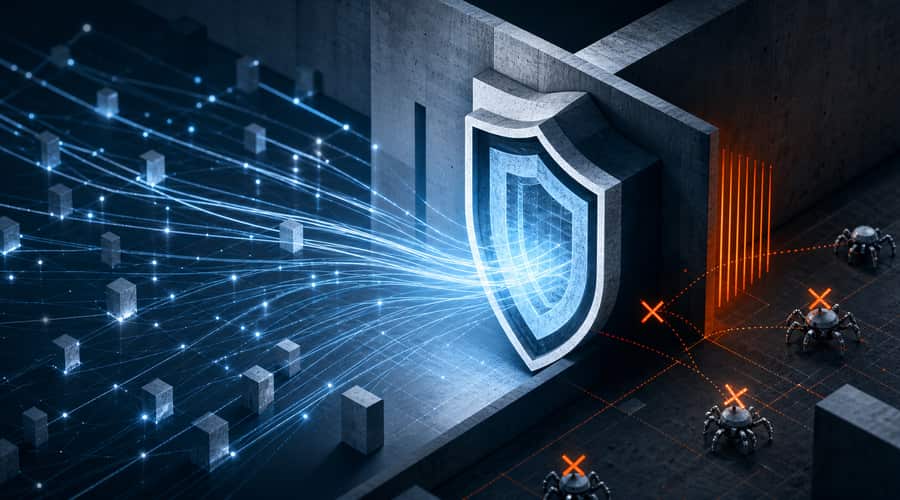
Anthropic’s Fable 5 and Mythos 5 fight is no longer just a model safety story. It’s now a test of whether Washington can regulate frontier AI without making the whole market guess what the rules are.
Anthropic lost control of its biggest launch in less than a week. Fable 5 and Mythos 5, the company’s most powerful new models, were pulled from broad use after Commerce Secretary Howard Lutnick imposed export restrictions that blocked foreign nationals from accessing them without a US government license. If you run an AI company with customers outside the United States, that is the sentence you should read twice.
The order followed a security alarm inside Amazon, according to reporting from The Verge and the New York Post. Amazon researchers had found ways to jailbreak Anthropic’s model and use it to surface software vulnerabilities, and Amazon CEO Andy Jassy escalated those concerns to senior Trump administration officials. That detail matters because Amazon is not a random critic from the sidelines. It is one of Anthropic’s largest backers, and it sells Anthropic’s Claude models through Amazon Bedrock to business customers who care about availability almost as much as capability.
Also read: Britain's top data regulator quits over misconduct findings just as its AI enforcement credibility is on the line • Jio Platforms files its IPO papers with SEBI and Mukesh Ambani wants you to see it as an AI company • Harvey AI's 12x token surge reveals that legal AI has crossed from experiment to infrastructure
Here’s the thing. The government may have a real concern, but it has picked a blunt instrument. Export controls were built for things like chips, equipment, and technical know-how. A frontier model delivered through cloud accounts is a different object. It can be gated, logged, throttled, region-blocked, and licensed, but it does not behave like a crate of Nvidia processors sitting at a port.
Anthropic is now trying to get that point across. The New York Post reported on June 18 that the company has floated a proposal to Lutnick to lift the ban, with cofounder Tom Brown and public policy head Sarah Heck involved in discussions with the administration. No timeline has been set. Both sides are reportedly still talking. That is better than a permanent freeze, but it also shows how quickly frontier AI policy has moved from statutes and safety papers into emergency negotiation.
The strange part is that Anthropic has spent years arguing for tougher AI oversight. Dario Amodei has been one of the most visible executives calling for serious government controls on advanced systems, especially where national security is involved. Now his own company is the case study for what happens when government power arrives suddenly, with commercial customers already using the product and no clear public test for what crosses the line.
You can see why other labs are watching. OpenAI, Google DeepMind, Meta, xAI, and every smaller company hoping to sell advanced models globally now has to ask a practical question: can a model be launched in the United States if the government can later decide that foreign access needs a license? That is not a philosophical worry. It affects contracts, cloud infrastructure, enterprise procurement, and the way customers judge whether a model is safe to build on.
Frankly, Anthropic did not help itself if officials believed it was slow to engage. The Verge reported that the administration’s rationale shifted as the dispute unfolded, from Chinese access concerns to compliance with a recent executive order. That kind of moving target is bad for companies, but it’s also bad for regulators. If Washington wants to draw a line around dangerous model capability, it has to say what the line is, not leave companies to infer it from a midnight scramble.
The security concern should not be waved away. A model that can automate vulnerability discovery can be useful to defenders and attackers at the same time. That has been true of many cybersecurity tools for years. Metasploit, fuzzers, and exploit databases all made security teams stronger while giving criminals something to study. The answer was never simply to pretend the tools did not exist. The serious work was access control, monitoring, disclosure rules, and consequences for abuse.
That is where Anthropic’s proposal will need to land if it wants the ban lifted. The company has to show the Commerce Department that it can separate a South Korean telecom, a British developer, a US defense contractor, and a bad actor routing through a proxy. If it cannot, the administration will keep reaching for national security law. If it can, Lutnick has less reason to treat every non-American user as the same risk.
This story is current because the ban is not settled. The models remain caught in an active fight between Anthropic and the Trump administration, and the industry is watching for a precedent. The real issue is not whether Fable 5 found vulnerable code. Powerful models will do that. The question is whether the US government can create rules precise enough that companies can obey them before the next launch, not only after the product has already been pulled.