Two of the most widely used digital platforms have turned to biometric eye-scanning to verify that their users are human, signaling that proof-of-personhood technology has crossed from crypto experimentation into mainstream consumer infrastructure.
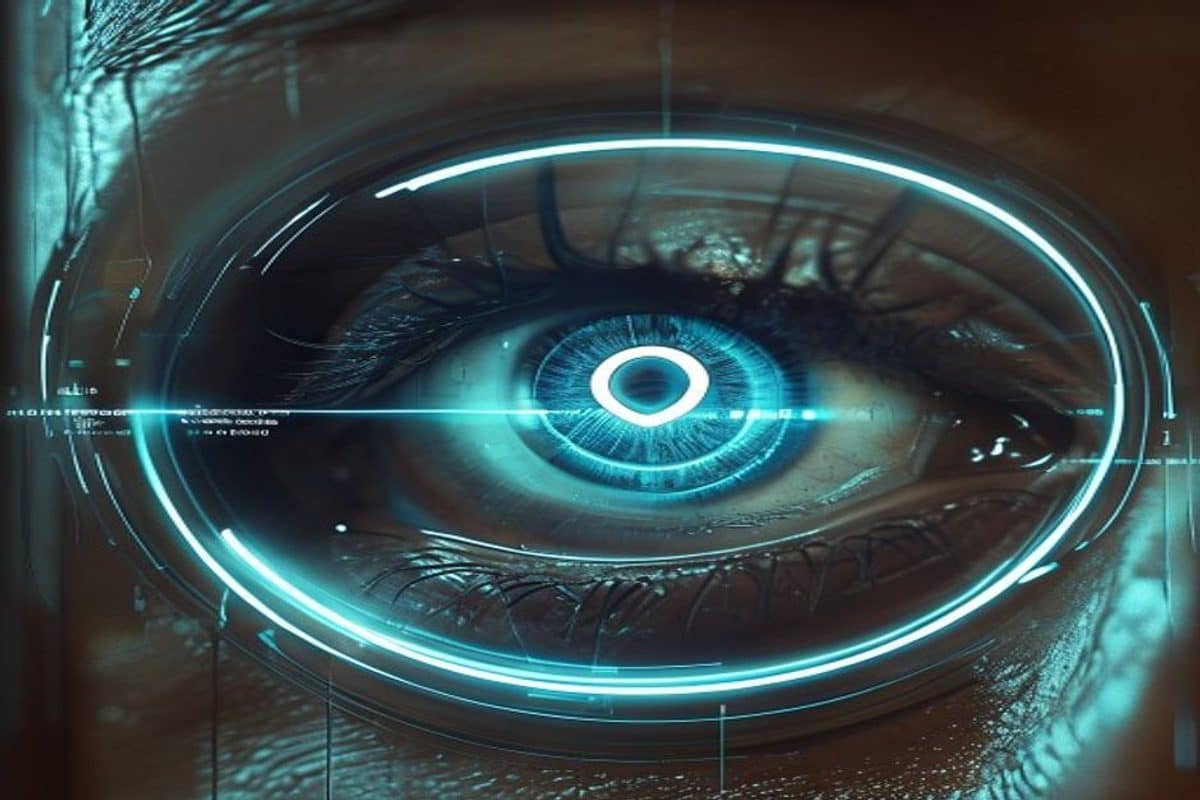
Tinder and Zoom announced today a strategic integration with Worldcoin, the identity protocol co-founded by OpenAI CEO Sam Altman, bringing the company's Orb iris-scanning hardware into consumer dating and enterprise video as a front-line defense against AI-generated personas. The move is the most significant real-world deployment of biometric identity verification outside of government systems, and it arrives at a moment when the line between human and synthetic online behavior has grown nearly impossible to draw.
The scale of the problem both companies are acknowledging is striking. Tinder reported a 45% year-over-year increase in AI-driven bot activity, a figure that reflects just how aggressively synthetic profiles have colonized the dating app ecosystem. Zoom, meanwhile, says synthetic identity fraud and zoombombing on enterprise accounts climbed 30% over the same period , a meaningful liability for a platform that now underpins remote banking, healthcare consultations, and corporate governance.
Under the integration, users who submit to an Orb iris scan receive a World ID credential and a visible Verified Human badge on their profile. The pilot launches in Q3 2026 across major metro areas in the US and UK, with both companies projecting more than five million voluntary opt-ins by Q4. Early internal data suggests verified users see engagement and trust scores rise by roughly 60%, which gives the feature an organic adoption incentive beyond simple security.
Worldcoin launched in 2023 as a cryptocurrency distribution experiment , scan your iris, receive tokens, prove you exist. The project attracted immediate skepticism, both for its unusual premise and for the optics of a Silicon Valley billionaire collecting biometric data from people in developing economies. What Altman's team has since built, however, is a protocol architecture that is now compelling enough for Match Group and Zoom to stake their user trust on it. That is a meaningful inflection point for Tools for Humanity regardless of how one feels about the original token mechanic.
Worldcoin currently holds iris codes for more than 10 million users globally. The addition of Tinder and Zoom's combined user bases is expected to roughly double that figure, creating a biometric registry of humanity at a scale no private company has previously attempted. That concentration is already drawing renewed scrutiny from digital rights organizations, who argue that centralizing iris data , even in hashed, non-reversible form , creates a catastrophic single point of failure if breached or compelled by state actors.
What this reframes for the identity market
The deeper market story here is not about dating apps or video calls. It is about the accelerating need to establish personhood as a verifiable, portable credential in an environment where AI agents are proliferating faster than platforms can detect them. Proof-of-personhood has been a theoretical priority in identity circles for several years; today's announcement suggests it has become an operational one. Investors in the digital identity sector , a space that includes players like Persona, Jumio, and Onfido alongside Worldcoin , will read this as validation that the category is no longer niche.
For Tinder specifically, this integration addresses a retention problem that has quietly undermined the platform for years. Catfishing and bot-driven conversations erode user trust at the exact moment of highest emotional investment, and no moderation system built on image analysis or behavioral signals has solved it convincingly. A biometric gate changes the underlying economics of fraud by raising the cost of a fake identity from near-zero to physically inconvenient.
Whether users in large numbers will consent to scanning their irises to use a dating app is the question that will define how quickly this scales beyond the pilot. The opt-in framing matters here , neither company is making verification mandatory, and the badge functions as a trust signal rather than a platform requirement. But if verified profiles genuinely convert better and attract more genuine engagement, the social pressure to participate may do what mandates cannot. Watch the Q4 opt-in numbers closely; they will tell us whether proof of humanity has become a feature users actually want, or simply one platforms wish they had.
Also read: OpenAI launches GPT-Image-2 with near-perfect text rendering and twice the speed of its predecessor • OpenAI Image 2.0 raises the ceiling on generative complexity and forces rivals to respond • Anthropic Opus 4.7 claims the top spot on the LLM Debate Benchmark with a flawless side-swapped record