The CEOs of three of the world's largest automakers have issued stark warnings about China's rapidly expanding lead in electric vehicle manufacturing, as automation levels inside Chinese factories have reached a scale that Western competitors are struggling to comprehend, let alone match.
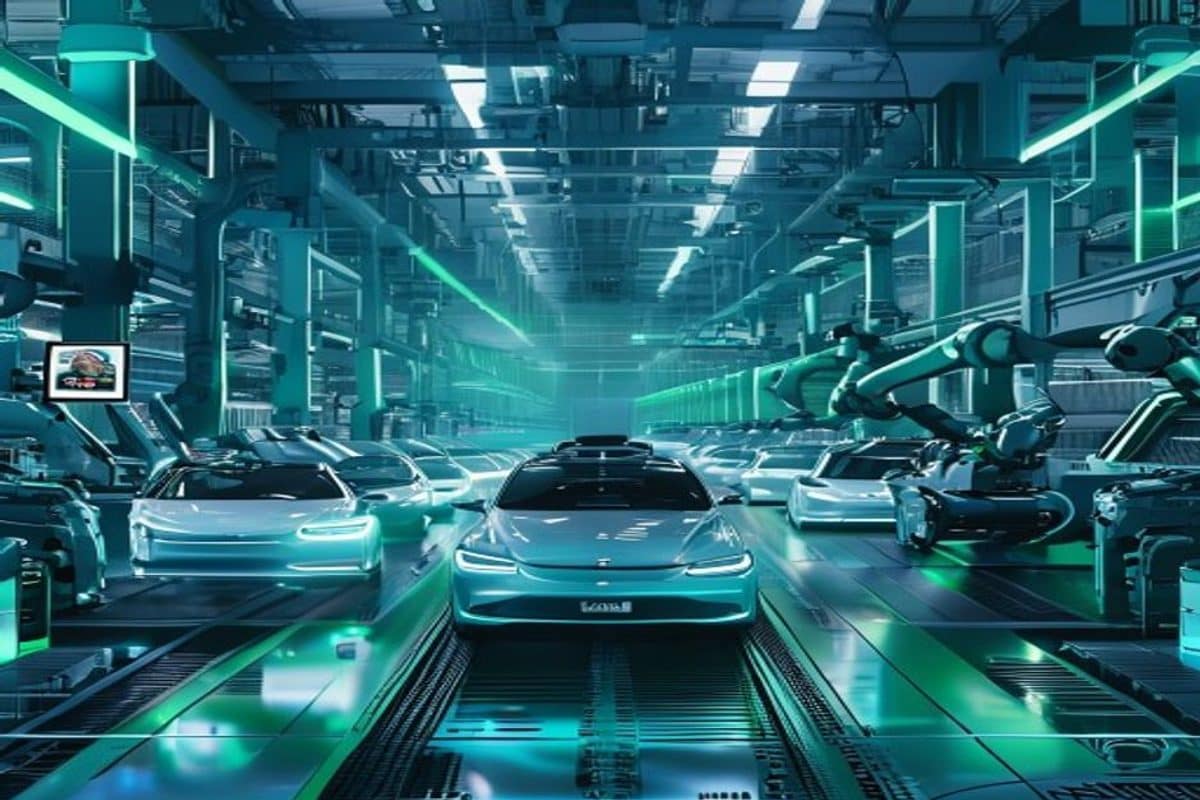
Honda's President and CEO Toshihiro Mibe recently walked the floor of a Shanghai automotive parts factory and came away shaken. Not by its size. Not by its speed. By the complete absence of human workers. Logistics, procurement, assembly, quality control: all of it running seamlessly without a single person visible on the production floor. Mibe did not frame what he saw as impressive. He framed it as an existential threat. "We will not survive," is the kind of statement that does not come from a CEO looking for a headline. It comes from one who has seen something that fundamentally changed his assessment of the competitive landscape.
China now accounts for 70% or more of all new electric vehicles produced globally. That figure alone would be significant. The deeper issue is the structural advantage underneath it. China did not arrive at this position simply by manufacturing cheaply. It built an integrated industrial ecosystem, spanning raw materials, battery chemistry, semiconductor supply chains, and now fully automated production, that compresses costs and accelerates iteration at a pace that traditional automotive timelines cannot match.
The conventional auto industry operates on development cycles measured in years. A new platform typically takes four to six years from concept to production vehicle. Chinese EV manufacturers, operating with tightly integrated supply chains and factories designed from the ground up around automation and software-driven production, are moving on cycles that are dramatically shorter. That gap compounds over time. Every new model generation that a Western manufacturer releases, a Chinese competitor has already iterated twice.
The battery supply chain dimension is where the structural disadvantage becomes most concrete. China controls a commanding share of the processing capacity for lithium, cobalt, and the other materials that flow into EV batteries. CATL alone supplies battery cells to a roster of global manufacturers while simultaneously supporting domestic brands with preferential volume and pricing. Western automakers are attempting to build alternative supply chains in North America and Europe, but those efforts are measured in years and billions of dollars with no guarantee of matching the cost structure that Chinese producers already operate at.
Ford's position illustrates the bind clearly. The company has invested heavily in EV transition while simultaneously managing the financial drag of that investment against declining internal combustion engine revenue. Competing on price against Chinese EVs in markets where tariff protection does not apply is, by Ford's own internal assessments, not currently viable. The CEO-level warnings being issued are not strategic positioning for trade negotiations. They reflect genuine uncertainty about where the profitability floor is in a market reshaped by Chinese production economics.
Automation as the Sharpest Edge
What Mibe observed in Shanghai points to something beyond cost efficiency. A factory with no human workers on the floor is not just cheaper to run. It is faster to reconfigure, less susceptible to labor disruption, and capable of operating at a consistency level that human-intensive production cannot match at scale. Chinese manufacturers have deployed robotics and AI-driven quality assurance across their supply chains at a pace that has outrun Western industrial automation adoption by a significant margin.
This is not an accident of geography or labor policy. It reflects deliberate industrial strategy backed by state coordination and patient capital that allowed Chinese manufacturers to absorb losses during the EV market's early years while building the automation infrastructure that now delivers competitive advantage. BYD, which recently surpassed Tesla in quarterly EV sales volume, spent years operating at margins that would have been unacceptable to a publicly listed Western automaker under conventional shareholder pressure.
The warning from these three CEOs lands at a moment when trade tariffs have provided some insulation for Western markets, but tariff walls are a delaying mechanism, not a solution. They buy time without closing the underlying capability gap. Japanese automakers in particular face acute pressure because their domestic market, historically a reliable profit base, is now seeing aggressive entry from Chinese brands willing to price at levels that compress Japanese margins even on home soil.
For investors and operators watching the automotive sector, the signal is clear. The question is no longer whether Chinese automakers will be competitive globally. They already are. The question is which Western manufacturers have the balance sheet resilience, the technology partnerships, and the willingness to restructure fast enough to remain relevant in a market where the production economics have fundamentally shifted. The CEOs issuing these warnings are not being dramatic. They are being honest about a timeline that is shorter than most of their shareholders have priced in.
Also read: Xbox's new CEO has done more in two months than her predecessor managed in two years of damage control • WhatsApp is free for two billion people and that is exactly how Meta makes its money • Iran and China Push Yuan Trade in Hormuz as Dollar Faces Pressure