A viral prompt experiment is stress-testing generative AI's grasp of human psychology, revealing just how far these tools have come in translating abstract dread into imagery.
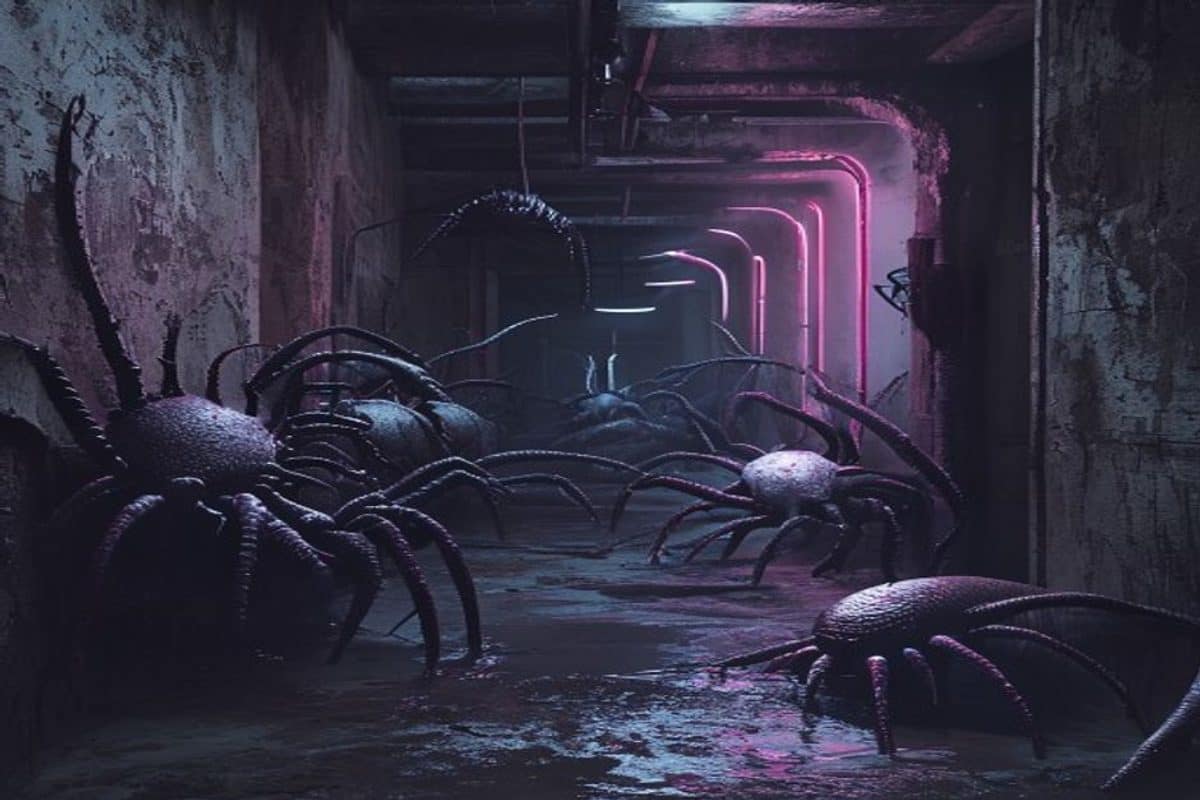
Somewhere between performance art and psychological experiment, a trend has taken hold across Reddit and X: users feeding AI systems the prompt "combine all of humanity's greatest fears into one photo" and sharing what comes back. The results , writhing amalgamations of deep-sea creatures, spiders, voids, and distorted architecture , have racked up tens of thousands of upvotes and millions of impressions, not because they're shock content, but because they work. The images feel wrong in a way that's hard to articulate, and that's precisely the point.
The workflow is more layered than the casual framing suggests. Users typically start with a large language model like GPT-4 to engineer a richly detailed descriptive prompt, then pipe that into a dedicated image generator , Midjourney v6, DALL-E 3, or Stable Diffusion. The LLM's job is conceptual translation: turning an abstract idea like "universal dread" into precise visual language involving texture, scale, lighting, and biological horror. The image model then renders it. Calling the whole process "ChatGPT" is a shorthand that flattens a genuinely sophisticated multimodal pipeline, but it's also why these outputs land harder than most AI art. The language model understands fear as a concept before the image model has drawn a single pixel.
This isn't just internet spectacle. The fact that these systems can operationalize something as culturally layered and subjectively loaded as "fear" , pulling together arachnophobia, thalassophobia, claustrophobia, and existential dread into a single coherent visual , is a meaningful capability marker. Earlier generations of image models struggled with abstract prompts, defaulting to literal or generic interpretations. The current cohort clearly carries high-level associative knowledge about human psychology baked into its training. That's a qualitative leap worth paying attention to.
The trend also exposes an ongoing tension between creative communities and platform safety systems. Prompt engineers on r/midjourney are openly competing to produce images that trigger the strongest visceral response, and the more determined among them are testing the edges of content filters to get there. Midjourney, OpenAI, and Stability AI all maintain NSFW guardrails, but users have become skilled at framing disturbing concepts in language that sidesteps automated moderation. It's a cat-and-mouse dynamic that predates this specific trend, but the "fears" prompt gives it fresh urgency because the intent is explicitly psychological disruption rather than artistic expression in any conventional sense.
The AI horror aesthetic and what's driving it
This fits neatly into a broader "AI Horror" aesthetic that crystallized around 2023 and 2024, but has deepened considerably since. What's interesting about this phase is the reflexivity: the technology generating these monsters is itself a source of cultural anxiety. The void, the unknowable creature, the labyrinthine architecture , these are images of the uncanny, and increasingly they serve as metaphors for AI itself. The communities producing this content are, consciously or not, using the tool to express ambivalence about the tool. That's a more sophisticated cultural moment than the early "AI art vs. human artists" debates suggested we'd reach this quickly.
For the companies involved, the viral attention is a double-edged signal. On one hand, it demonstrates genuine product stickiness , people are engaging deeply and creatively with these platforms, not just running one-off queries. Threads generating 15,000 upvotes within 24 hours are free distribution at scale. On the other hand, the use case sits uncomfortably close to the line those companies have publicly committed to holding, and regulators watching AI content moderation in the EU and UK will notice when millions of people are explicitly trying to generate psychological horror imagery using commercial tools.
The prompt experiment will eventually cycle out of trending, as these things do. But the capability it demonstrated won't recede. The question for AI platforms now is whether they develop more nuanced content policies that distinguish between artistic exploration of dark themes and genuine harm , or whether they tighten filters in ways that frustrate the exact creative communities driving their organic growth. How Midjourney and OpenAI handle that balance in the next product cycle will say more about the maturity of this industry than any benchmark score.
Also read: Anthropic quietly pulls Claude Code from Pro plan and hands local model advocates their strongest argument yet • ChatGPT is alienating its own users and the timing could not be worse for OpenAI • Reasoner-4 just converted millions of AI skeptics in a single morning