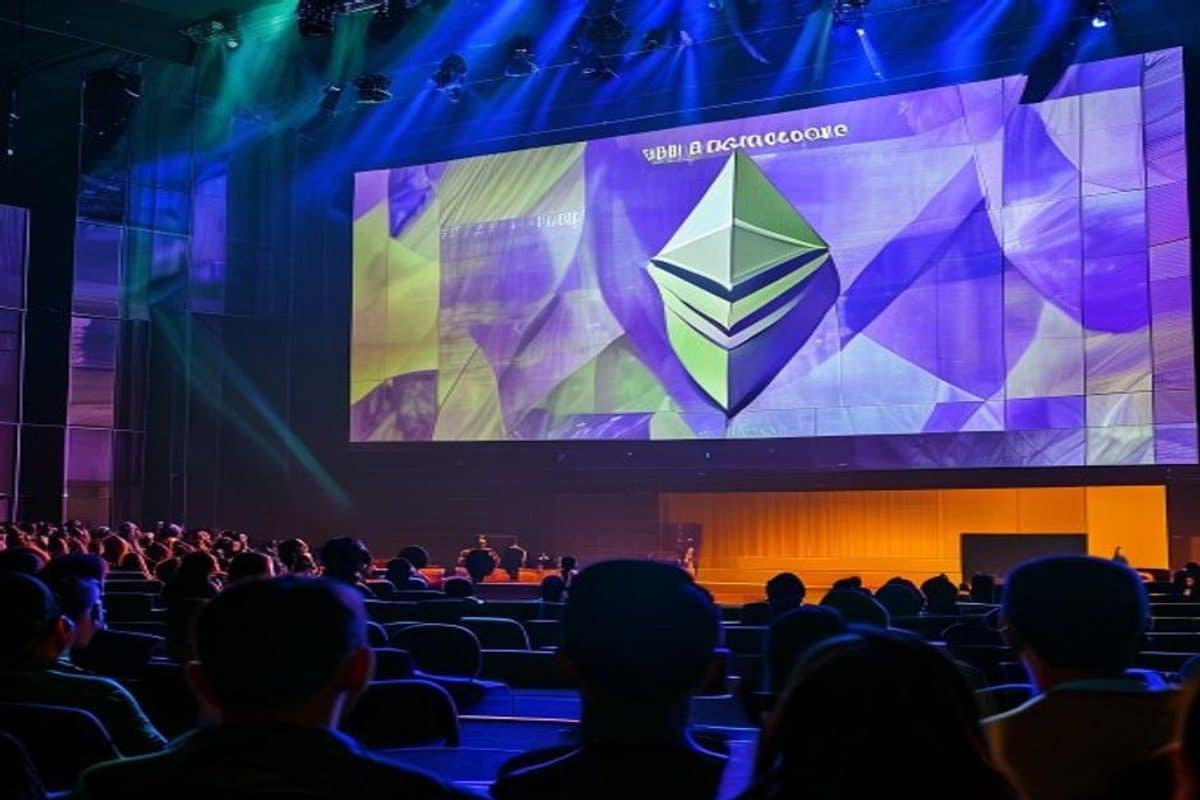
Ethereum co-founder Vitalik Buterin used his keynote at the Hong Kong Web3 Festival to reaffirm that Ethereum's development roadmap will continue to prioritize security and decentralization, drawing an implicit contrast with faster but potentially centralized competitor chains.
Buterin's message at this year's Hong Kong Web3 Festival was blunt: Ethereum is not in a race to the bottom on transaction speed, and it never will be. Speaking to an audience that included Ethereum Foundation representatives and a cohort of Layer 2 builders, the co-founder pushed back against the prevailing narrative that blockchains must maximize throughput to remain competitive. His argument was simple but pointed , premature hardware acceleration and aggressive performance chasing introduce systemic risks that can quietly erode the decentralization a network was built to protect.
The remarks land at a moment when the market is littered with Layer 1 chains pitching themselves as faster, cheaper alternatives to Ethereum. Buterin did not name names, but the subtext was hard to miss. Chains that optimize for raw speed often do so by concentrating validator power or raising hardware requirements to a level that prices out independent node operators. The result is a network that looks decentralized on paper but functions more like a permissioned system in practice.
Buterin pointed to concrete progress as evidence that the current approach is working. Transaction fees on Layer 2 rollups have dropped by roughly 95% over the past two years, a reduction he attributed directly to protocol-level upgrades rather than architectural shortcuts. Network uptime has remained consistent throughout, a metric that rarely makes headlines precisely because nothing went wrong. For Buterin, that kind of quiet reliability is the point. A settlement layer for global finance cannot afford dramatic trade-offs between performance and integrity.
The framing of Ethereum as a global settlement layer rather than a consumer-facing transaction network is a deliberate strategic choice. It positions the chain less as a competitor to Visa or Solana and more as the foundational infrastructure beneath them , the layer where finality happens, where disputes resolve, and where the rules cannot be quietly rewritten by a small group of well-resourced validators.
Market read and investor reaction
ETH liquidity metrics stabilized in the immediate aftermath of the speech, a signal that institutional participants at minimum were not spooked by the conservative tone. In a market cycle that has frequently rewarded hype and punished patience, a founder doubling down on long-term architectural discipline is not always what traders want to hear. The stability in liquidity suggests that a meaningful portion of ETH holders are explicitly betting on the security-first thesis rather than despite it.
That matters because the competitive pressure on Ethereum is not abstract. Several well-funded Layer 1 projects have made genuine inroads on developer mindshare and total value locked over the past 18 months. Buterin's Hong Kong address is partly a confidence signal to that developer community: the foundation is not going to panic-pivot toward throughput metrics in response to competitive pressure.
The practical question going forward is whether the Layer 2 ecosystem can continue delivering the user-facing performance improvements that make Ethereum's base-layer conservatism sustainable as a market position. So far, rollup adoption data suggests it can. But the gap between Ethereum's technical roadmap and the speed expectations of retail users remains something the ecosystem will need to actively manage. Buterin has drawn the line clearly. Now it falls to the builders deploying on top of it to make that line feel like a feature rather than a constraint.
Also read: Billions in user funds on Ethereum Layer 2 networks sit behind a handful of private keys and that should concern every crypto investor • North Korea's Lazarus Group stole $292 million from two DeFi protocols that are now publicly blaming each other • The viral essay forcing crypto investors to confront their own psychology instead of the price